Ask a room full of believers which spiritual practices they value, and you will hear the familiar list. Prayer, scripture, generosity, service, gathering with others. All good, all worth keeping. But there is one practice that almost never makes the list, even though it sits underneath every other one, and that is silence. We will do nearly anything before we will sit still and quiet with God for ten minutes. The discipline most people quietly avoid is not a hard one to understand. It is just one we are afraid of, because silence strips away the noise we use to keep ourselves company.
Consider how much of even our religious life is filled with words and activity. We pray by talking. We worship with music. We study by reading. We serve by doing. Each of those is good, but notice that every one of them keeps us in motion and keeps something playing in the background of our minds. Silence removes all of it at once. No talking, no input, no task to complete, nothing to perform. For most of us that emptiness feels less like peace and more like exposure, which is exactly why we fill every spare moment with a screen or a sound the second it appears.
The avoidance runs deeper than a busy schedule. When the noise stops, the things we have been outrunning catch up. The worry we have not faced, the grief we have not named, the question we do not want to ask, the conviction we keep changing the subject on. Silence does not create those things. It simply removes the static that has been hiding them. That is uncomfortable, and discomfort is a powerful teacher about where we actually are. The very reason silence feels unbearable is the reason it is worth practicing, because it shows you what you have been avoiding in yourself.
Scripture treats this as ordinary rather than exotic. The instruction to be still and know that God is God is not a poetic flourish. It is a command to stop the motion long enough to remember who is actually holding things together. Across the tradition you find the same pattern again and again. People withdrew to quiet places, away from crowds and tasks, to be alone with God. If the practice was necessary for them, the idea that we can skip it entirely and still grow is a comfortable fiction we have told ourselves to avoid the silence we fear.
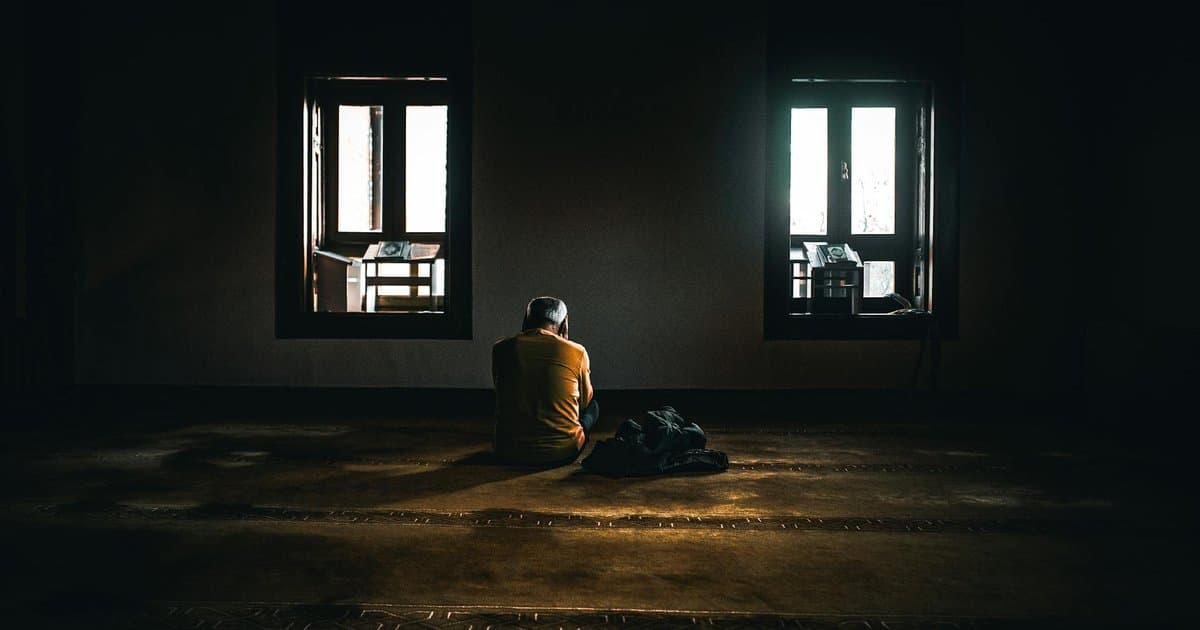
The practice itself is almost embarrassingly simple, which is part of why we resist it. You sit somewhere without your phone, without music, without a book, and you stay there for a set amount of time. You are not trying to empty your mind or achieve a feeling. You are simply making space and letting the noise settle, returning your attention gently when it wanders, which it will, constantly. Start with five minutes, because ten will feel like an hour at first. The goal is not performance. The goal is to become a person who can be still without flinching.
What grows out of this is not dramatic, and that matters. You will not usually hear a voice or have a vision. What you will slowly gain is a steadier interior, a reduced need to fill every gap, and a clearer sense of what is actually going on underneath your own restlessness. Prayer deepens because you have stopped doing all the talking. Decisions get clearer because the panic has somewhere to drain. The other disciplines you already practice begin to land differently, because you have built the quiet floor they were always meant to stand on.
So if your spiritual life feels noisy, scattered, and strangely tiring, the missing piece may not be more activity. It may be the one practice you have been carefully avoiding without admitting it. Silence is not a luxury for monks or a personality trait for quiet people. It is available to anyone willing to sit still and let the noise fall away long enough to be present. Start small, expect it to feel awkward, and do it anyway. The discipline everyone skips is the one most of us need first.