Most people say it every day and never once think about it. Amen closes prayers, ends hymns, and punctuates sermons across the world. We treat it like a period at the end of a sentence, a signal that the talking is finished. But the word is not a spiritual full stop, and it was never meant to be one. It carries a specific meaning that most of us were never actually taught. Once you know where it comes from, you start to hear it very differently.
Amen comes from an old Hebrew root spelled with three letters, aleph, mem, and nun. The root is aman, and it points to something firm, steady, and reliable. That same root gives Hebrew its word for faith, emunah, and it stands close to emet, the word for truth. So the whole family of words around amen is about being solid and trustworthy. It is not about ending a thought or wrapping something up. When you say amen, you are reaching for a word that means sure, settled, and dependable.
In its oldest use, amen was an answer, not a sign-off. When one person spoke a blessing or an oath aloud, the people listening said amen to agree with it. They were saying, in plain terms, let it be firm, we stand behind this, count us in. In the book of Deuteronomy, whole crowds answered amen to a long list of blessings and curses read out to them. In the book of Numbers, a person under a solemn oath answers amen, amen, doubling the word for weight. The response tied the speaker and the hearers together in one shared commitment.
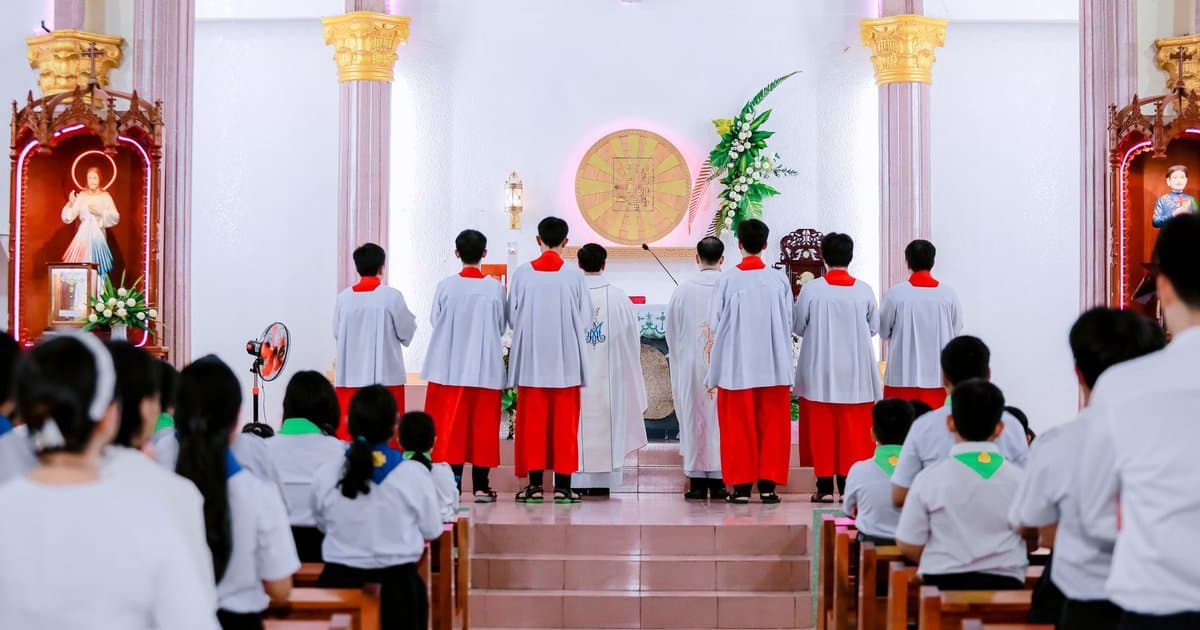
The word also marked the seams of Israel's worship. Several of the books that make up the Psalms end with a line like blessed be the Lord forever, amen and amen. That repeated amen was a congregation sealing a prayer as true and final. Early synagogue practice carried the habit forward without much change. The first churches did the same as they gathered and prayed together. Paul even mentions people saying amen to a prayer of thanks in one of his letters, treating it as ordinary congregational speech. To answer amen was to make someone else's words your very own.
Then the word takes a sharp turn in the Gospels. Jesus does something with amen that almost no one had done before him. Instead of using it to respond to another person, he puts it at the front of his own statements. Again and again he says amen, I say to you, and in John's Gospel the word is doubled, amen, amen. Older English Bibles translate this as verily or truly. The effect is striking, because he is not agreeing with someone else's truth, he is stamping his own words as firm and sure before he even finishes saying them.
The word even becomes a name. In the book of Revelation, a message opens with the words of the Amen, the faithful and true witness. Here amen is not a response and not an introduction, it is a title for Christ himself. The one who is called the Amen is being described as utterly reliable, the person in whom every promise holds. That is a long way from a throwaway word tacked onto the end of a prayer. It shows how much weight the early church placed on the term. They saw in it a short summary of faithfulness itself.
There is another reason amen stands out among words. It is one of the very few that traveled across the world almost untouched. Hebrew handed it to Greek, Greek handed it to Latin, and Latin passed it to English and countless other tongues, with barely a change in sound. Translators who turned nearly every other word into the local language often left amen exactly as it was. That is why a believer in one country and a believer on the far side of the earth say nearly the same word. Few words are shared so widely and so faithfully across cultures and centuries.
So the next time the word shows up at the close of a prayer, it helps to remember what you are actually saying. Amen is not a way to hang up the phone with heaven and move on. It is a claim that the words just spoken are firm, true, and worth standing behind. When you say it to a prayer you did not pray yourself, you are signing your name to it. When you say it to a promise, you are betting that the promise will hold. That small word asks for far more agreement than we usually give it, and it always has.