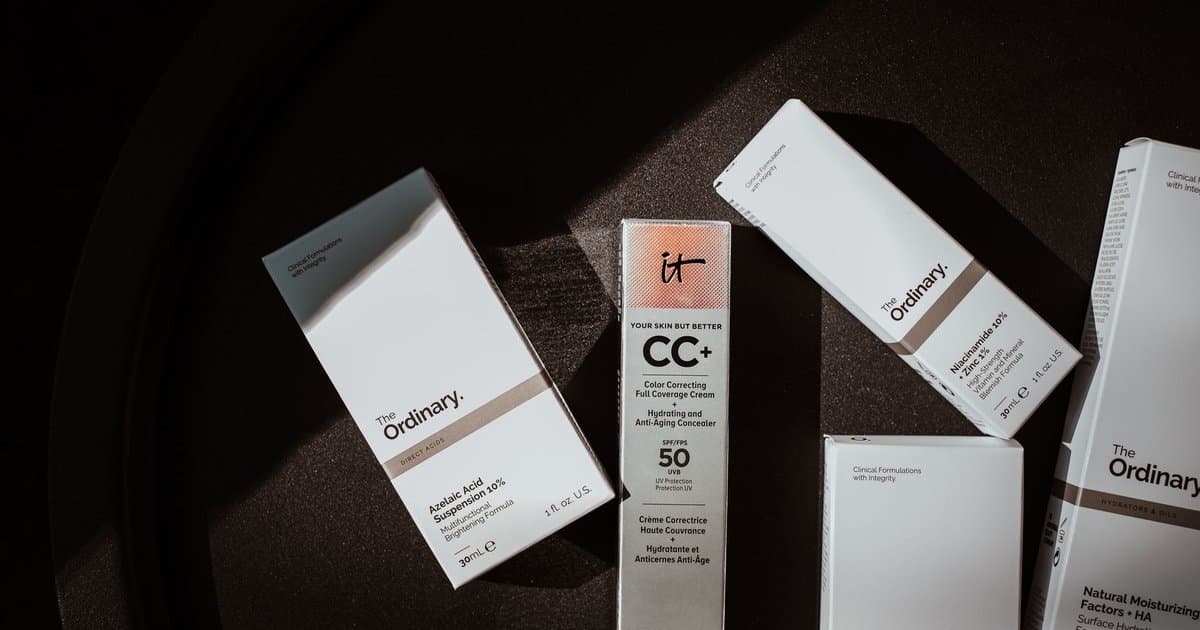
It is a comforting line on the label. Your foundation, tinted moisturizer, or setting powder says SPF 30, so it feels like sun protection is handled. You put it on, you head out the door, and you assume your skin is covered for the day. The uncomfortable truth is that the SPF in most makeup is doing far less than the number suggests. It is not that the label is a lie. It is that the way people actually wear makeup almost guarantees they never get the protection printed on the box.
The heart of the issue is how much product you would need. SPF ratings are measured in a lab using a thick, even layer of product across the skin. For your face and neck, that works out to a surprisingly large amount, close to a teaspoon of sunscreen. Almost nobody applies that much foundation, because a layer that heavy would look like a mask. People dab on a thin, light coat meant to even out their skin tone. That thin coat delivers only a small slice of the SPF on the label.
The gap is bigger than most people guess. To reach the SPF stated on a foundation, some dermatologists estimate you would need several times the amount you normally use. A pea sized dot blended over the whole face is nowhere near enough. Powders and tinted moisturizers make it worse, since they go on even thinner than liquid foundation. So a product labeled SPF 30 might be giving you the equivalent of a much lower number in real life. The rating is honest in the lab and misleading on your face.
Many people try to solve this by layering. They reason that a moisturizer with SPF 15, plus a foundation with SPF 20, adds up to strong coverage. Sun protection does not work that way. SPF numbers do not stack, so wearing two products does not give you the sum of the two. Instead you are roughly protected at the level of the single strongest layer, and only if that layer is applied thickly enough. Stacking thin coats of different products still leaves you short of real protection.
There is also the problem of time. Sunscreen breaks down as it sits on the skin and gets exposed to light, sweat, and touch. That is why the standard advice is to reapply every two hours when you are out in the sun. Makeup is not something most people reapply that way. You put it on once in the morning and leave it until night. By the afternoon, whatever thin protection it offered has largely worn off, rubbed away by your hands, your phone, and the hours.
The fix is not to throw out your makeup. It is to stop treating it as your sunscreen. Dermatologists suggest putting on a real broad spectrum sunscreen of at least SPF 30 first, as its own step. Let it absorb, then apply your makeup on top as usual. That way the sunscreen does the protecting and the makeup does the coloring, each doing the job it is good at. The SPF in the makeup becomes a small bonus rather than the whole plan.
Reapplying over a full face of makeup is the part people find hardest. The trick is to reach for products made for exactly that. Powder sunscreens brush over makeup without smearing it, and setting sprays with SPF can refresh coverage during the day. Neither is as strong as a proper morning layer, but both help you top up without starting over. Keeping one in a bag or a desk drawer makes the two hour habit realistic. A quick midday pass is far better than nothing at all.
So the label is not wrong, but it is easy to misread. The SPF in your foundation was measured under conditions you will almost never match in real life. Counting on it alone leaves your skin far more exposed than you think, day after day. The safer move is simple. Treat sunscreen as its own step, wear your makeup over it, and refresh when you can. Read the SPF on your makeup as a nice extra, not as the shield standing between you and the sun.