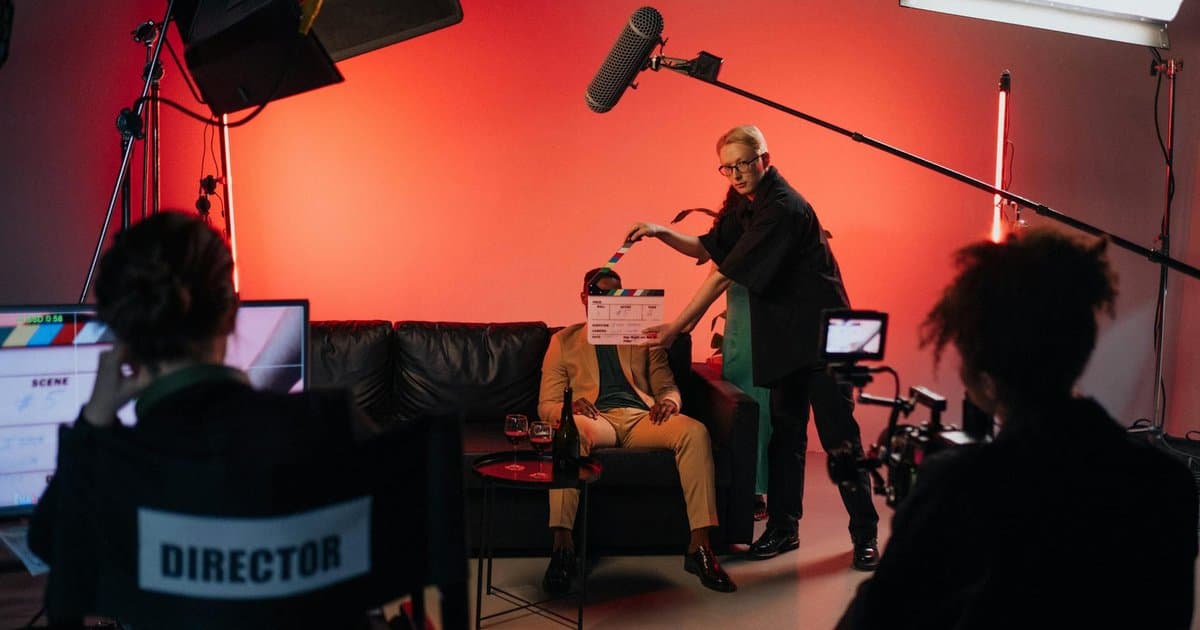
When a shoot runs long, the camera takes the blame, but the camera is rarely the problem. The footage itself takes seconds to capture once everything is ready. What stretches a two hour booking into four hours is the long list of small things that happen between takes, the parts no one sees in the final cut. A client watching the edit assumes the day was a smooth run of recording. The crew knows the day was mostly waiting, adjusting, and solving problems that had nothing to do with pressing record. Understanding where the time really goes is the difference between a calm set and a chaotic one.
The biggest hidden cost is lighting changes. Every time the subject moves to a new spot or the scene shifts, the lights have to move with them, and that means stands repositioned, power re-run, and exposure rebalanced. A single new setup can take fifteen or twenty minutes before the first frame is even shot. Crews that plan their setups in a logical order, grouping everything that shares a lighting position, save enormous time. Crews that jump around the shot list reset their lighting over and over for no reason. The footage looks identical either way, but one approach finishes by lunch and the other runs into the evening.
Audio is the second quiet thief of time. A room that sounded fine to the ear turns out to have a humming refrigerator, a buzzing light, or an air vent that the microphone hears clearly. Finding and killing those sounds takes patience, and sometimes it means moving the entire setup to a quieter corner. Microphone placement, battery checks, and a level test for every speaker all add minutes that feel small until you stack them across a long day. Skipping these steps does not save time, it moves the cost to the edit, where bad audio is far harder to fix. The careful sets handle this up front and never think about it again.
Then there is the human element, which no schedule fully predicts. The subject needs a moment to settle, flubs a line, or wants to redo a take they were not happy with. A client asks for a change mid-shoot, a delivery arrives, a phone rings, a child or a pet wanders into frame. These interruptions are normal and not anyone's fault, but they are real time, and a plan that assumes none of them will happen is a plan that fails. Experienced crews build a buffer into every booking precisely because they know the day will not run clean. The buffer is not padding. It is the honest acknowledgment that real work has friction.
The fix for all of this is not a faster camera or a bigger crew. It is preparation that happens before anyone arrives. A scouted location removes the surprise of bad power or bad acoustics. A shot list ordered by setup removes wasted lighting resets. A call sheet that tells everyone where to be and when removes the slow morning drift that quietly burns the first hour. The shoots that finish on time are not the ones with the best gear. They are the ones where the thinking was done in advance, so the day itself becomes a matter of execution rather than improvisation. That is the real reason some shoots wrap early and others never seem to end.