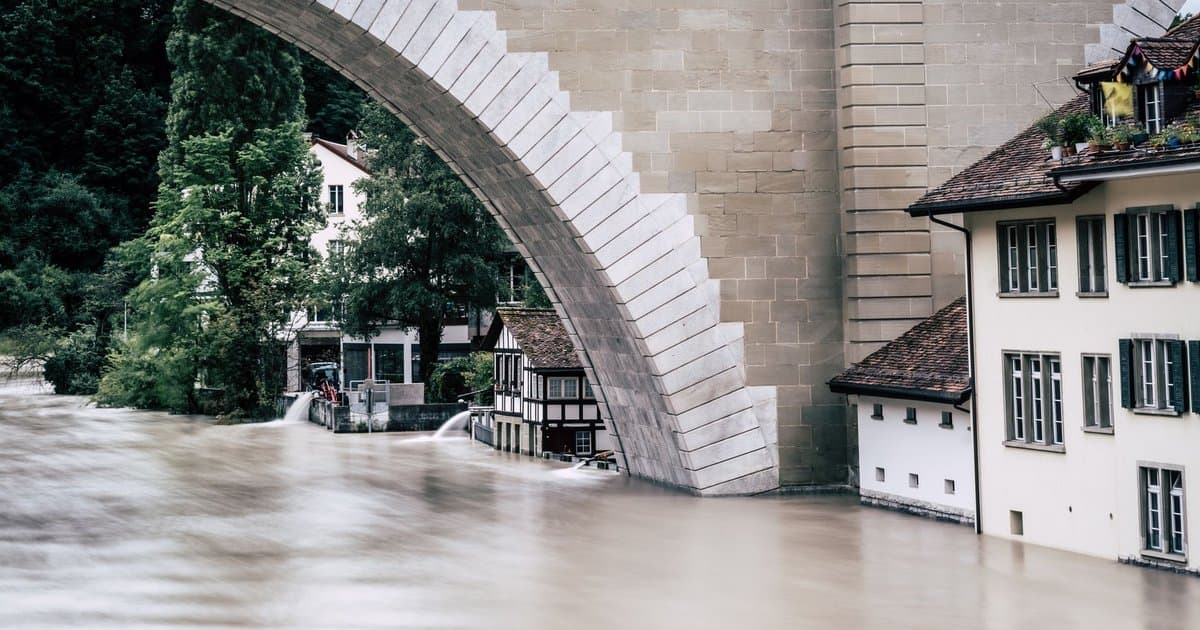
A house that has never flooded feels like a safe bet. The seller says it has stayed dry through every storm, the neighbors nod along, and there is no water stain in the basement to argue otherwise. Buyers hear that and cross flooding off their list of worries. The problem is that a clean history tells you about the past, not the future, and flood risk has been shifting faster than most maps and memories can keep up with. Plenty of homes that never took on water are now sitting in the path of a risk nobody priced in. The stakes are high because flood damage is expensive, often uninsured, and easy to inherit without realizing it.
Start with the maps everyone relies on. Federal flood maps were the standard reference for decades, but many of them are old, drawn before recent development and weather patterns changed how water moves. A property can sit just outside an official high risk zone and still flood, because the line on the map does not match the ground anymore. Newer independent flood models, which factor in heavy rainfall and changing climate, regularly show far more homes at risk than the official maps do. So a buyer who checks only the federal designation can walk away thinking a home is safe when a more current model would flag it clearly.
Then there is the way new construction changes water flow around an existing home. When developers pave land, add rooftops, and build up areas that used to absorb rain, that water has to go somewhere. A house that drained fine for thirty years can start taking on water after a new subdivision or shopping center goes up nearby, simply because the runoff now has nowhere else to travel. This kind of risk is invisible in a flood history, because the conditions that create it may be only a few years old. The home did not change. The land around it did, and the water followed.
The financial exposure is where this turns serious. Standard homeowners insurance does not cover flooding, a fact that surprises many buyers after it is too late. Flood coverage is a separate policy, and if a home is not in a mapped high risk zone, a lender will not require it, so most owners skip it to save money. That works right up until the day water gets in, and then the owner faces a repair bill that can run into the tens of thousands with no insurance behind it. Even a few inches of water can ruin floors, drywall, electrical systems, and appliances. The gap between feeling safe and being covered is exactly where people get hurt.
Resale adds another layer. As flood awareness grows and disclosure rules tighten, a home that floods even once can become hard to sell and expensive to insure for the next owner. Buyers are increasingly checking flood scores and asking questions that did not come up a decade ago. A property you bought believing it was low risk can lose value if the broader market starts treating its area as a flood concern. That means the risk is not only about the water itself. It is about what happens to the home as an asset once the risk becomes visible to everyone else.
It is worth understanding how this plays out locally, because flood risk is not spread evenly across a city. Low lying neighborhoods, areas near creeks and rivers, and spots downhill from new development tend to carry more risk than a single address suggests. A home can sit on relatively high ground while its street becomes a channel during heavy rain, trapping water against foundations. Talking to longtime neighbors can surface history that no disclosure form captures, like the year the road turned into a river. Local officials and planning departments often have drainage studies that tell you more than a national map ever will. The point is to treat flood risk as a question about the whole area, not just the house, because water does not respect property lines.
The good news is that protecting yourself is mostly about checking before you commit. Look up the property on a current flood risk model, not just the federal map, and treat any elevated score as a reason to dig deeper. Ask specifically about new development nearby and how drainage has changed. Get a flood insurance quote during your research, because the cost of a policy tells you how seriously insurers take the risk. Walk the lot during or right after heavy rain if you can, and notice where water pools. A few hours of checking is nothing compared to the years a single flood can cost you, and the home that never flooded is exactly the one most buyers forget to check.