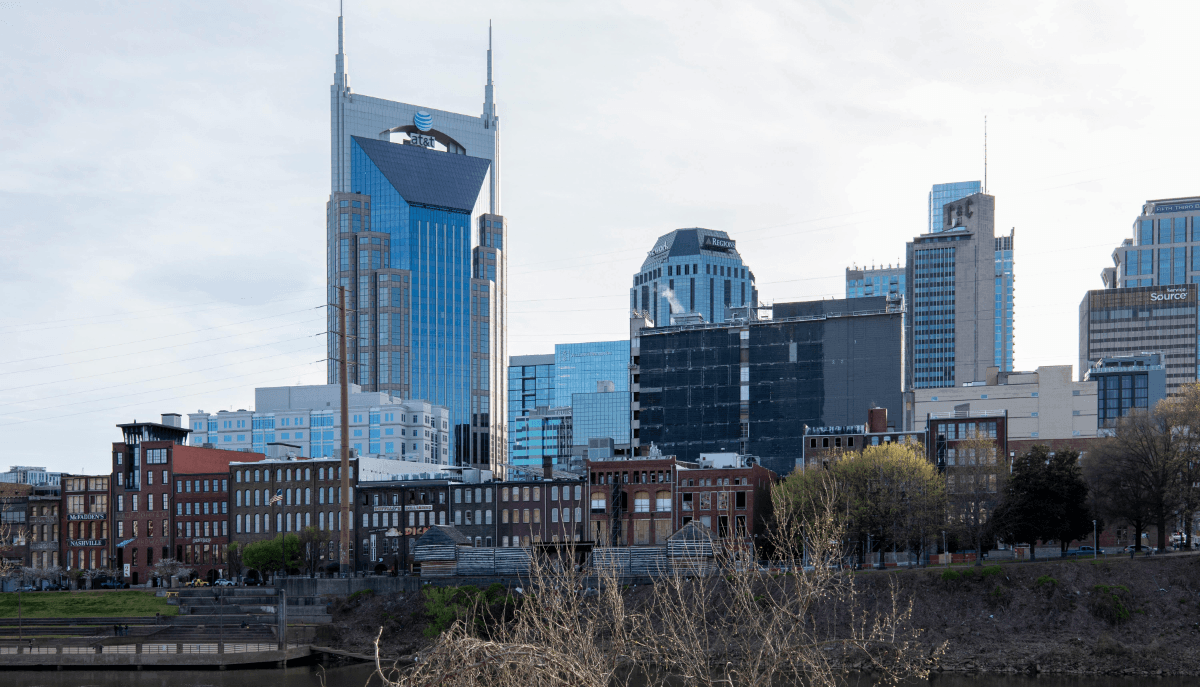
Nashville brought in $5.1 billion in real estate investment volume in 2025. That's a 40% jump over 2024, and it landed the city back among the top-tier growth markets in the country. Industrial led the way with $1.9 billion. Multifamily came in at $1.4 billion. Office had its best year in recent memory, with volume climbing 75% to just under $900 million. By the numbers, Nashville looks like a city that figured out its second act after the pandemic years scrambled everything.
But there is a problem sitting underneath those headline figures, and it is going to matter more in 2026 than the investment volume numbers suggest. The development pipeline is dry. As of Q1 2026, Nashville has approximately 729,000 square feet of commercial space under construction. For a city that regularly led the country in construction starts through 2019 and 2022, that number is not just low. It is a signal that something structural has changed in how Nashville gets built.
The reasons are layered and they compound on each other. Construction costs are still elevated from the supply chain disruptions of the past few years. Financing is more expensive than it was when many of the large projects from earlier this decade were underwritten. Land prices in desirable corridors have risen faster than projected rents in many asset classes, which compresses margins to the point where spec development does not pencil. Developers who want to build are running into a math problem that the investment climate alone cannot solve. Capital is available. Projects are not getting financed at scale because the numbers on the proforma only work in specific conditions that are not broadly present right now.
What is getting built is telling. The projects underway are predominantly built-to-suit or mixed-use anchored by a specific tenant or institutional partner. Oracle is preparing to start construction on its River North headquarters campus, which will eventually include up to 13 buildings and a pedestrian bridge connecting to Germantown. AJ Capital Partners broke ground on an 18-acre mixed-use development along Harding Pike near Belle Meade. Elmington Capital Group picked up two multifamily properties near 21st Avenue South in Hillsboro Village. New office space is planned at 1316 Adams Street in Germantown, increasing density near the East Bank. Six luxury hotel brands including Equinox, Ritz-Carlton, and St. Regis are expected to break ground by year's end. These are serious projects led by serious developers, but they are exceptions, not the trend.
The near-term implication for buyers and investors is straightforward: supply is constrained and it is going to stay constrained for the next 18 to 24 months. That is good news for existing asset values and challenging news for anyone hoping that new inventory will ease competition. The multifamily sector in particular is facing a situation where demand has not softened significantly but new units are not coming online at the pace that Nashville's population growth historically required. Rent growth has moderated from the peak years, but the underlying pressure has not disappeared. It has just redistributed into a market where older inventory is absorbing demand that would normally go to new product.
For the people who are actually building wealth through Nashville real estate right now, the move is not waiting for the market to normalize. The move is understanding exactly what the pipeline gap means for specific submarkets and specific asset types. The corridors nearest to the Oracle campus and the East Bank transit infrastructure are going to attract institutional capital before the general public realizes the magnitude of what is being built there. Germantown, North Nashville, and the industrial submarkets east of downtown are where the deal flow is concentrating. Anyone who has watched how Nashville corridors appreciate around major institutional anchors knows the pattern. The window to get in front of it is not large, and the development pipeline numbers are telling you that window has not closed yet. The investment money is here. The building has slowed. That combination creates opportunity if you know where to look.