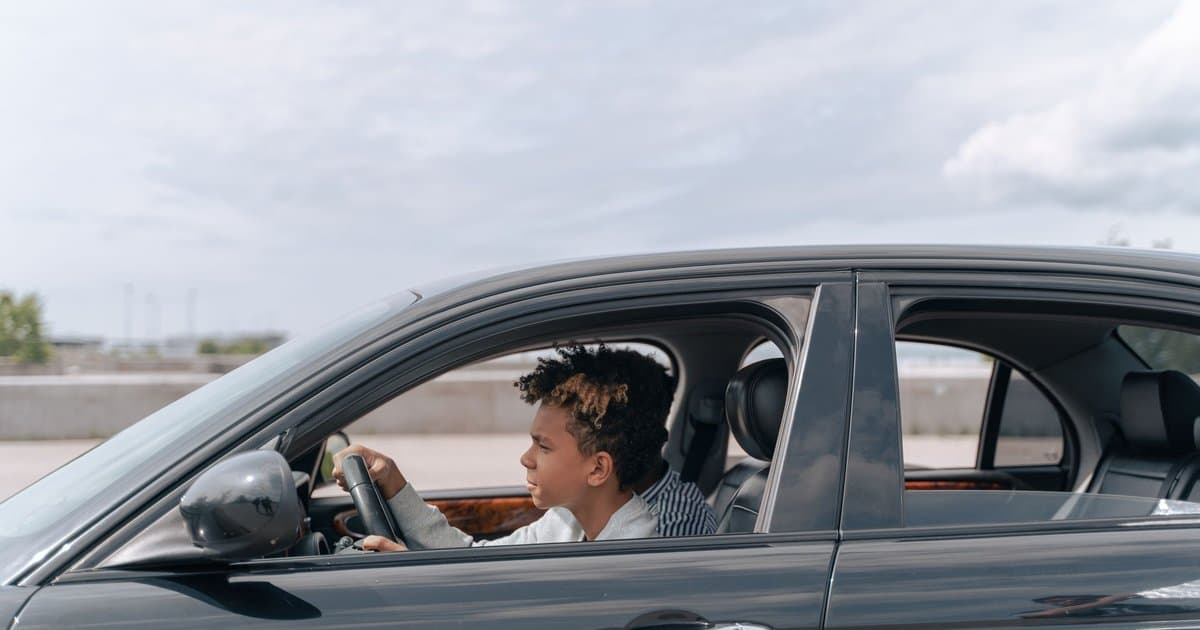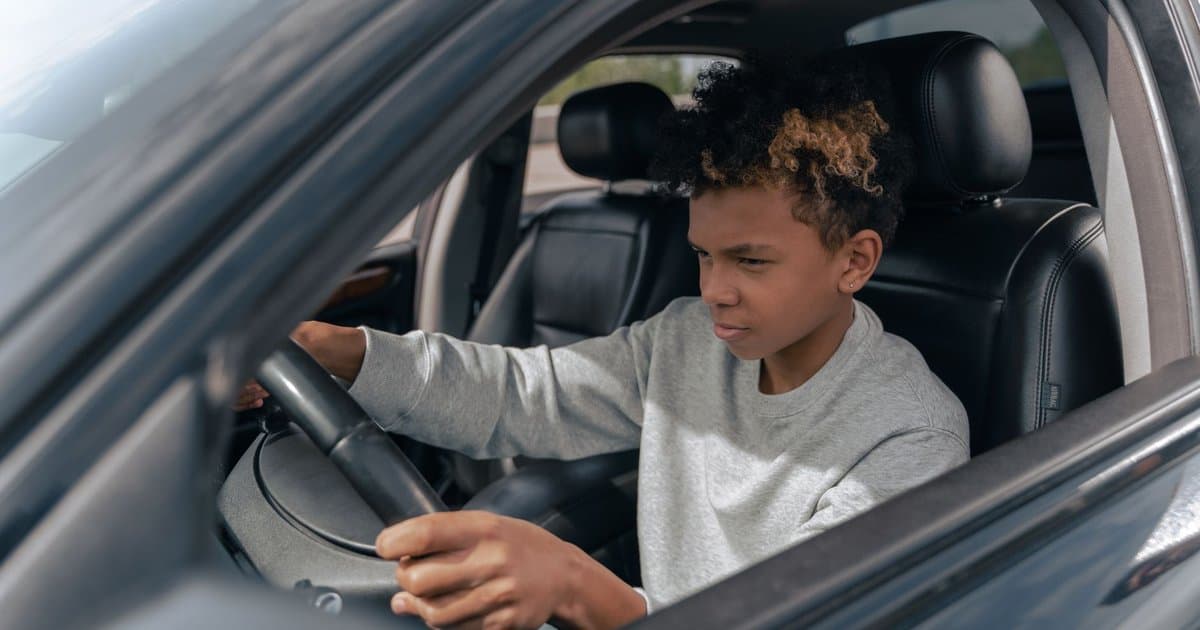
Parents spend months worrying about whether their teenager can handle a highway merge, and almost no time worrying about who is sitting in the back seat. The research says the second question matters more. Work from the AAA Foundation for Traffic Safety found that the risk of a 16 or 17 year old driver dying in a crash rises about 44 percent with one passenger under 21 in the car and no older passenger present. With two young passengers, the risk roughly doubles. With three or more, it roughly quadruples. The same analysis found that risk dropped about 62 percent when at least one passenger aged 35 or older was in the vehicle, which means the seat next to your teenager is either the biggest danger in the car or the biggest protection in it.
The reason is not that teenagers stop caring about safety when their friends show up. It is that driving is a task that eats attention, and a new driver has almost none to spare. An experienced driver processes lane position, following distance and mirror checks largely on autopilot after years of repetition. A driver with six months of solo experience is still doing all of that consciously. Add conversation, music arguments, a phone being passed around and someone reacting to something out the window, and the attention budget runs out. Crash reports from this age group show a pattern of late braking and missed hazards rather than reckless speed alone, which is what distraction looks like from the outside.
Timing compounds it. Naturalistic driving research that put cameras in cars with newly licensed teenagers found crash and near crash rates were highest in the first months after licensing and dropped as experience accumulated. The most dangerous stretch of a young driver's life is not the learner period when a parent is in the passenger seat. It is the window right after the license arrives, when supervision disappears overnight and the driving looks confident before the judgment catches up. Night hours make it worse, since roughly a third of fatal teen crashes happen between 9 p.m. and 6 a.m. even though far less driving happens then. Weekend nights carry both risk factors at once.
Graduated driver licensing laws exist because of exactly this data, and they work. Nearly every state limits passengers and night driving for the first 6 to 12 months of licensure, and studies of states that adopted strong programs found meaningful drops in fatal crashes among 16 year olds. The catch is that the limits are often written loosely and enforced lightly. Many states exempt siblings from passenger limits, which is reasonable for logistics and useless for the attention problem. Others allow so many exceptions that the rule stops functioning. Parents who assume the state law is doing the work are often relying on a rule that expires before their teenager has driven through a single winter.
The household rules that actually change outcomes are boring and specific. No passengers for the first six months, and no more than one for the six months after that. No driving after 10 p.m. during that first year unless it is a planned trip with a known route. Phone in the glove box or in do not disturb while driving mode, set up by the parent, not promised by the teenager. A hard rule that the driver, not the passengers, decides the music and the route. These are not trust statements. They are load limits on a task the brain has not automated yet, and framing them that way lands better with a 16 year old than a lecture about responsibility does.
Supervised practice is the other lever, and most families stop short of what the research supports. State minimums commonly sit at 40 to 50 hours, which sounds like a lot until you break it down. That total should include rain, heavy traffic, highway merges, parking garages, night driving and unfamiliar roads, because a teenager who logged 50 hours of daylight loops around a familiar neighborhood has practiced one narrow scenario many times. Driving instructors will tell you the same thing about what shows up in a first crash. It is almost never the maneuver that got drilled. It is the situation that never came up during practice and gets encountered alone for the first time at 40 miles per hour.
The conversation worth having with a teenager is not about statistics, because statistics do not feel personal at that age. It is about the specific moment when three friends are in the car, someone says something funny, and the car ahead brakes. The point is not that they are a bad driver. The point is that no new driver has the spare attention for that moment, and the fix is deciding in advance who gets to be in the car and when. Families that write the rules down, revisit them every few months as experience builds and tie privileges to time behind the wheel rather than age tend to get through the first year without the phone call. The data is clear about which year matters most.