You set up for a heavy set of deadlifts or rows, and the lift does not fail in your legs or your back. It fails in your hands. The bar starts to roll out of your fingers and you have to drop it while the bigger muscles still have plenty left. That is one of the most common ceilings people hit in the gym, and it has very little to do with how strong the rest of you is. Your grip is its own system, and when it is the weak link, every pulling exercise you do gets limited by it. Here are the four reasons it tends to give out first, and what each one is actually telling you.
The first reason is that grip is built on small muscles and tendons that fatigue faster than large ones. The forearm flexors and the connective tissue running into your fingers are doing a lot of work to hold a heavy load, and they simply do not have the size or endurance of your glutes, hamstrings, and lats. When you load a barbell with weight those big muscles can handle, the grip is being asked to match a level it was never trained to. It is not weak in a general sense. It is undertrained relative to the muscles around it. That gap is normal, and it is also fixable, which is the whole point.
The second reason is that you are probably relying on a weak grip style without realizing it. A standard double overhand grip, both palms facing you, is the hardest way to hold a bar because the weight wants to roll your fingers open. Most people never progress past it for their heaviest pulls. A mixed grip, one palm forward and one back, locks the bar in and instantly adds capacity. A hook grip, where your thumb is trapped under your fingers, does the same thing differently. Neither is cheating. They are tools, and refusing to use them means your grip caps a lift your body could otherwise finish. Save the pure overhand work for lighter sets where building grip is the actual goal.
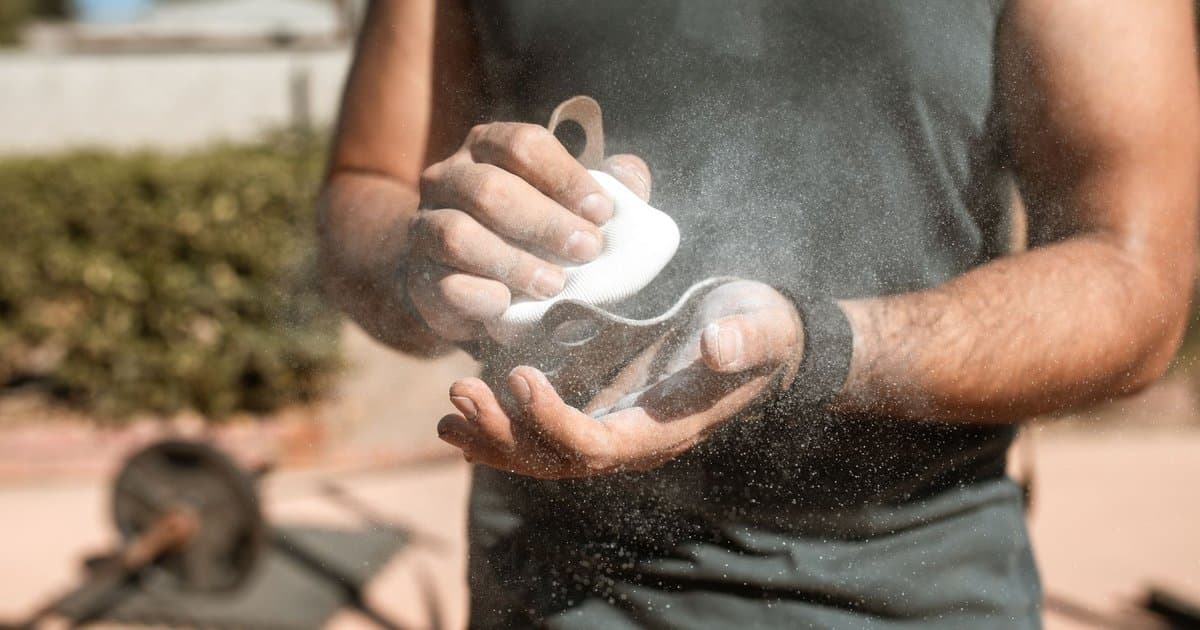
The third reason is sweat and bar condition, which sounds minor until it ends your set. A smooth, worn barbell with no knurling, or hands that are damp, removes most of the friction your grip depends on. You can be plenty strong and still lose the bar because there is nothing for your skin to bite into. This is why chalk exists and why serious lifters treat it as basic equipment rather than a luxury. Chalk pulls moisture off your palms and lets your hand actually lock onto the knurling. If your gym does not allow loose chalk, a liquid chalk solves the same problem without the dust. Fixing friction alone can add noticeable reps before your hands quit.
The fourth reason is that you train grip indirectly and then wonder why it lags. Every other muscle gets dedicated attention. You program sets and progress for your legs, your chest, your back. Grip usually gets whatever incidental work happens during other lifts, and that is not enough to push it forward. If it is your limiter, it deserves its own slot. Holding the top of a deadlift for a few seconds, doing timed hangs from a bar, carrying heavy dumbbells for distance, or using a thick bar all build the forearms and fingers directly. A few focused minutes a couple of times a week closes the gap faster than people expect, because the grip responds well to consistent loading.
The reason this matters goes beyond the frustration of dropping a bar. When your grip fails early, you are leaving training stimulus on the table for your back and legs. Those muscles never get the full set because the lift ended before they were challenged. Over weeks and months that adds up to slower progress on your biggest movements, not because you cannot pull the weight, but because you cannot hold it long enough to make the rest of you work. The grip becomes a quiet governor on everything you do that involves a bar in your hands.
So if your hands are the first thing to go, treat that as useful information rather than a flaw. It tells you exactly where to put attention. Use a stronger grip style on heavy days, add chalk to fix friction, and give the forearms direct work the same way you would any other muscle you wanted to grow. Do those things for a few weeks and the failure point moves. The bar stops sliding, the big muscles finally get the full load they were ready for, and lifts that felt stuck start moving again. The weak link was never your strength. It was the one part of the chain you never trained on purpose.