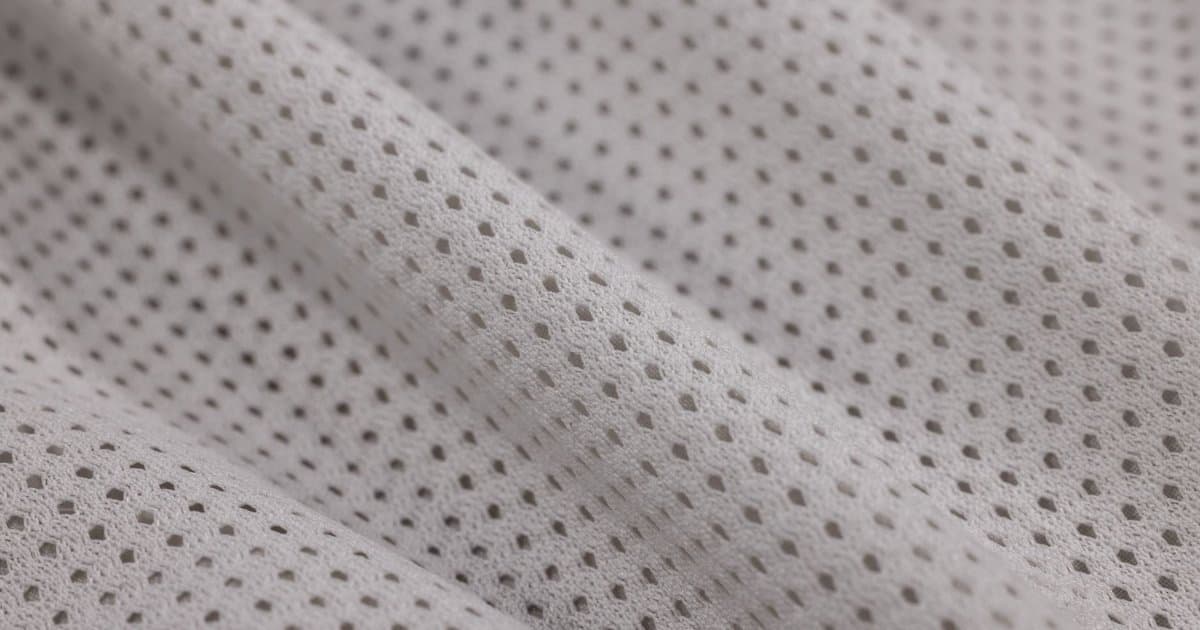
Cotton has a reputation it did not entirely earn. Ask most people what to wear in the heat and they will say cotton, because cotton is natural and natural sounds cool and light. The feeling that backs this up is real. Put on a cotton shirt on a hot day and it does feel like it is doing something. What it is doing is absorbing, and absorbing is a very different job from breathing. Once you separate the two, a lot of uncomfortable afternoons start making sense. The word natural is doing a lot of work there.
Breathability is actually two properties wearing one name. The first is air permeability, which is how easily air passes through the weave. The second is moisture vapor transport, which is how well the fabric moves sweat away from your skin and lets it evaporate. A fabric can be strong at one and weak at the other. Cotton scores reasonably well on airflow depending on the weave, and it is the second property where it falls apart. That gap is the whole story.
Cotton fiber is thirsty by nature. The cellulose it is made of attracts water, so sweat gets pulled into the fiber and held there instead of moving to the surface and evaporating. Cotton can hold many times its own weight in water, which is a fine trait in a towel and a bad one in a shirt. A towel is supposed to hold water, a shirt is not. Once saturated, the fabric stops taking in more and simply stays wet against you. Wet cotton also pulls heat away from your body far faster than dry cotton, which is why a soaked cotton shirt feels clammy the moment a breeze hits or the sun goes down. Outdoor guides have a blunt saying about cotton in cold wet conditions, and they are not being dramatic.
Merino wool does the opposite thing well. Its fibers pull moisture as vapor into the core of the fiber while the outer surface still feels dry to the touch. That buffering is why merino feels comfortable across a wider temperature range than its weight suggests. It also resists odor unusually well, which is why people wear the same merino shirt for days of travel. The tradeoffs are honest ones. It costs more, it wears out faster in high abrasion spots, and it needs gentler care.
Technical synthetics attack the problem from the other side. Polyester and nylon repel water rather than absorbing it, so sweat travels along the outside of the fiber, spreads across a wide area, and evaporates quickly. That is why a running shirt dries in minutes while a cotton tee is still heavy an hour later. The weakness is odor, since the same surfaces that shed water hold onto the oils that bacteria feed on. Anyone who owns gym clothes knows this without needing a study. Wash them inside out and skip the fabric softener.
The real champion in dry heat is linen, and it gets far less credit than it deserves. Linen fibers are stiff, so the fabric holds itself slightly off the skin instead of clinging, which creates a thin moving layer of air. The weave is typically open, so actual airflow is high. It absorbs moisture like cotton but releases it much faster, so it does not stay soaked the same way. The cost is that it wrinkles almost immediately, and that is not a defect to be fixed. It is the direct result of the fiber stiffness that makes it work. It is a feature of the fiber, not a flaw in the shirt.
None of this makes cotton a bad fabric. In dry heat with low exertion, a loose cotton shirt is comfortable, cheap, and pleasant against skin. It does not build static, it does not melt near a flame the way some synthetics can, and a good weave lasts years. It is a poor choice for hard exercise, for cold weather layers next to your skin, and for long travel days where you will sweat and then sit in air conditioning. One shirt cannot do every job. The failure is not the fabric. It is the assumption that one fabric fits every situation.
So choose by the job instead of by the word natural. Next to your skin during real exertion, pick merino or a technical synthetic and let it move the sweat. For sitting still in dry heat, linen first and cotton second. For cold and wet, keep cotton out of every layer that touches you. Blends can split the difference, and a cotton blend with a small amount of synthetic dries meaningfully faster than pure cotton. Read the fiber content tag before the price tag, because that small block of text tells you more about how a garment will actually feel than anything on the front of the store.