Here is a number that is almost too big to feel. Your body is built from about 37 trillion cells. Written out, that is 37 followed by twelve zeros. Your brain cannot really picture a pile that size, and that is the problem with numbers this large. Most of those cells are so small that millions would fit on the head of a pin. Each one is a tiny living unit with a job to do. You are not one solid thing. You are a crowd so large it breaks the imagination.
That figure is not a wild guess. It comes from a 2013 study by a team of European researchers, published in a journal called the Annals of Human Biology. It was the first real attempt to build the number from the ground up. Before their work, textbook estimates were all over the map, from a few trillion cells to hundreds of trillions. The team picked a standard adult, a man near thirty years old, about 70 kilograms and 1.72 meters tall. Then they broke the body into organs and cell types and counted each group on its own. When they added everything up, the total landed close to 37.2 trillion. Newer estimates sit in the same range, somewhere around 30 to 37 trillion.
Why is something so basic this hard to pin down? Because cells differ wildly in size and in how tightly they pack together. A fat cell is huge next to a red blood cell. You cannot simply weigh a person and divide, because a gram of one tissue holds a very different count than a gram of another. The researchers had to treat each organ almost like its own small census. That is why the honest answer is a careful estimate, not a hard, fixed count. Anyone who gives you an exact number down to the last digit is guessing.
One type of cell runs away with the total. Red blood cells make up the large majority of your count, roughly 80 percent or more. They are tiny, and a mature one does not even carry a nucleus. So most of you, by sheer count, is a fleet of little discs hauling oxygen. Your brain, by contrast, holds around 86 billion nerve cells, which sounds huge until you set it beside trillions. Line the types up by how many there are, and the ranking looks nothing like you would guess. Count, size, and importance are three different things, and they do not line up.
The number is also a moving target, because your cells never stop turning over. You lose and rebuild millions of them every second of every day. The lining of your gut refreshes in a matter of days, your skin over a few weeks, and your red blood cells over about four months. Bone takes years to fully cycle, and a few cell types, like many brain neurons, tend to stay with you for life. So the 37 trillion is a snapshot of a body in constant motion. The you of last month was built from slightly different parts than the you of today.
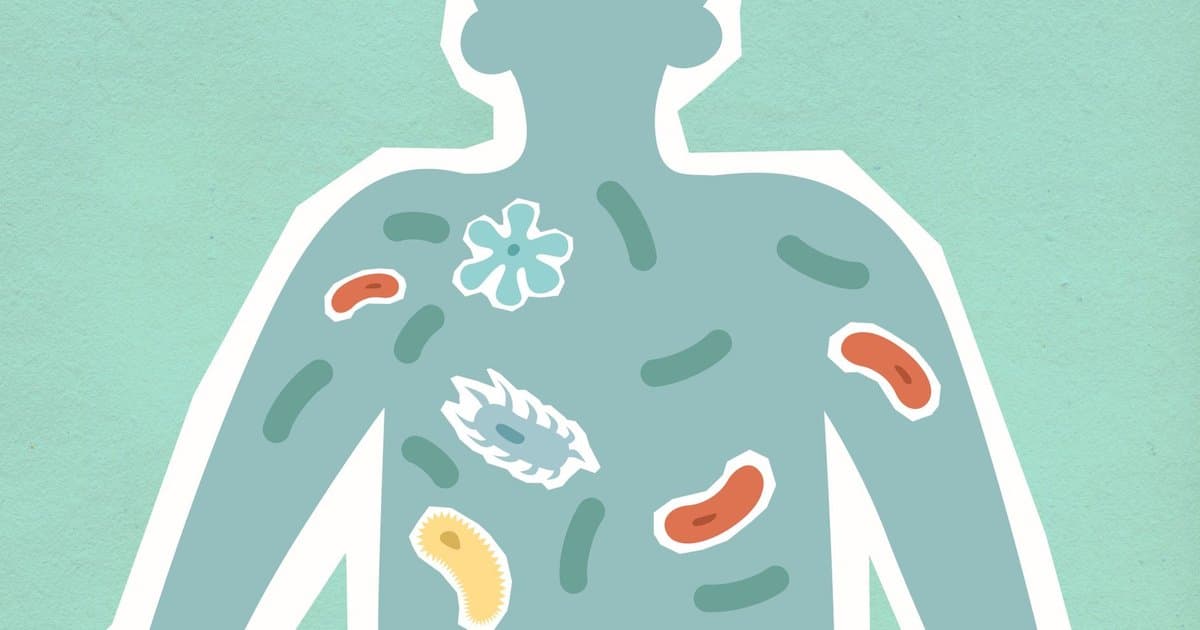
There is one more twist that surprises people. You are not carrying only human cells. Your body is also home to roughly 38 trillion bacteria, most of them living in your gut. For years people repeated that microbes outnumbered human cells ten to one, but that claim has been corrected. The real ratio is closer to one to one, give or take. In plain terms, the human part of you and the microbe part of you are about even. You are less a single creature and more a walking ecosystem that carries its own weather.
So what do you do with a fact this large? Let it change how you picture health. When you sleep, eat, and move, you are feeding a colony, not oiling a machine. Every one of those cells needs oxygen, water, and fuel delivered on time. Harm one system, and the effect ripples out to millions of cells that depend on it. Small habits, repeated daily, reach places no single treatment can. That is part of why rest and plain food matter at a level you will never see or feel directly.
The point of the 37 trillion is not to memorize it for trivia night. It is to sit with the size of what your body handles without ever asking you for a thing. You are running a city that never sleeps, never bills you, and rarely sends a warning. Most of the time it just works in the background. When you treat your body as something fragile and worth guarding, you are closer to the truth than when you treat it like a simple tool. Respect tends to follow once you grasp the scale. That crowd of cells is the most complex thing you will ever own.