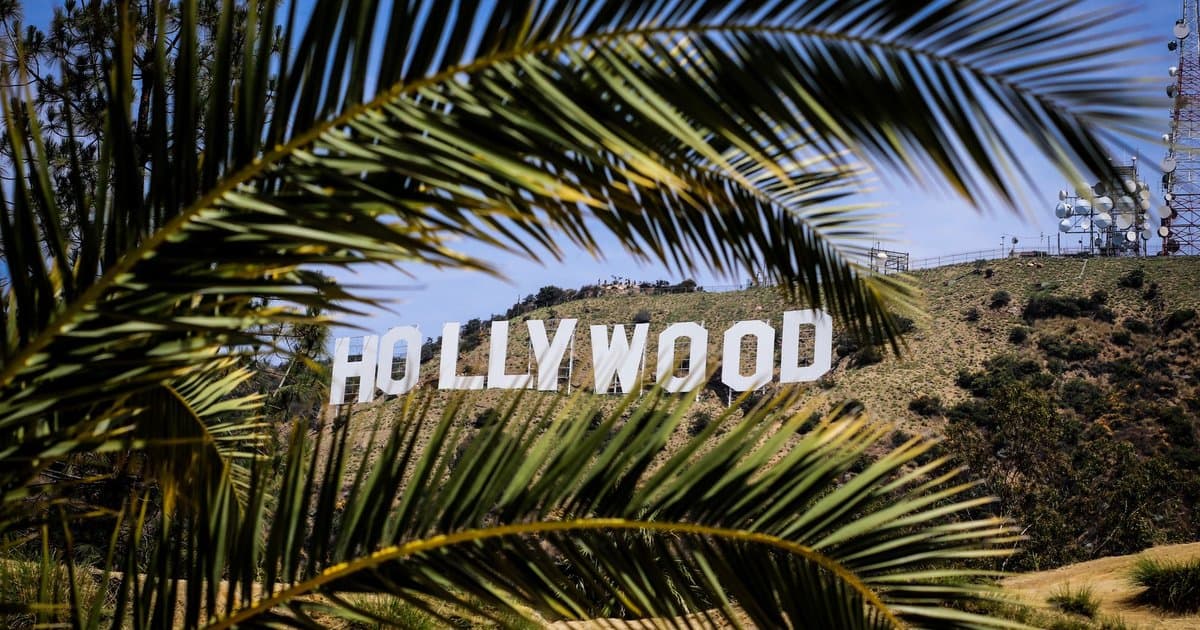
The Hollywood sign is one of the most famous landmarks on earth. Most people assume it was built to honor the film business. That is not what happened. When the sign went up in 1923, it had nothing to do with movies at all. It was a billboard for a housing development. The full sign read HOLLYWOODLAND, and it was meant to sell lots on the hills above Los Angeles. The people who paid for it wanted to move houses, not celebrate cinema. The story of how it became a symbol of the film world is stranger than the sign itself.
A group of real estate developers put up the money. They were selling a new subdivision called Hollywoodland, and they wanted something people could see from far away. The sign had thirteen letters, and each one stood around thirty to fifty feet tall. Crews framed the letters in wood and sheet metal and studded them with thousands of light bulbs. At night the sign flashed in parts, first HOLLY, then WOOD, then LAND. It cost about twenty one thousand dollars to build, which was real money in 1923. The whole thing was only supposed to stand for about a year and a half. Nobody planned for it to last a century.
The sign was never really maintained the way you would expect. By the 1940s it was falling apart. The caretaker who lived near the sign lost his job, and the lights went dark. In 1949 the Hollywood Chamber of Commerce stepped in to fix it. They made one big change that turned a local ad into a global icon. They tore down the last four letters, LAND, and kept only HOLLYWOOD. From that point on the sign no longer pointed to a housing tract. It pointed to the whole idea of the movie business, and the name stuck.
The rescue did not fix the sign for good. Decades of weather and neglect left it in bad shape again. By the late 1970s the letters were crumbling, and one had fallen over completely. The paint was peeling and the wood was rotting. In 1978 a public campaign raised money to rebuild the sign from scratch in steel. Donors paid about twenty seven thousand seven hundred dollars for each letter. The list of sponsors was full of famous names. Hugh Hefner hosted a fundraiser, the singer Andy Williams took a letter, and rocker Alice Cooper paid for an O in memory of Groucho Marx.
The new sign is the one you see today. It is made of steel, stands about forty five feet tall, and runs longer than a football field. It sits on Mount Lee and is watched over by cameras and a fence to keep people away. Climbing up to it is against the law, and the security is serious. The land around it is protected as part of a public park. Guides and helicopters bring visitors close to it every day. What began as a cheap wooden ad is now treated like a national treasure. The city guards it the way it would guard any piece of history.
There is a lesson buried in this story that has nothing to do with Los Angeles. Things built for one reason often end up meaning something else entirely. The developers wanted to sell houses, and the houses sold and were forgotten. The sign they treated as throwaway marketing outlived the whole project. Value is not always where the people who made something think it is. Sometimes the byproduct becomes the main event, and the main event fades. That reversal happens more often than we notice. The next time you see that white sign on the hill, remember it started as a way to move real estate.