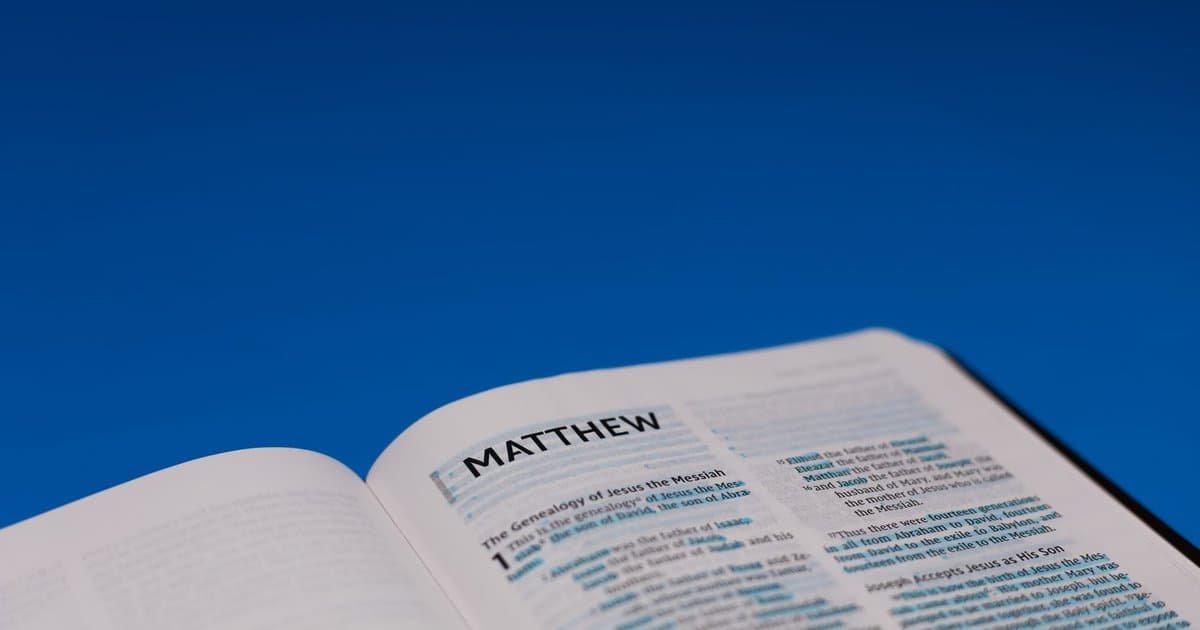
Most people picture the Bible as a single book that dropped out of the sky in one piece. The real story runs through thousands of hand copied pages spread across libraries, monasteries, and museums. Scholars who count these copies work from a running catalog kept in Münster, Germany, at a research center built for this exact job. Their tally for the Greek New Testament sits at roughly 5,800 separate manuscripts. Some are full books you could hold in two hands. Others are scraps the size of a credit card with a few words on them. Together they form the largest paper trail any ancient text has ever left behind.
To feel the weight of that number, set it next to the rest of the ancient world. Homer's Iliad, the most copied piece of Greek literature outside the Bible, survives in around 1,900 manuscripts. Many famous works from Rome and Greece rest on a few dozen copies, and some hang on by fewer than ten. The oldest of those copies often sit hundreds or even a thousand years after the author died. For the New Testament, the gap between writing and surviving copies is far shorter. A few fragments date to within a century or two of the originals. That closeness is rare enough that historians treat it as its own kind of evidence.
It helps to know what a manuscript really is. Before printing presses, every copy of a text had to be written out by hand, letter by letter. A scribe would sit with an older copy in front of him and reproduce it onto new material. Early Christians used papyrus, a paper made from reeds, and later switched to parchment made from treated animal skin. A single full New Testament could take months of steady work to produce. Because each copy was made by a person, no two are exactly alike. Those small differences are the heart of what scholars study.
Here is the part that surprises people on both sides of the question. Across all those copies, scholars have found hundreds of thousands of small differences in wording. That sounds alarming until you see what the differences are. The large majority are spelling slips, swapped word order, or a scribe skipping a line and catching it later. A handful touch on longer passages that most modern Bibles already flag in the footnotes. Very few affect any point that a church would call essential. The sheer number of copies is what lets scholars spot these changes in the first place.
This is the strange gift hidden in the pile. When you only have two or three copies of a text, a mistake in one of them is hard to catch. When you have thousands, a single scribe's error stands out like a wrong note in a choir. Researchers can line the copies up, compare them, and trace where a change entered and when. More copies mean more cross checks, not more confusion. That is why textual scholars, even ones with no faith of their own, treat the New Testament as unusually well preserved. The volume works in the reader's favor.
Some of these copies have become small celebrities in their own right. A scrap known as P52, holding a few lines from the Gospel of John, is often dated to the first half of the second century. Larger codices from the fourth century, written on fine parchment, contain most of the Bible in one bound volume. These sit today in places like the British Library and the Vatican. People line up to see them behind glass. Each one is a link in a chain that runs from a working scribe to the page a reader opens now. The physical objects still exist and can be examined.
The Greek copies are only part of the record. As the faith spread, the text was translated into Latin, Syriac, Coptic, Armenian, and other tongues, and those versions survive in the tens of thousands. On top of that, early church writers quoted scripture so often in their letters and sermons that scholars say you could rebuild most of the New Testament from those quotes alone. So the true evidence base is far wider than the Greek number suggests. It is a web, not a single thread. That web is what makes the text so hard to lose. Damage to any one strand barely dents the whole.
None of this forces a person to believe what the pages say. Belief is a separate step, and an honest one. But the common idea that the Bible is a shaky, much changed document does not match the physical record. By the plain standards historians use for any old text, the New Testament is the best attested writing to come out of the ancient world. That is a claim about paper and ink, not just about faith. You can check it in a library. The copies are still there, waiting to be counted.