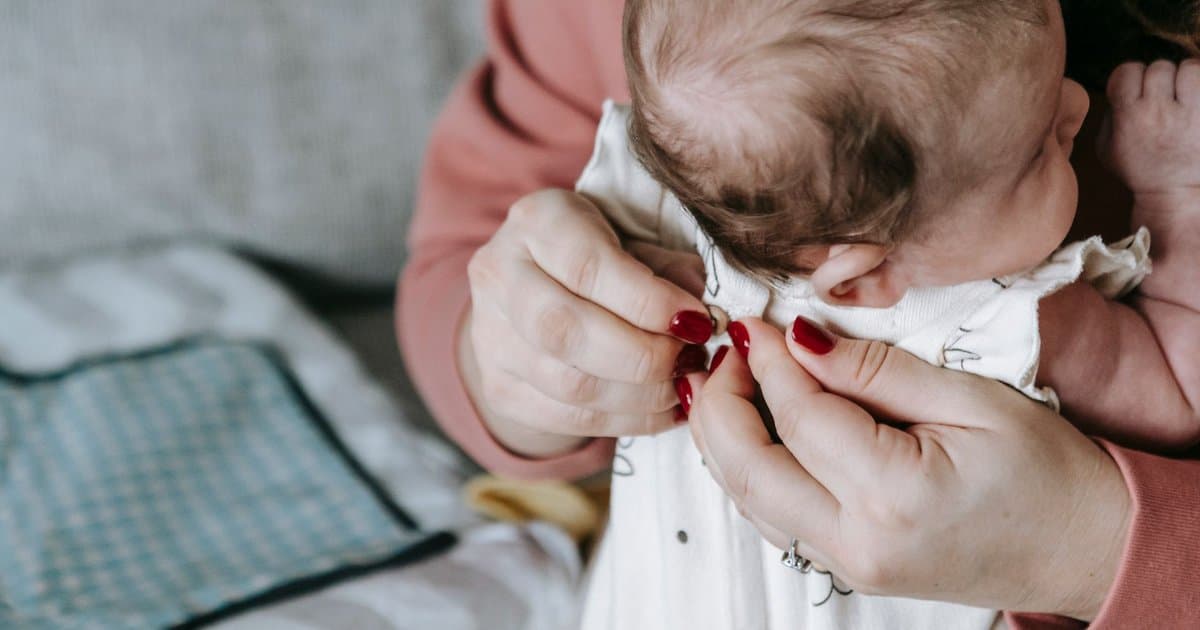
New parents often wonder if their baby can really see them. The honest answer is that a newborn sees, but only in a small, blurry window. In the first weeks, a baby can focus best on things about 8 to 12 inches away. Anything closer or farther turns soft and unclear. That short range is not a flaw. It happens to match the distance from a feeding baby to a parent's face.
That match is worth sitting with for a moment. When you hold your baby to feed, your face lands right in that clear zone. The child cannot study the far wall or the window, but it can study you. Your eyes, your mouth, and the shape of your face fall into focus. Those early looks help the baby start to link your face with comfort and food. The narrow view gently points the baby toward the people who care for it.
The reason for the blur is simple growth. A newborn's eyes and the brain behind them are still very young. The parts that handle sharp sight and fine detail need time to develop. Color also comes in slowly, so early weeks lean toward strong contrast like black and white. Bold patterns and faces catch a baby's eye more than soft pastel shades. Over the first months, the picture sharpens as the whole system matures.
This is why closeness in the early days carries real weight. Holding your baby near your face is not just sweet, it is useful for growth. Each feeding becomes a small lesson in faces, sounds, and warmth all at once. The baby hears your voice, feels your hold, and sees your eyes in one moment. Those linked signals help build trust and early bonds. What feels like simple cuddling is quiet, steady learning.
Distance changes what a baby can take in, and that shapes your choices. Faces held close will land far better than toys across the room. A parent leaning in during a diaper change gives the baby a clear target. Slow, near movements are easier to track than fast, far ones. You do not need bright gadgets or busy mobiles in these first weeks. Your own face, up close and often, is the richest thing to see.
There is comfort in this for tired parents as well. You may worry that you are not doing enough to teach your child. The truth is that ordinary care already gives the baby what it needs most. Feeding, holding, and talking softly all sit inside that clear zone. You are the lesson, and you are already there many times a day. Simple presence does more than any special product could.
As the weeks pass, you will see the range begin to stretch. The baby starts to follow you across the room with its eyes. It notices faces from farther away and reacts to more color. Smiles arrive, then longer gazes, then real tracking of moving things. Each step shows the eyes and brain growing stronger together. The small window slowly opens into a wide, curious view.
So if your newborn seems to stare only when you are near, that is exactly right. The close focus is built for this season of life. It draws the baby toward faces, warmth, and the voices it already knows. Those first weeks are less about far sights and more about near bonds. Lean in, hold close, and let your face be the thing they learn first. The distance was made for you.