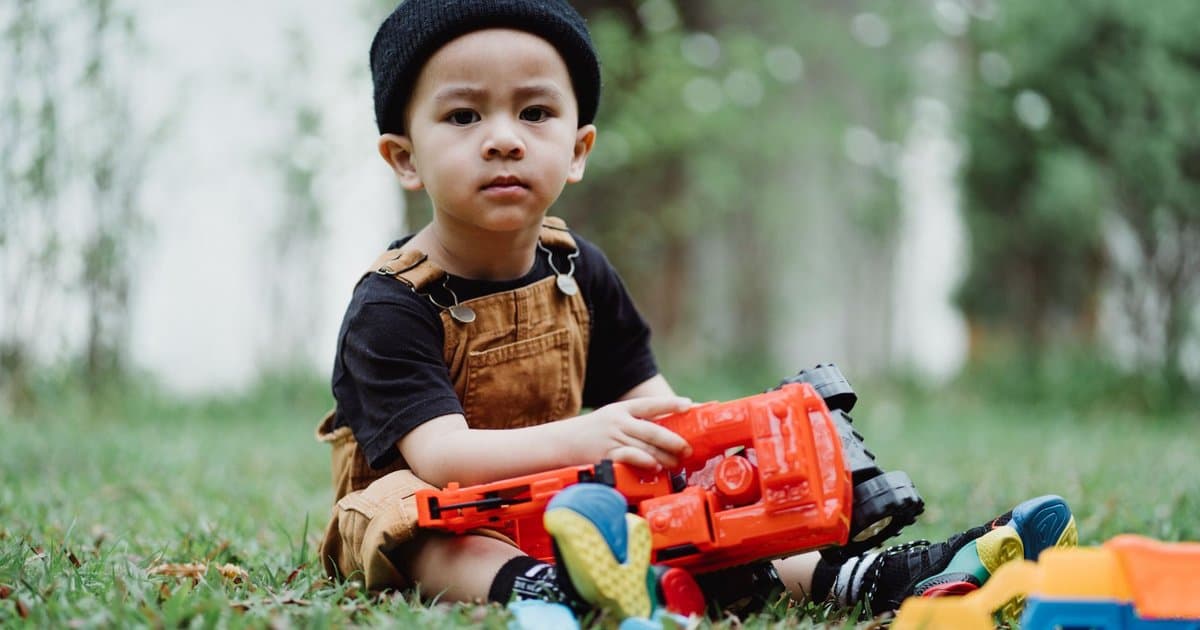
Most of us assume that more toys make for a happier, busier child. It feels obvious, since more choices should mean more ways to have fun. Birthdays and holidays pile it on, and the playroom fills up fast. Yet many parents notice something odd in the middle of all that plenty. Their child drifts from one thing to the next and settles into nothing. The toys are everywhere, but the deep, focused play is missing. It turns out the crowded playroom may be part of the problem.
Researchers have actually tested this idea, and the results are worth knowing. In one study out of the University of Toledo, toddlers were watched in two setups. In one room they had four toys, and in the other they had sixteen. The children with only four toys played nearly twice as long with each one. They also played in more creative and inventive ways. With fewer choices in front of them, they went deeper instead of wider. The smaller pile pulled better play out of them.
The reason lines up with how young attention works. A child standing in front of sixteen options faces a small flood of choices. Each new toy in view is a fresh pull on their focus. So they grab one, glance at the pile, and reach for the next before the first idea forms. Nothing gets the time it needs to grow into real play. Too much choice scatters a young mind rather than feeding it. Fewer things in view lets one idea actually take hold.
The kind of toy matters just as much as the number. The best toys are the open ended ones that can become almost anything. Blocks, simple dolls, art supplies, and even plain boxes leave room for a child to invent. Flashy toys that light up and play sounds tend to do the work for the child. When a toy performs on its own, the child watches instead of creating. A quiet block asks the child to bring the story, and that is the whole point. Choose toys that wait for the child to lead.
What kids gain from this deeper play is real and lasting. Long stretches with one toy build the attention span they will need for school. Inventing their own games grows creativity and problem solving. Working through a tricky build teaches patience and how to handle a small failure. Playing alone for a while builds independence and comfort in their own company. Talking their way through a made up world stretches their language. These are not small perks, they are the foundation of a curious mind.
The fix does not require throwing everything away or buying anything new. The simple trick is to rotate the toys instead of leaving them all out. Keep a small set available and store the rest out of sight. Every week or two, swap a few pieces in and a few pieces out. To the child, the returning toys feel brand new again. This keeps interest high without another shopping trip. A little curation goes a long way.
There are side benefits that make the whole house calmer, too. A smaller toy set means less clutter and far less cleanup at the end of the day. Kids can actually learn where things go when there are fewer things to sort. With less to manage, children tend to value and care for what they do have. A toy that is not lost in a heap gets treated with more attention. The home feels lighter, and so does the daily grind of tidying. Everyone benefits from a little breathing room.
A fair question is what to do about the steady stream of new toys from birthdays and relatives. You cannot control every gift, but you can control what stays in daily reach. When new toys arrive, let a few older ones cycle out to storage or to a donation box. Bringing your child into that choice can teach something valuable on its own. Picking a toy to pass on to another kid plants an early seed of generosity. It also helps them see toys as things to value rather than pile up. Over time, children raised this way tend to ask for less and play with more focus. The lesson outlasts any single toy.
None of this is about depriving a child or making play feel strict. It is about curating instead of piling on. Kids still need enough to explore, just not an avalanche that buries their focus. Try clearing out the broken and ignored pieces first. Keep the open ended favorites, store the extras, and rotate them in over time. Then step back and watch what a child does with a little less. Give it a week or two before you judge the result. The change is small, but the difference in how they play tends to show up fast. In most homes, the play gets richer, not poorer.