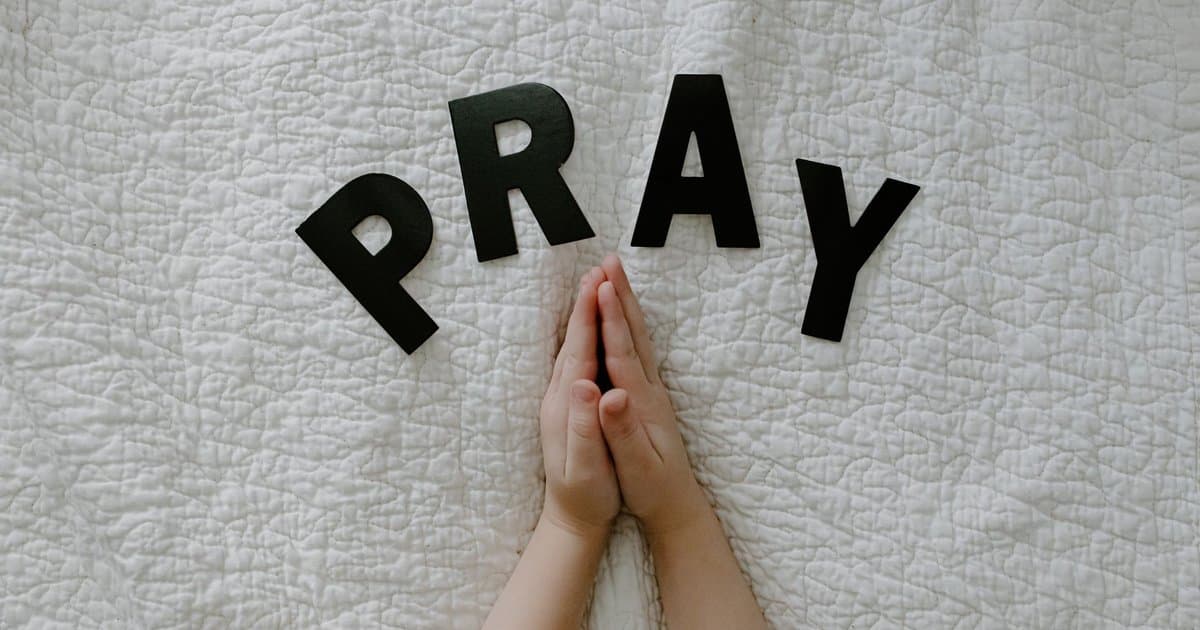
Almost everyone raised around church learned to close their eyes to pray. We were told to bow our heads and shut them tight, often before we could read. It felt like a rule handed down from the start, as fixed as saying amen at the end. So it surprises a lot of people to learn the Bible never gives that instruction. There is no verse that tells a believer to close their eyes to speak with God. The habit is real and common, but it did not come from a direct command. Once you see that, the reason behind it gets more interesting.
Look at how people actually pray in scripture, and you find a wide range of postures. Some stand with their hands lifted toward the sky. Others kneel, and a few fall face down on the ground in front of God. David writes about lifting his eyes to the hills, not lowering them. In one of his own prayers, Jesus looks up to heaven before he speaks. The tax collector in the parable would not even raise his eyes, while the proud man stood tall. The point in each case is the heart, not one fixed shape for the body.
If the Bible shows open eyes and raised faces, where did the closed eyes come from? The honest answer is that it grew mostly as a tool for focus. Shutting your eyes cuts off the flood of things competing for your attention. You stop reading the room, checking the clock, and watching the people around you. With the visual noise gone, it becomes easier to settle your mind on the words. Teachers and parents leaned on this because it works, especially for restless children. Over many years the practice hardened into something that felt like a requirement.
There is a plain and slightly funny reason parents kept pushing it too. Closed eyes keep children from poking each other during the blessing. A child who cannot see the snacks on the table is a little less likely to grab early. Adults are not so different, if we are honest with ourselves. Our eyes wander to phones, to windows, and to whatever moves across our path. The closed eye is a small fence we build around a few quiet minutes. It is a discipline of attention more than an act of holiness.
None of this means closing your eyes is wrong or empty. A habit can be good and helpful without being a divine law. If shutting your eyes helps you focus and feel present with God, then keep doing it. Many people find that the darkness helps them listen and slow their racing thoughts. The trouble only starts when we treat the posture as the point. A person can bow with perfect form and think about nothing at all. Another can pray with open eyes on a busy road and mean every word.
Seeing the practice for what it is can actually set people free. Someone driving a car can pray without guilt for not folding their hands. A nurse in the middle of a shift can send up a prayer while looking right at a patient. A parent can whisper for their child while watching them cross a street. God is not grading the position of your eyelids during any of this. He is listening for a heart that turns toward him in trust. That truth makes prayer available in far more moments than we assume.
It also reframes what reverence really means when we come to God. Reverence is not a stiff pose we strike for a few seconds at a meal. It is the posture of the inner person, the part no one else can see. You can hold that posture standing, kneeling, walking, or lying awake at night. The outer body can help the inner heart, and often it does. Closed eyes, bowed heads, and folded hands are all fine servants of that goal. They simply make poor masters when we forget what they are for.
So the next time you shut your eyes to pray, know why you are doing it. You are not obeying a hidden verse or earning extra credit with God. You are using a simple, tested way to guard your attention from a noisy world. That is a good reason, and it deserves an honest name. The freedom is in knowing you could pray with your eyes wide open just as well. What God asks for is not a face pointed down but a heart turned up. The habit is a gift, and like any gift, it is best held with an open hand.