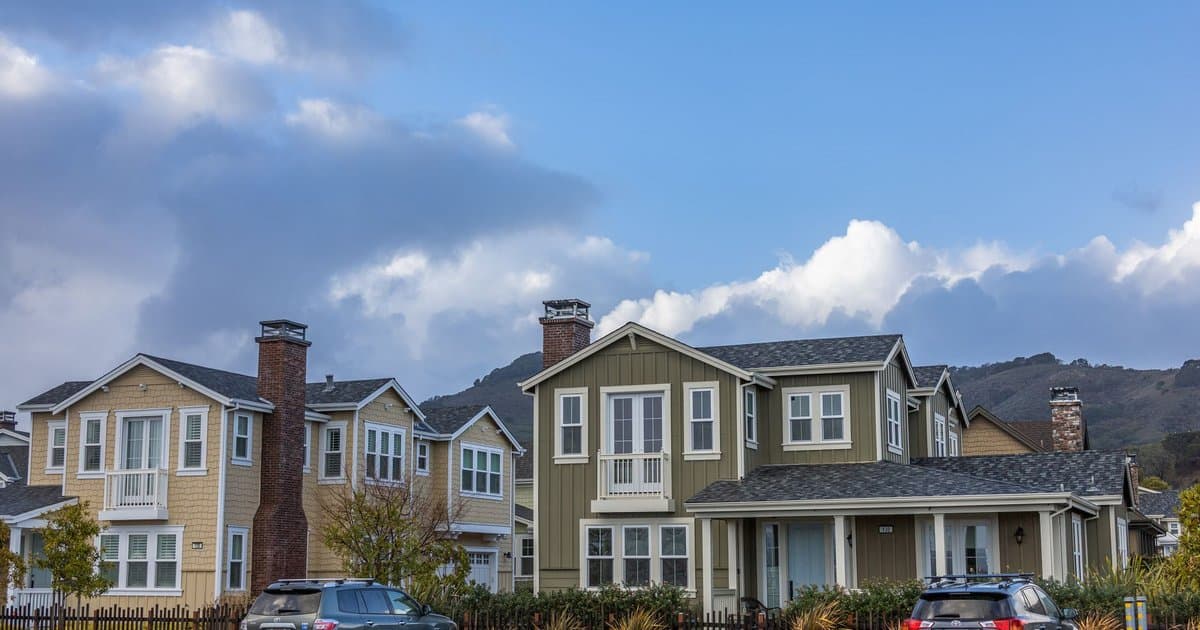
Walk any established neighborhood and the pattern shows up fast. Two houses go on the market within a week of each other, similar square footage, similar condition, similar year built. One goes under contract the first weekend with multiple offers. The other sits through spring, takes two price cuts, and finally closes in late summer for less than the first one got. Buyers assume there was something hidden wrong with the slow house, and sellers assume they got unlucky with timing. Most of the time the gap traces back to decisions made before the sign went in the yard.
The single biggest one is where the price falls relative to search filters. Almost every buyer starts on a listing site and sets a maximum price, and almost every buyer sets that maximum at a round number. Four hundred thousand. Three fifty. Five hundred. A house priced at four hundred and five thousand disappears entirely from the searches of everyone who capped at four hundred, including buyers who could easily have stretched. Price it at three ninety nine and it appears in that group and in the searches of everyone shopping above it. The house did not change, but the pool of people who ever saw it grew by a wide margin.
Timing inside the listing window matters almost as much. Listing sites push new inventory to saved searches, and buyers who have been looking for months open those alerts the day they arrive. The strongest showing activity for nearly every property happens in the first ten to fourteen days, and it drops steeply after that. A listing that goes live with poor photos, an incomplete description, or the wrong price burns through that window and cannot get it back. Fixing the photos in week four reaches a much smaller audience than getting them right in week one. That first stretch is the only period when a house is genuinely new to the market.
Then days on market starts working against the seller directly. Once a listing passes thirty days in a normal market, buyers begin assuming something is wrong with it, even when nothing is. Agents start using it as a bargaining point, framing offers around how long the place has been available. Price reductions, which should signal a bargain, often read as confirmation that the property has a problem. Some sellers respond by pulling the listing and relisting to reset the counter, which experienced agents spot immediately in the property history. The stigma compounds, and a house that started fairly priced ends up selling below what it would have brought on day one.
Photography does more heavy lifting than most sellers believe. The overwhelming majority of buyers see a house first as a thumbnail on a phone screen, roughly the size of a business card. If that lead image is dark, shot from an odd angle, or shows a driveway instead of the front of the house, the listing gets scrolled past before anyone reads the price. Listings with too few photos read as though the seller is hiding something, and listings with thirty near identical shots of the same room read as filler. The order matters as well, since most people stop scrolling after eight or ten images. Professional photos are not vanity, they are the entire first impression for nearly everyone who will ever consider the property.
Condition signals get read faster and more harshly than sellers expect. Buyers spend a few minutes in a house and make judgments from a handful of cues rather than a careful inspection. Worn carpet, scuffed paint, dated fixtures, and any noticeable smell all get mentally priced as a full renovation, not as the few thousand dollars they usually represent. Clutter shrinks rooms in photos and in person, and a packed garage reads as a house without storage. The cosmetic work that shifts perception the most is almost always the cheapest work available. Paint, light fixtures, cabinet hardware, and clearing surfaces move a buyer's estimate more than anything expensive under the floor.
For sellers, this means the advantage sits in the two weeks before listing, not in the months after. Set the price against the filter bands buyers actually use, finish the cosmetic work first, and go live only when the photos are done. Rushing a listing onto the market to catch a good weekend costs far more than waiting nine days for a photographer. For buyers, the same pattern is an opening worth watching. A house that has sat sixty days with no offers is often a pricing or presentation failure rather than a structural one, and the seller is far more flexible than the listing suggests. Reading the property history reveals which one it is, since a listing that started high and cut twice tells a different story than one that never moved. The slow house is frequently the better deal, and almost nobody is looking at it anymore.