Stand at the door of most old churches and you are usually looking east. The altar, the main window, and the focus of the room sit at the far end toward the sunrise. This pattern shows up across centuries and across countries, from small country chapels to massive stone cathedrals. It is common enough that builders had a word for it, orientation, which comes from the Latin for east. The choice was deliberate, and it carried meaning that most visitors today walk past without noticing. Once you know to look for it, you start seeing it everywhere. The building itself points you toward the dawn.
The habit is older than the churches themselves. Early Christians prayed while facing east long before they had grand buildings to pray in. Writers in the first few centuries described turning toward the sunrise during prayer as a shared practice. The rising sun stood for the resurrection, the light returning after darkness. East was also tied to hope for the return of Christ, which early believers pictured coming like the dawn. So when Christians finally built lasting churches, they built the direction they already prayed in right into the walls. The direction was a habit of the heart before it was a rule of stone.
The sun did more than carry a symbol. It shaped how the room felt hour by hour. A church built to face east catches the morning light through its eastern windows, right where the altar stands. For a service held at dawn, the light arrives behind the most sacred part of the room and fills it. Builders who could not afford much still could afford to point the building the right way. The effect turned a plain space into something that seemed to glow at the start of the day. It cost nothing extra and gave the space a sense of wonder.
There is a practical layer under the symbol as well. Before compasses were common, the sunrise was one of the few fixed points a builder could trust. Some old churches point not to true east but to the spot on the horizon where the sun rose on a certain day. In a few cases that day was the feast of the saint the church was named for. The building itself became a kind of calendar, aligned to a moment in the year that mattered to the people who raised it. The stone remembered a date long after the builders were gone. A careful eye can still read that choice in the walls today.
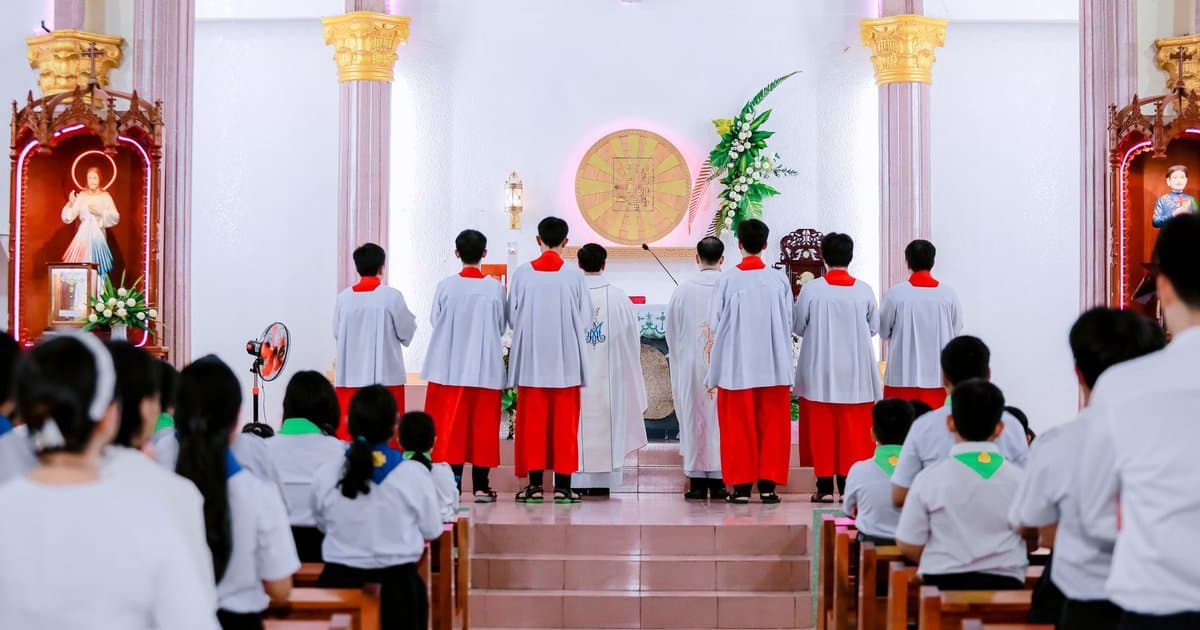
The layout inside followed from the direction outside. Because the altar sat at the east end, the priest and the people often faced the same way during prayer, toward the sunrise. The main door usually opened at the west end, so a person walked in from the setting sun and moved toward the light. Even the words used for the parts of the building carried this map. Older texts speak of the east end as the holy end. The whole shape of the room told a story about moving from darkness toward light.
West carried its own weight in this scheme. If east meant sunrise and hope, the west end, where the day ends, often held images of the last judgment. A worshipper leaving the building walked toward those scenes as a reminder to carry the service into daily life. Fonts for baptism were frequently placed near the western door, marking the entry point into the faith. The path from the font at the back to the altar at the front traced a life from beginning to end. Nothing about the placement was random. The journey through the room mirrored the journey of a life.
Not every church follows the rule, and the reasons are usually simple. A cramped city lot may force a building to fit the street instead of the sky. Later builders sometimes cared more about facing a grand avenue or a town square than facing the sunrise. Some traditions never held the practice as strongly to begin with. Modern churches often set the direction aside entirely in favor of parking, sight lines, and the shape of the land. The older the building, the more likely the east end still points where it always did. Even so, the pattern held for a remarkably long time.
The direction of a building is an easy thing to overlook. Yet for centuries it was one of the first choices a community made when it decided to build. Facing east tied a plain structure to sunrise, to resurrection, and to the rhythm of the year. It turned bricks and timber into a quiet statement of what the people inside believed. You do not have to share that belief to find the craft in it worth respect. The next time you enter an old church, check where the altar sits, and you may find the sunrise waiting there.