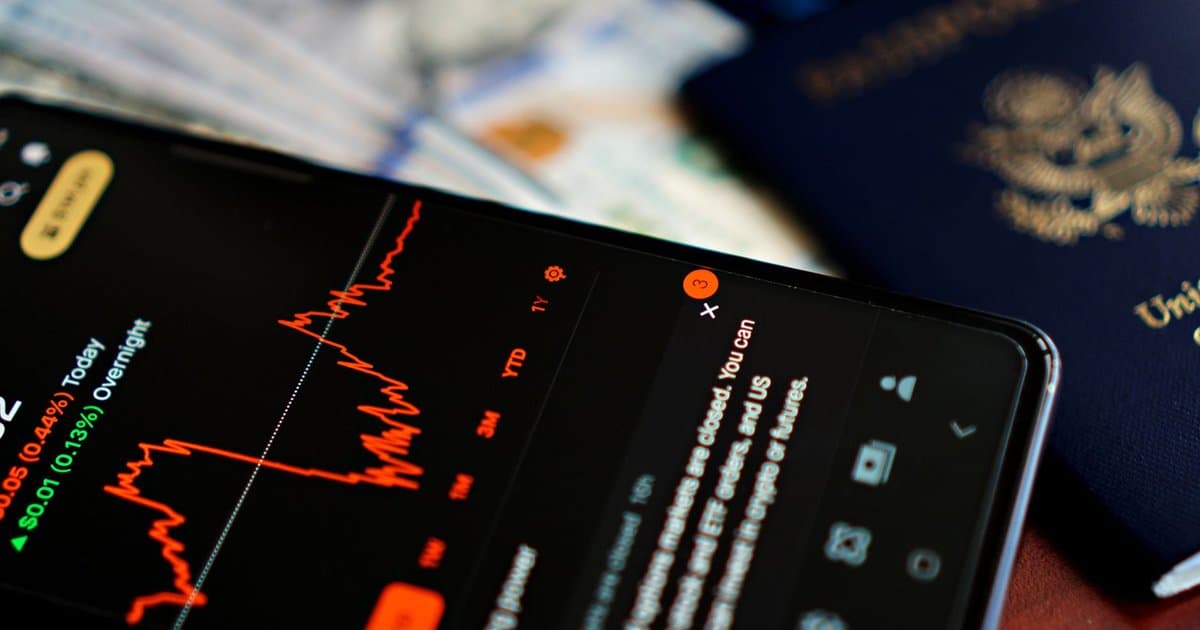
You tap buy on your phone, the trade fills in a second, and the app says congratulations. It feels direct, like your order went straight to the market and came back done. What happens in that second is more complicated, and most people who invest have no idea it is happening at all. Between your tap and your fill, your order often takes a detour that shapes the price you get. The mechanism has a name, payment for order flow, and understanding it changes how you read the words free trading. Nothing is truly free, and this is where the cost quietly hides.
When you place an order at many popular brokerages, it does not go directly to a public exchange. Instead the brokerage routes it to a large trading firm known as a market maker, and that firm pays the brokerage for the right to fill it. That payment is where a lot of commission free brokerages actually make their money. The market maker fills your order and profits from the tiny gap between the price it buys at and the price it sells at, called the spread. Your trade is the product being sold, and the fee you thought disappeared simply moved somewhere you cannot see it. This is legal, disclosed in fine print, and extremely common across the apps most people use.
The concern is not that the arrangement exists but what it can do to your price. When a brokerage routes orders to whoever pays the most for them rather than wherever you would get the best possible price, your fill can be slightly worse than it needed to be. On a single small trade, the difference might be a penny or two, easy to shrug off. Across millions of orders, those pennies add up to real money, and it flows away from investors and toward the firms in the middle. The improvement you might have gotten from better routing is the quiet cost of the free label. You rarely see it because you never learn what price you could have had.
At the center of this is a conflict of interest that is easy to state plainly. Your brokerage is supposed to seek the best execution for you, but it also earns more when it sends your orders to the highest paying firm. Those two incentives do not always point the same direction. Regulators require brokerages to disclose their arrangements and their execution quality, but the disclosures are buried and written in language few people read. The system is not necessarily cheating you, and for tiny trades the practical harm can be small. The point is that a relationship exists where your interest and your brokerage's income are not perfectly aligned, and you deserve to know it is there.
You are not powerless here, and a few habits help. For most long term investors buying and holding, the effect of payment for order flow is minor compared to fees, taxes, and simply staying invested, so it should not scare you out of the market. If you trade more actively or in larger size, using limit orders instead of market orders gives you control over the price you accept, which blunts the disadvantage. You can also read your brokerage's execution quality disclosures, and some brokerages route orders differently and even advertise not selling your flow. Knowing the trade off lets you choose with open eyes. The goal is not fear. It is awareness of how the free thing actually gets paid for.
It is also worth understanding why this practice grew so quickly in the first place. When brokerages dropped commissions to zero, they still needed a way to make money, and selling order flow filled that gap almost overnight. That is why the shift to free trading and the rise of payment for order flow happened side by side rather than by accident. The trade you make for free is only free because the revenue moved to a place you were never shown. This is not unique to investing, and the pattern repeats anywhere a product costs nothing up front. Once you learn to ask where the money actually comes from, you start seeing the answer everywhere.
The larger lesson reaches past this one practice. In investing, when a service costs you nothing on the surface, it is worth asking who is paying and how, because someone always is. Payment for order flow is not a scandal so much as a reminder that the convenience in your pocket was built on a business model, and you are part of that model. That does not mean abandoning the tools that made investing cheap and accessible, which are genuinely useful. It means using them with your eyes open, understanding the small ways the house keeps its edge. The most protected investors are not the ones who trust the app completely. They are the ones who know what happens in the second after they tap.