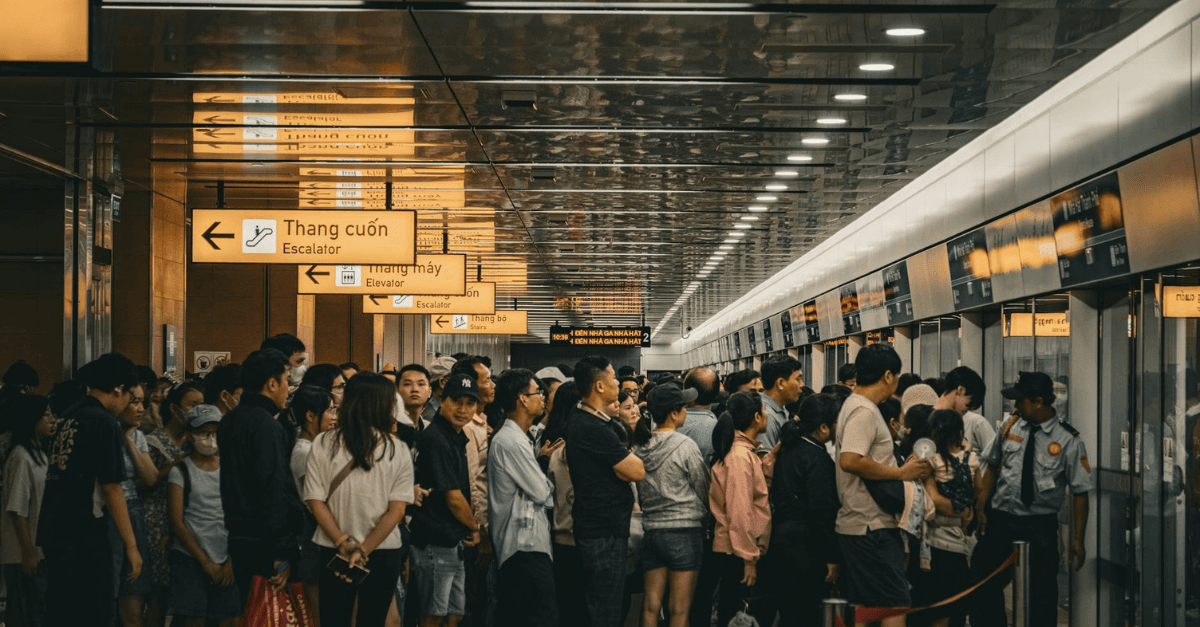
TSA PreCheck used to be the reliable shortcut for frequent travelers. Pay 78 dollars, do the interview, get the Known Traveler Number, and skip the regular line for five years. From 2013 through about 2022, the math was clean. The PreCheck line was almost always under 5 minutes, the regular line was 25 to 45 minutes, and the time savings paid for the program in roughly two trips. That arithmetic has broken down. PreCheck enrollment has surged past 25 million members in 2025. Airports have not added enough PreCheck lanes to match the growth. The lines that were once the shortcut have become the pinch point at certain airports. The data reveals which airports stay reliable and which have quietly become traps.
The TSA publishes wait time data through its app and website, and travel data aggregators (Hopper, AirHelp, the FAA itself) compile longer-term averages. The 2025 averages tell a clearer story than any individual experience. Atlanta-Hartsfield (ATL) PreCheck wait times now average 14 minutes during peak hours, with the 95th percentile at 32 minutes. The regular line at ATL averages 18 minutes during the same window. The PreCheck advantage at ATL has narrowed to 4 minutes on average and disappears entirely on the worst days. For ATL travelers, PreCheck is no longer the reliable time-saver it was 5 years ago.
Newark Liberty (EWR) tells the same story. EWR PreCheck averages 18 minutes during peak hours, with the 95th percentile at 38 minutes. The TSA opened a third PreCheck lane at EWR in late 2024, but enrollment growth has outpaced the additional capacity. Travelers connecting through EWR with tight transfer times have been routinely missing flights despite holding PreCheck status. The advice from frequent travelers is now to plan as if PreCheck does not exist at EWR and use Clear (a separate biometric service at 199 dollars per year) for the actual time advantage.
Chicago O'Hare (ORD) shows a different pattern. ORD PreCheck averages 7 minutes during peak hours, with the 95th percentile at 14 minutes. The regular line averages 22 minutes. The PreCheck advantage is intact at ORD because the airport added five additional PreCheck lanes in the 2023 to 2024 expansion. Where capacity matched demand, the program continues to work as designed. Where capacity lagged, the program has become a queue rather than a shortcut.
The reliable PreCheck airports as of Q2 2026, ranked by average advantage over the regular line, are Phoenix (PHX), Charlotte (CLT), Detroit (DTW), Minneapolis (MSP), and Salt Lake City (SLC). All five maintain PreCheck wait times under 8 minutes on average and have meaningful advantages over the regular line. The unreliable PreCheck airports are JFK, LAX, EWR, ATL, and SFO, where the program has degraded to roughly the same performance as the regular line during peak hours. The pattern correlates with airport hub size and PreCheck enrollment density, not with TSA staffing per se.
Nashville BNA sits in the middle of the pack. BNA PreCheck averages 11 minutes during peak hours, with the 95th percentile at 22 minutes. The regular line averages 19 minutes. The advantage is present but narrower than the program's marketing implies. BNA opened a new concourse in 2023 and added PreCheck capacity with it, which has kept the line manageable through the city's continued growth. As Nashville passenger traffic continues to climb, BNA will likely degrade further unless additional capacity comes online before 2027.
The honest implication for travelers is that the optimization has shifted. PreCheck alone is no longer enough at the major hub airports. The combinations that work in 2026 are PreCheck plus Clear at airports where Clear has good coverage (most major hubs except some international terminals), or PreCheck only at the airports that have maintained the program well. Paying for both is 277 dollars a year combined, which is real money but consistent with the time value for travelers flying 25 or more times per year.
For occasional travelers (under 10 trips per year), the math on PreCheck has changed. The 78 dollars over 5 years amortizes to 15.60 a year, or roughly 1.50 per trip. That is still defensible at any airport with a meaningful advantage. The math fails entirely if your home airport is JFK, LAX, EWR, or ATL and most of your travel routes through them. For travelers in those cities, PreCheck is now closer to a coin flip than a guaranteed shortcut. The time you save on reliable airports is offset by the time you do not save on the unreliable ones.
The TSA has not commented publicly on the line degradation at the major hubs but has acknowledged in budget testimony that PreCheck capacity expansion has not kept pace with enrollment growth. The expectation is that the next federal budget cycle will include funding for additional PreCheck lanes at the most-affected airports, but implementation will take 18 to 36 months from approval. In the meantime, the time savings are what they are. The marketing is overpromising. The data is honest.
The takeaway for frequent travelers is that PreCheck is no longer a single-decision purchase. It is one tool in a stack that includes Clear, Global Entry (still highly reliable for international entry), and the willingness to arrive at the airport earlier than you used to. The travelers who treat PreCheck as a guaranteed shortcut are missing flights in 2026. The travelers who plan for the actual data-driven wait times are arriving on time. The line that used to be the shortcut has become a signal of how well the airport you are flying through has managed its growth. Read the signal. Plan accordingly.