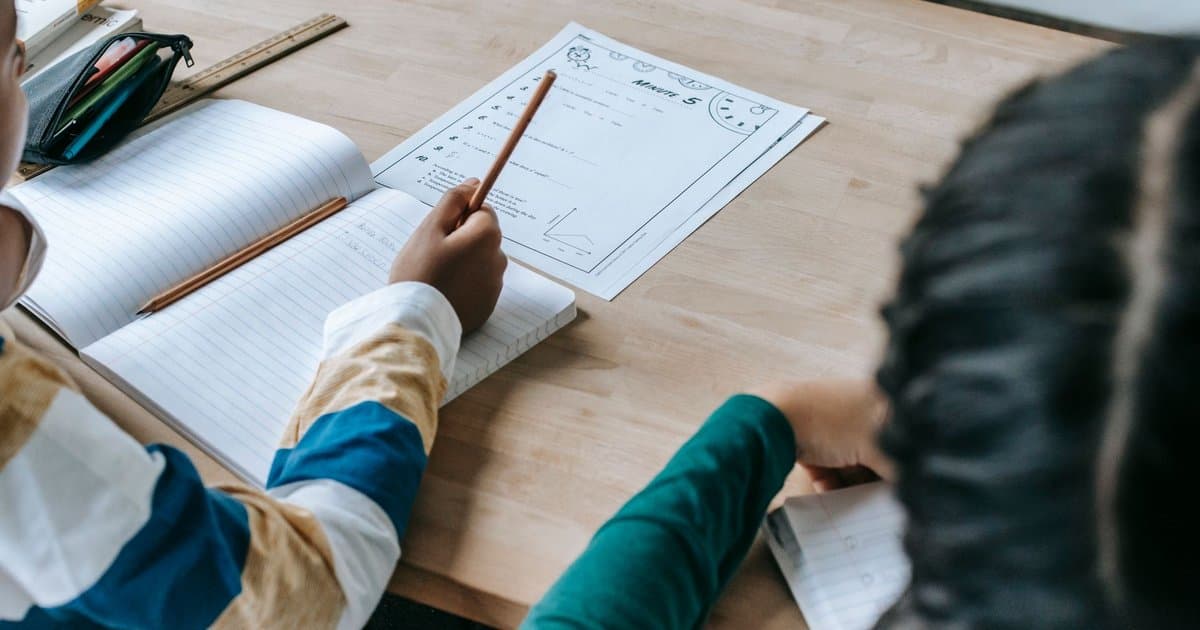
Homework is one of those parts of school that almost no one questions, even though the research on it is far messier than most parents assume. Teachers assign it, students grumble through it, and families build their evenings around it, all on the shared belief that more practice means more learning. When researchers actually measured that belief, the picture that came back was complicated. Homework helps some students a great deal, helps others only a little, and for one large group it barely moves learning at all. The single biggest factor is not the subject or the amount, it is the age of the child. Understanding that one variable changes how a family should think about the whole thing.
For younger children, roughly through the elementary years, the evidence that homework boosts academic achievement is thin to nonexistent. Study after study has struggled to find a meaningful link between homework and learning gains in the early grades. That does not mean a small amount is useless, because there are other reasons a young child might benefit from a short, gentle task. Reading with a parent for a few minutes, for example, builds a habit and a bond that pays off in ways tests do not capture. The problem is heavy assignments that eat into play, sleep, and family time without delivering the learning they promise. For little kids, the cost of too much homework often outweighs whatever academic benefit it might offer.
The story shifts as children get older. In the middle and high school years, the research finds a clearer and more consistent connection between homework and achievement. Older students have the attention span, the study skills, and the independence to actually learn from working through problems on their own. Practicing a concept after class helps it stick, and reviewing material builds the kind of memory that survives until the exam. The benefit is real, but it is not unlimited, and that is the part that surprises people. Beyond a certain point each additional hour adds less and less, and eventually it starts to hurt.
That tipping point matters more than the total amount. Researchers have repeatedly found that the relationship between homework and achievement is shaped like a hill rather than a straight line. Up to a reasonable level, more practice helps, and a common guideline suggests roughly ten minutes per grade level per night as a sensible ceiling. Past that level the curve flattens and then turns downward as fatigue, stress, and lost sleep start to cancel out the gains. A high school student buried under four hours of nightly assignments is not learning four hours' worth, they are running on empty. Quality and focus beat raw quantity, which is the opposite of how homework is often assigned.
There is also a fairness problem hiding inside the homework debate. Homework assumes a quiet place to work, a reliable internet connection, and an adult available to help, and not every child has those things. A student doing assignments at a kitchen table in a calm home has a very different experience from one working in a crowded apartment after a long shift at a job. So heavy homework loads can quietly widen the gap between students who have support at home and those who do not. That does not make homework wrong, but it does mean the same assignment lands unequally across a classroom. Good teachers account for that reality instead of pretending every home is the same.
Homework also teaches things no test ever measures. Working through a task alone builds the habit of focus and the skill of managing time without an adult standing over you. Those habits matter more in the long run than any single worksheet ever could. A short, clear assignment can build them, while a crushing pile only teaches a child to dread school. The aim is to grow independence, not simply to fill an evening. Judged that way, a little homework done well can do more than a lot of it done in exhaustion.
So what should a family actually do with all of this. For younger children, protect sleep, play, and reading time first, and treat heavy worksheets with healthy skepticism. For older students, treat homework as real practice that matters, while watching for the point where the load stops helping and starts draining. Pay attention to focus and stress more than to the number of pages, since a tired student gains little from grinding through extra problems. Talk to teachers when the workload seems out of proportion, because most are reasonable when they understand a child's full evening. The research does not say homework is good or bad, it says the right amount depends on the age and the child. Used with that judgment, homework becomes a tool rather than a ritual.