Most parents assume homework is one of the clearest signs that a school takes learning seriously. The thinking feels obvious. More practice at home should mean more progress in the classroom. A folder of worksheets in a backpack looks like proof that teachers are pushing children to grow. That assumption shapes how families spend their evenings, and it shapes how kids start to feel about school before they are even ten years old. When you sit with the actual research, though, the homework folder is a lot less impressive than it appears.
Decades of studies on homework in the early grades keep landing on the same uncomfortable result. For children from kindergarten through roughly fifth grade, there is little to no measurable link between homework and academic achievement. The most cited review of this question, led by education researcher Harris Cooper, found that the relationship between homework and performance is close to zero for young students and only becomes meaningful in high school. That does not mean older teenagers should skip it. It means the nightly worksheets handed to a seven year old are doing something other than raising test scores, and most families have never been told that plainly.
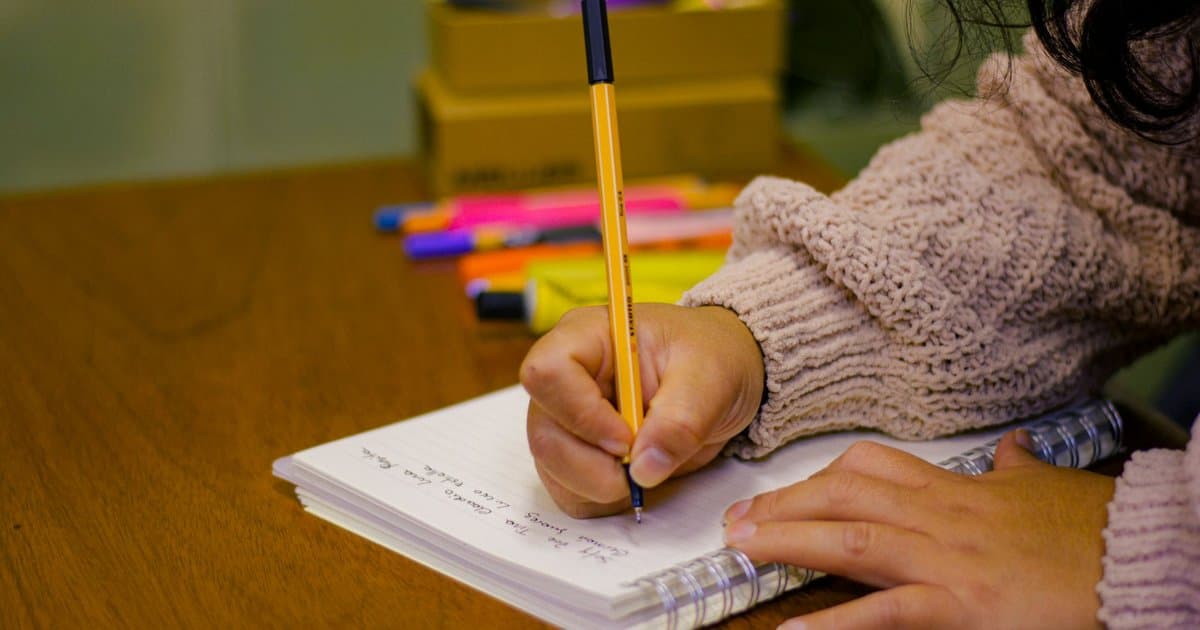
So if the homework is not moving the academic needle, what is it actually doing in those early years? In a lot of homes it is generating friction. Tired kids who have already spent six or seven hours in a classroom sit down to repeat work they may or may not understand, often without a teacher nearby to correct a misstep. Parents who are exhausted from their own day become enforcers instead of encouragers. The dinner table turns into a negotiation. For a young child, the lesson that sinks in is not multiplication or spelling. It is that learning is a chore you fight through, which is the opposite of what early education is supposed to build.
There is also a fairness problem hiding inside the routine. Homework quietly assumes that every child goes home to the same conditions. It assumes a quiet room, a parent with the time and the academic confidence to help, reliable internet, and a printer when one is needed. Plenty of families do not have all of those things, through no fault of their own. A kid in a crowded apartment with a parent working a night shift is graded on the same assignment as a kid with a private desk and a tutor. When homework counts toward a grade, it can widen gaps that have nothing to do with how smart or hardworking a child is.
None of this means practice has no place at home. The research points toward a smaller and gentler version of what most schools assign. Reading together, or letting a child read on their own, shows real and lasting benefits at every age. So does a short, low pressure routine, the kind some experts sum up as roughly ten minutes per grade level. A second grader might do twenty minutes of light reading and one brief task, not an hour of drills. The goal in the early years is to protect a child's relationship with learning, not to simulate a second school day inside the home.
For parents, the practical move is to stop treating homework as a measure of how good the school is or how driven your child is. If your young child is melting down over assignments every night, that is information, not a character flaw. It is worth a calm conversation with the teacher about what the homework is meant to accomplish and whether it can be trimmed. Many teachers are assigning it because it is expected of them, not because they have seen it work. A respectful question from a parent can open a door that the system rarely opens on its own.
The bigger shift is in how we think about childhood and rest. Young kids need unstructured time, physical play, sleep, and connection with the people who love them. Those are not luxuries that come after the real work of school. They are the foundation that makes school work in the first place. A child who is rested and curious will outpace a child who is drilled and drained, almost every time. The most useful thing a family can offer after the school day is often the thing that looks the least like homework.
The shocking part is not that homework fails to help in the early grades. It is how long that has been known, and how rarely it changes what happens at the kitchen table. Generations of families have organized their evenings around a belief that the evidence does not support. You do not have to wait for a school to catch up. You can decide, starting tonight, that protecting your child's love of learning matters more than finishing the worksheet.