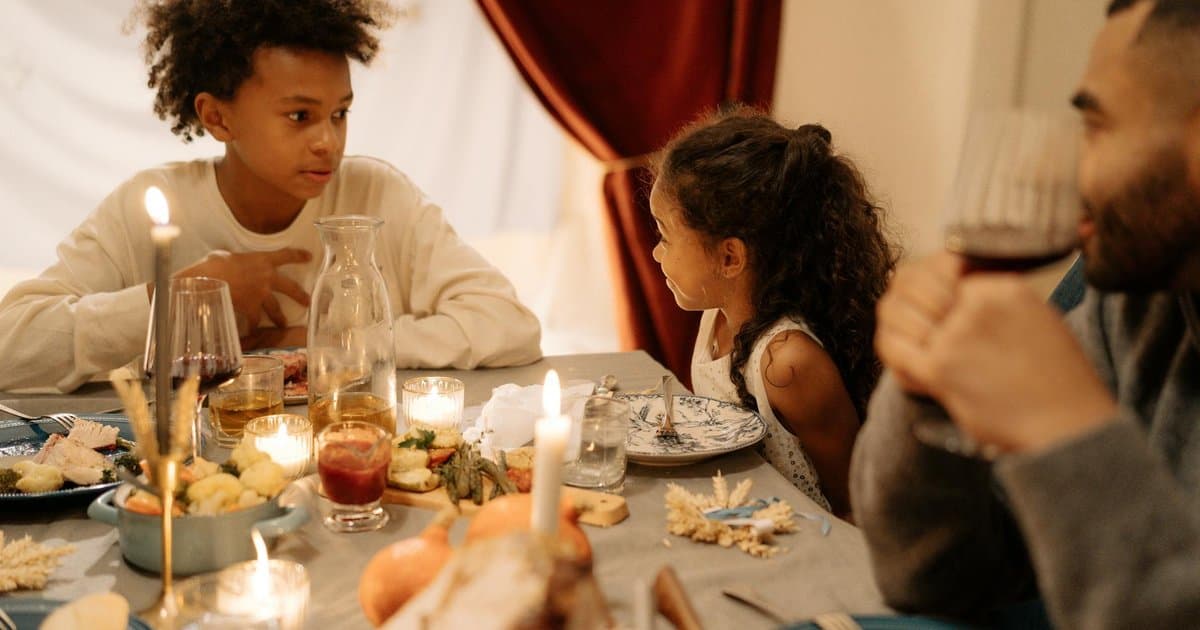
The family dinner gets dismissed as a nice idea that busy life crowds out. Practices run late, parents work odd hours, and a shared meal starts to feel like a luxury rather than a habit. So the table sits empty while everyone eats on their own schedule with a screen for company. What gets lost in that drift is one of the most reliable predictors of how a child turns out. The regular family meal does quiet work that rarely announces itself, and the payoff shows up years after the plates are cleared. It is not the food that matters. It is what happens around it.
Start with language, because the dinner table is where a child hears how adults actually talk. Around a shared meal a kid is exposed to a wider vocabulary, longer sentences, and the back and forth of real conversation. They learn to wait for a turn, to follow a thread, and to ask a question that keeps a discussion going. Children who eat with their families regularly tend to show stronger language skills than peers who do not, and that edge carries into reading and school. None of this requires a lesson or a worksheet of any kind. It happens naturally in the rhythm of people talking while they pass the salt.
The table also teaches a child that they belong to something steady. A meal that happens at roughly the same time, with the same people, gives a young person an anchor in a week that can feel chaotic. That predictability is quietly protective, because a child who knows there is a place they are expected carries less anxiety into the rest of their day. Research has tied frequent family meals to lower rates of risky behavior in teenagers, from substance use to other choices parents worry about. The mechanism is not magic. A kid who feels seen at home is less likely to go looking for that feeling in places that harm them.
Just as important is what the meal models about handling life together. Children watch how parents disagree without exploding, how they listen to a hard day, and how they repair after a sharp word. They learn that a family can sit with discomfort and stay at the table rather than scatter. These small lessons in patience and attention become the blueprint a child uses in their own relationships later. The dinner is a low stakes rehearsal for the higher stakes conversations that come in adulthood. You are teaching emotional skills without ever calling them that.
The encouraging part is how forgiving this habit is in practice. The meal does not have to be elaborate, and it does not have to happen every single night to do its work. A few shared dinners a week, with phones set aside and real attention on each other, deliver most of the benefit. What counts is the consistency and the presence, not the menu or the setting. Protect that time the way you would protect anything that compounds, because this is one of the rare investments in a child that almost never disappoints. The ordinary table, used faithfully, builds more than any program you could buy.