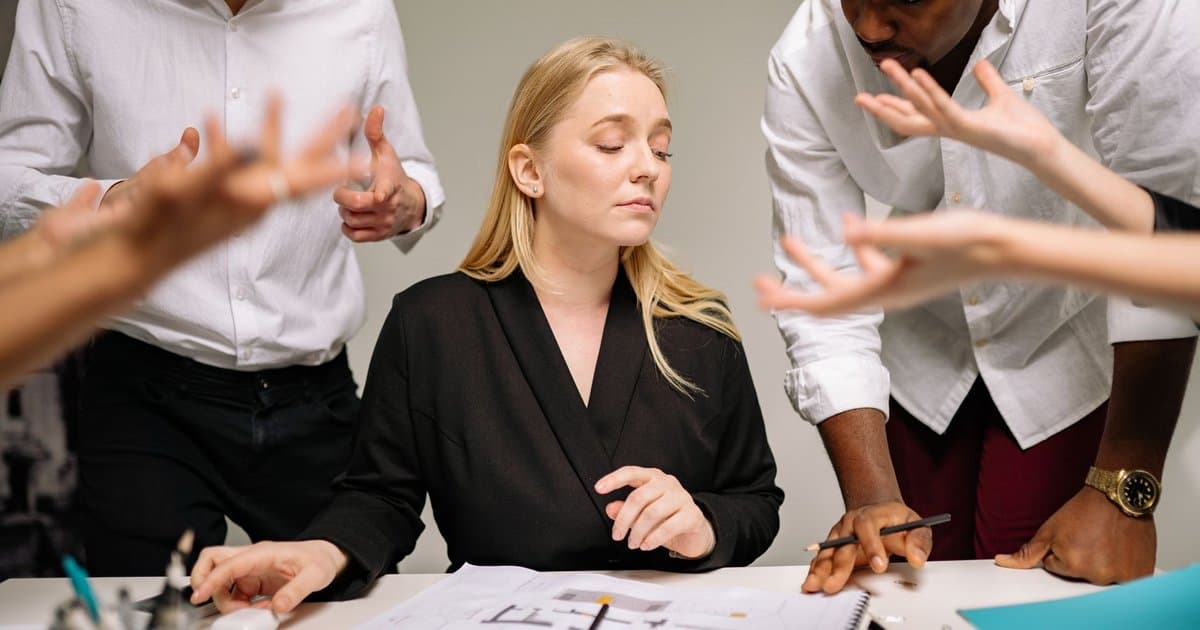
Most people think patience means waiting. They picture a person sitting still, doing nothing, holding on until the thing they hoped for finally shows up. That picture is exactly where the mistake begins. Patience was never meant to be passive. The old meaning of the word points to endurance, to staying steady under weight, to holding your ground while the answer takes its time. When you treat patience as a reason to stop moving, you quietly turn a strength into a stall. The wait becomes an excuse instead of a season with a purpose.
Think about a farmer, since that is the picture the Bible reaches for again and again. A farmer waits for the harvest, but no one would call his season restful. He plants long before he can see a single result. He pulls weeds he would rather ignore. He waters ground that looks the same today as it did the day before. The waiting is full of work, and the work is what makes the waiting count. His patience is active, not idle, and that is the whole point.
The mistake shows up in ordinary life more than we like to admit. Someone prays for a better job and then stops sharpening their skills. Someone asks God for a stronger marriage and then stops doing the small daily things that actually build one. Someone wants to grow in character but treats every hard moment as something to escape instead of something to walk through. They call it trusting the process. What it often really means is that they have gone still and then named that stillness faith. The name sounds holy, but the fruit tells the truth.
Real patience keeps its hands busy while its heart stays calm. You can wait on an outcome you cannot control and still control your own effort. You can hold a promise loosely and still show up for the plain tasks in front of you. Those two things are not in conflict at all. In fact they belong together. The person who waits well is almost always the person who kept working when nothing on the surface seemed to be changing.
There is also a quieter version of this mistake, and it hides better. Some people stay so busy that they never truly wait on anything. They force doors, rush timelines, and grab at things before they are ready, all in the name of being faithful. That is not patience either. That is fear wearing a productive mask. Patience holds the tension between doing your part and trusting that the timing is not entirely yours to set. It works hard and still leaves room for God to move.
So how do you tell the difference between waiting well and simply stalling? Ask what you are doing with the time you have been given. If the wait has left you lazy, distracted, or bitter, something has gone wrong inside. If the wait has made you more disciplined, more prayerful, and more useful to the people around you, you are on the right track. The season is doing its work in you, which is often the reason for the delay in the first place. The waiting is not empty. It is shaping you.
This matters because the wait is rarely wasted. The stretch between the prayer and the answer is where most of the growth actually happens. Character gets built in the ordinary middle when no one is clapping and no result is promised. Skills get sharper there. Trust gets deeper there. People who skip that stretch, or resent every day of it, often reach the thing they wanted without the strength to carry it. The delay was never the enemy. It was preparation for the weight ahead.
So here is the correction, plain and simple. Stop reading patience as a command to freeze. Read it as a command to endure on purpose. Keep planting. Keep praying. Keep doing the next honest thing in front of you while you wait for what you cannot rush. Patience is not the absence of movement. It is steady movement without panic, and that steadiness is what carries you all the way to the harvest. Trust the timing, but do not put down your tools.