Say the Lord's Prayer in most Protestant churches and it ends on a soaring line. For thine is the kingdom, and the power, and the glory, forever, amen. It feels like the natural close, the part where the whole room lifts its voice together. Here is what almost nobody mentions from the front of the sanctuary. That ending does not appear in the oldest and most trusted copies of the Gospel of Matthew. It was not part of the prayer as the earliest scribes wrote it down. The story of how it got there is worth knowing, and it is not the scandal it might first sound like.
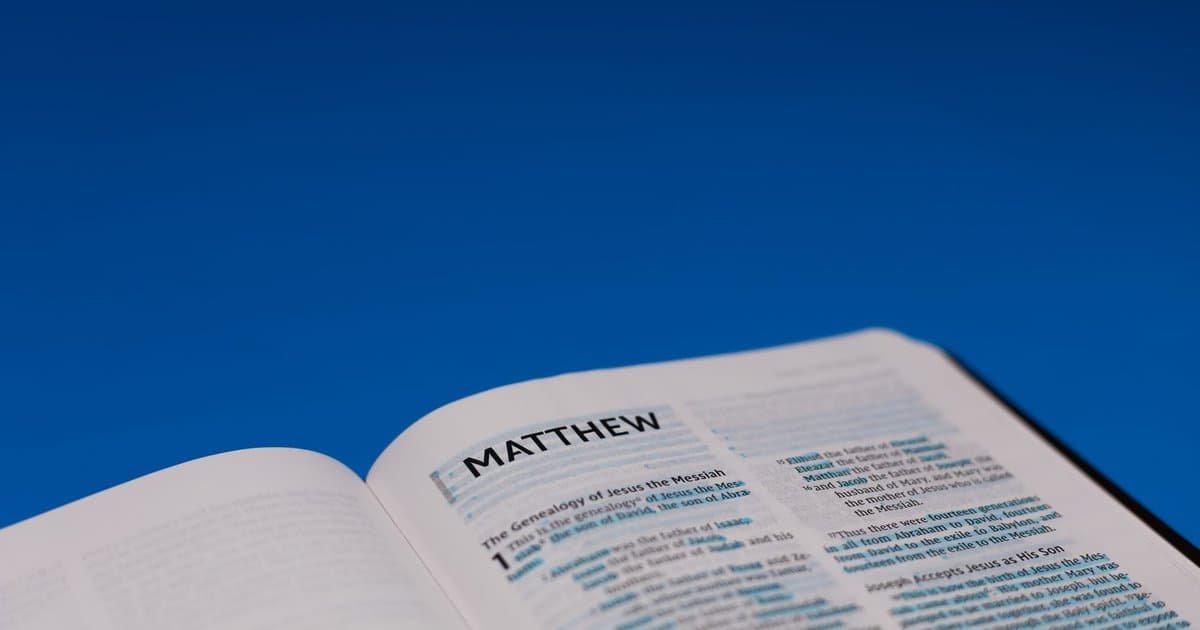
The line has a name. Scholars call it the doxology, a short burst of praise tacked onto the end of a prayer. In Matthew chapter six, Jesus gives the prayer to his followers, and in the King James Version it closes with those familiar words about the kingdom and the power and the glory. Generations of believers have prayed it exactly that way. It is stitched into hymns, engraved on walls, and recited from memory by people who have never opened a study Bible. So the surprise is not that people say it. The surprise is where it actually came from.
The evidence sits in the manuscripts themselves. The earliest complete copies of Matthew that survive, including two famous fourth-century books known as Codex Sinaiticus and Codex Vaticanus, simply do not carry the doxology. In those pages the prayer ends at deliver us from evil, and stops. The praise line shows up later, in copies made further down the centuries, and grows more common as time goes on. When scholars line up the oldest witnesses against the newer ones, the pattern is hard to miss. The ending was added, not removed. The oldest ink tells the plainest story.
This is where the King James Version comes in. That translation was made in 1611 from a printed Greek text assembled mostly from later manuscripts, the kind that already carried the doxology. So the translators faithfully rendered what was in front of them, ending on the praise. Modern translations such as the New International Version and the English Standard Version lean on the older manuscripts instead. That is why many newer Bibles drop the line from the verse or tuck it into a footnote. The difference between your grandmother's Bible and a new one is not an error by either. It is a difference in which manuscripts they trusted.
There is a twist that keeps this from being a simple case of something invented late. A version of the doxology appears in a very old church document called the Didache, a short manual of Christian practice from the late first or early second century. That tells us believers were praying a praise ending remarkably early, likely as a spoken response in worship. The best guess among careful scholars is that congregations said the line aloud after the prayer, the way a church today might answer amen. Over time a scribe noted it in the margin, and a later scribe folded it into the text. What looks like an addition was really an old habit of worship finding its way onto the page. The words were treasured long before they were ever official.
This history quietly explains a difference many people notice. Roman Catholics traditionally end the prayer at deliver us from evil, then say the doxology separately a moment later in the Mass. Many Protestants run straight through to the praise line as one continuous prayer. Neither group is misreading the other. They are simply following different streams of the same long tradition. It helps to know that Luke also records a version of this prayer, in his eleventh chapter, and his is shorter and never carried the doxology at all. Two Gospel writers preserved the prayer a little differently, and the church has lived with both.
So what do you do with a beloved line that the oldest Bibles leave out. You can hold it exactly as what it is, an ancient act of praise that the church added on purpose and has cherished for nearly two thousand years. Knowing its history does not cheapen the words at all. If anything it shows how carefully people have handled this text, marking what is old, noting what came later, and hiding none of it. The footnotes in a good study Bible are not there to unsettle you. They are there because honesty about the manuscripts is itself a form of respect. The prayer still ends well, and now you know why it ends the way it does.