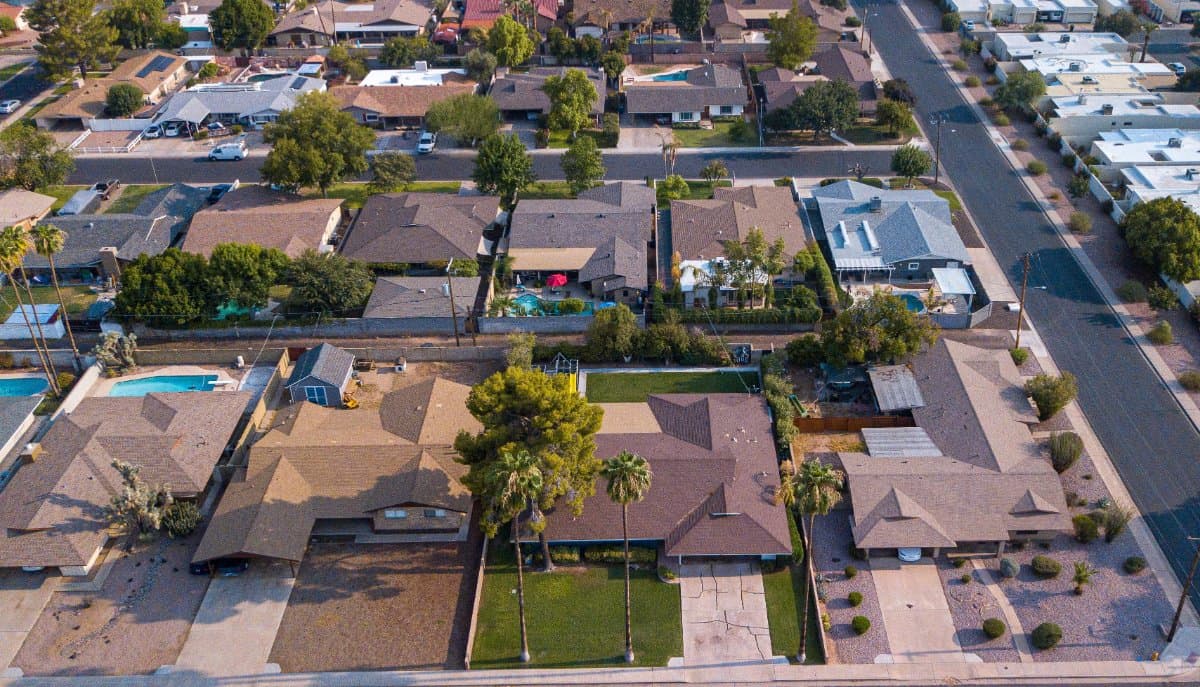
The single most underexploited real estate move in Nashville right now is the accessory dwelling unit. Tennessee passed Senate Bill 1869 in late 2024, which took effect in March 2025, and it changed the rules in a way most investors and homeowners still do not realize. The law preempts most municipal restrictions on detached ADUs of up to 1,000 square feet on lots zoned for single-family residential use. Cities can still regulate height, setback, and design standards, but they can no longer outright ban ADUs in residential zones.
What this means in practice is that thousands of Nashville lots that were previously single-family-only are now duplex-capable in functional terms. Davidson County has roughly 240,000 single-family residential lots. Industry estimates from the Greater Nashville REALTORS association suggest 60,000 to 90,000 of these lots have sufficient space, access, and infrastructure to accommodate a detached ADU under the new rules. Even at conservative adoption rates, that represents a meaningful supply expansion that has barely begun.
The math on a typical Nashville ADU project breaks down clearly. Construction costs for a 600 to 800 square foot detached unit in 2026 run $185 to $220 per square foot for builder-grade finishes, which puts an 800 square foot unit at roughly $148,000 to $176,000 all-in. Soft costs including permits, design, and site work add $18,000 to $32,000. Total project cost lands at $170,000 to $210,000 for a complete build. Rent for a one-bedroom or studio ADU in East Nashville, Madison, Bordeaux, and Antioch ranges from $1,400 to $1,950 per month based on April 2026 Zillow and Apartments.com data. The math produces a 9 to 11 percent gross yield on cost, which beats almost any traditional rental acquisition in the current market.
The financing picture is the part most investors miss. Conventional mortgage products do not cleanly finance ADU construction on an existing primary residence. The three workable structures are construction-to-permanent loans through local lenders like Pinnacle, FirstBank, and Tennessee Bank and Trust, home equity lines of credit at prime plus 0 to 2 percent for owners with significant equity, and cash-out refinances at current 30-year rates of 6.74 percent for primary residence and 7.25 percent for non-owner occupied. The construction loan path typically requires 20 to 25 percent down on total project value and converts to a permanent loan at completion. The HELOC path works for owners with $200,000 or more in available equity who want to avoid touching their primary mortgage.
Nashville's permitting timeline as of April 2026 runs roughly 90 to 140 days from application to issued permit for a standard ADU. Metro Codes implemented an expedited review track for pre-approved ADU plans in late 2025 that cuts permitting to 45 to 60 days for projects using one of the four approved plan templates. The expedited track is the right path for an investor doing first or second ADU because it removes the design risk and predicts the timeline. Custom designs reserve the standard timeline.
The neighborhoods where the math works best are not the trendy ones. Madison, Bordeaux, North Nashville, Antioch, and parts of Donelson all have lot sizes, infrastructure access, and rent levels that produce double-digit yields on ADU builds. The trendy neighborhoods like 12 South, East Nashville proper, and Germantown have higher rents but also higher land costs and tighter design review, which compresses the math. The deeper investor opportunity sits in Madison and Bordeaux where median lot sizes are larger, rents are climbing fast, and design review is less restrictive.
The owner-occupied opportunity is even better than the investor opportunity for the right household. A homeowner who builds an ADU on their existing primary residence and rents it out can typically cover their entire primary mortgage with the ADU rent, especially in the $400,000 to $550,000 home price range that dominates Madison and Antioch. The IRS treatment of an owner-occupied property with rental ADU is favorable, with rental income offset by depreciation and operating expenses on the ADU portion only. A homeowner with a $2,200 monthly mortgage payment and a $1,650 ADU rent gets to live in the property for an effective $550 per month plus utilities, which is functionally house hacking by another name.
The risk factors are real and worth naming. ADU construction in Nashville has shown timeline slippage of 30 to 45 days beyond contractor estimates on roughly 40 percent of projects in 2025, based on Tennessee Builders Association data. Material costs for windows and HVAC components have moved unpredictably. Lender appraisals on properties with new ADUs sometimes do not reflect full added value because comparable sales remain limited. The first hundred ADUs built under the new law are essentially establishing the comp set.
The window for early movers is the next 24 to 36 months. After that, supply expansion will compress yields and the easy lots will be developed. The investors and homeowners who move now lock in current construction costs, current rents, and current financing rates, all of which are likely to compress the spread over time. The math is the math.