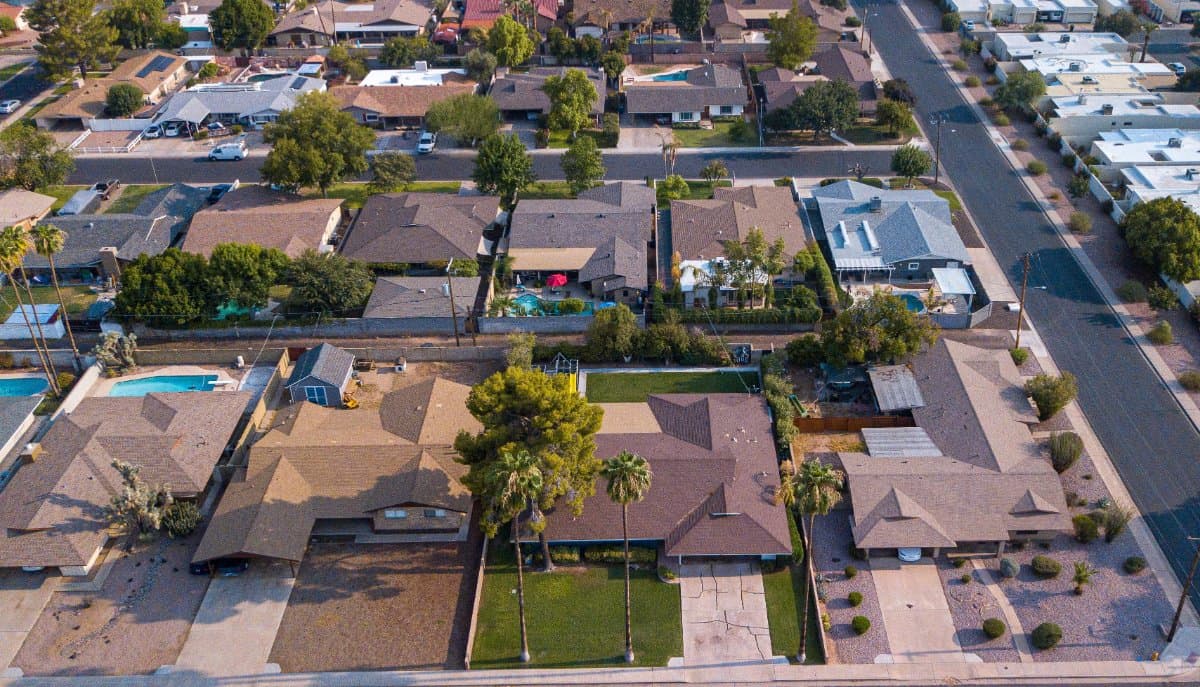
For half a decade the story in American real estate was the Sun Belt. Phoenix, Austin, Tampa, Dallas, Raleigh, Nashville, and Charlotte pulled people and capital out of coastal markets at a rate that rewrote local economies. Prices climbed double digits year over year in markets that had historically been affordable. In 2026 that story is finally shifting. The April data shows Sun Belt inventory at multi-year highs, price cuts running above the national average, and median prices flattening or declining in several of the hottest metros of the cycle.
Start with inventory. Active listings in Phoenix at the end of March were the highest they have been for any March since 2014. Austin crossed a threshold of six months of supply earlier this year, which is the traditional definition of a buyer's market. Tampa and Orlando both have roughly double the active listings they had at this point in 2022. Nashville, which held up longer than most of its peers, has now joined the same pattern, with 10,400 active listings in the metro as of mid-April compared to about 6,200 two years ago. Charlotte, Raleigh, and Jacksonville all show similar trajectories.
Price cuts tell a sharper story. Realtor.com data shows roughly a third of active listings in Austin and Phoenix have had at least one price reduction during the current listing cycle, compared to about 22 percent nationally. In dollar terms, the median sold price in Austin is down around 12 percent from its 2022 peak and flat year over year. Phoenix is down about 8 percent from peak. Nashville's median is still slightly positive year over year but the rate of appreciation has collapsed from double digits to under 2 percent.
Several factors converged. Mortgage rates above six percent are the largest single factor, because they reshaped affordability for markets that had priced in much cheaper money during the 2020 to 2022 surge. A median-priced home in Austin with a 10 percent down payment and a six-and-a-half percent mortgage now requires a household income well above 150,000 dollars, which is a different buyer pool than the one who drove the market up. The math simply does not work for the marginal buyer anymore.
The second factor is build-to-rent and single-family new construction inventory that came online on roughly the same schedule, adding supply at exactly the moment demand pulled back. Builders kept building through 2023 and 2024 on land they had locked up during the boom. That inventory is hitting the market now and competing directly with resale.
The third factor is the reversal of some of the migration patterns that drove the surge. Net in-migration to Sun Belt metros slowed sharply in 2024 and 2025. Texas, Florida, and Arizona are still attracting people, but not at the pace that justified the price run-up. California, New York, and Illinois have seen their out-migration slow, partly because the relative affordability advantage of the Sun Belt has compressed. A family in Los Angeles looking at Austin in 2021 was pricing in a massive cost-of-living delta. The delta today is smaller, particularly once you include insurance, property taxes, and the cost of air conditioning through longer summers.
Insurance is the sleeper factor that may matter most going forward. Florida and parts of Texas have become difficult markets for homeowners insurance, with premiums rising at rates that make carrying cost comparisons with coastal cities much less flattering than they were. Property tax increases in several Sun Belt states, driven by the underlying price surge itself, have added to the carrying cost pressure.
None of this means the Sun Belt has lost. Phoenix, Austin, and Nashville still have structural drivers that will produce long-term growth. Tech and health care employment in those metros is not going away. The cost-of-living advantage over coastal cities is smaller but still real. What has ended is the era when buying almost anything in almost any Sun Belt neighborhood was guaranteed to appreciate at a double-digit rate. That era was always going to end. The data in April 2026 confirms that it has.
For buyers who have been waiting, the negotiating position is the best it has been in five years. Sellers in the Sun Belt are now cutting prices, paying closing costs, and offering rate buydowns at rates comparable to 2019. For sellers, the pragmatic advice is to price conservatively at listing rather than chase the market down. Listings that linger get stale, and the data is clear that stale listings in the current Sun Belt environment sell for less than listings that were priced correctly from the start.
The deeper message is that the American housing market is normalizing after a generational anomaly. The Sun Belt is still where people are moving. It is just no longer where they are moving at any price.