Reading aloud to a child can feel like one of those nice extras you fit in when there is time. It looks small next to the big decisions about schools and tutors and screen rules. The research tells a different story, and it is consistent enough that experts treat reading aloud as one of the highest return things a parent can do at home. The habit costs nothing, needs no special skill, and pays off in vocabulary, attention, and a head start that follows a child into school. Skip it, and the gap shows up later in ways that are far harder and more expensive to close. The stakes are quieter than a bad grade, but they are real.
The first thing reading aloud builds is vocabulary, and the difference is larger than most parents expect. Everyday conversation, even loving and constant conversation, tends to circle the same few hundred words. Books reach for language that rarely comes up at the dinner table, words about faraway places, strange animals, and feelings a young child has not yet named. A child read to often hears thousands of these words before kindergarten, words a child who is not read to simply never encounters. That early word bank becomes the foundation for reading on their own, because you cannot easily read a word you have never heard. The gap that opens in those first years tends to widen, not shrink, once school begins.
Attention is the second thing the habit trains, and it may matter more now than ever. Sitting through a story, following a plot from beginning to end, holding characters in mind across pages, all of it asks a child to focus for a stretch of time. That is a muscle, and like any muscle it grows with use. A child raised on a steady diet of read aloud stories arrives at school already practiced at paying attention to one thing for more than a moment. A child raised on quick flashes of screen content often struggles with exactly that, and teachers notice the difference in the first weeks. The bedtime story is quietly teaching a skill that every later subject will demand.
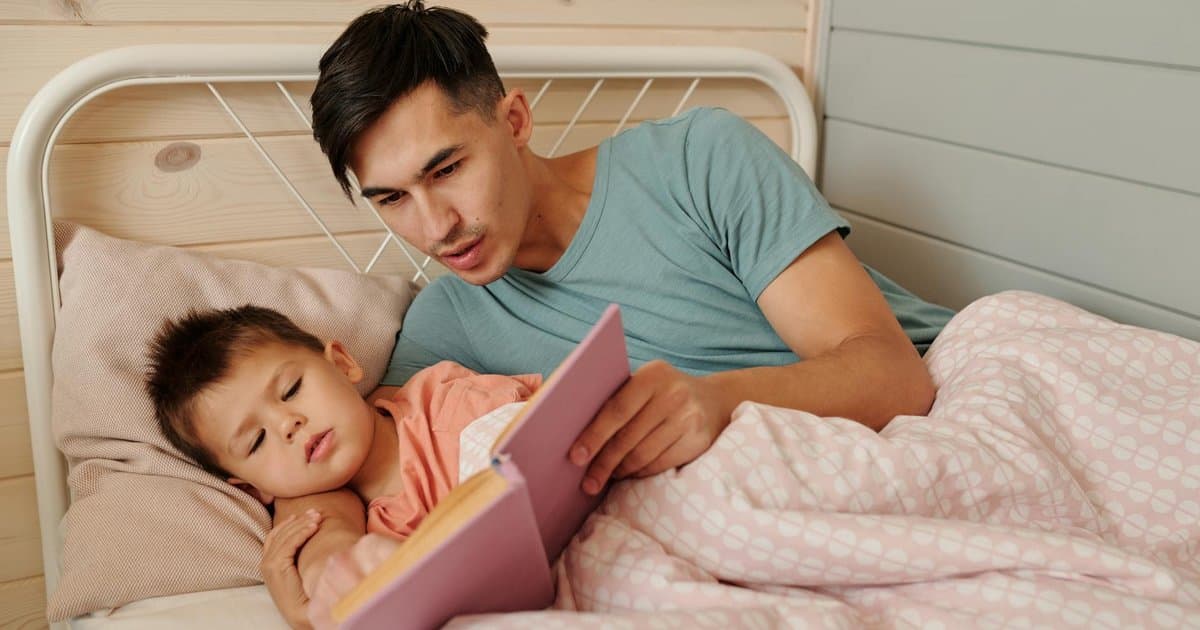
There is an emotional layer that the academic benefits can overshadow. When you read to a child, you are usually close, calm, and giving them your full attention, which is rarer in a busy day than we like to admit. The story becomes a safe place where hard feelings can be explored at a distance, through a character rather than the child directly. A book about fear, or jealousy, or a first day somewhere new, gives a child language for things they feel but cannot yet explain. That shared time also strengthens the bond between parent and child in a way that pays dividends well beyond reading. Children who associate books with warmth tend to become readers, and children who become readers tend to do better at nearly everything school asks.
The habit also prepares the mechanics of reading itself, long before formal lessons start. A child who has been read to understands that print runs left to right, that the marks on the page carry the words, that a book has a front and a back and a shape to its story. They learn that letters make sounds and that sounds build words, often without anyone teaching it directly, simply from following along. This is called print awareness, and it gives a child a running start when reading instruction begins. The child who arrives without it is not behind because they are slow, they are behind because no one gave them the exposure, and catching up takes effort that could have been avoided.
The reason this matters so much is that early gaps rarely stay small. A child who starts school with a thin vocabulary and little practice focusing does not just have a harder first year. They read less because reading is hard, and reading less means they fall further behind the children who read more, which makes reading harder still. Educators call this widening pattern a gap that feeds on itself, and it is one of the most stubborn problems in schooling. The cheapest place to interrupt it is at home, years before the first report card, with a parent and a book and twenty minutes.
The encouraging part is how low the bar actually is. You do not need to be a skilled reader or own a big library, and you do not need to do it perfectly every night. The picture book read for the tenth time still counts, the silly voices still help, and a trip to the library costs nothing. What matters is that it happens, regularly, so the words and the focus and the love of stories have time to take root. Reading aloud is not a luxury you add when life slows down. It is one of the few free tools that quietly decides how ready a child is for everything that comes next, and the cost of skipping it lands on the child.