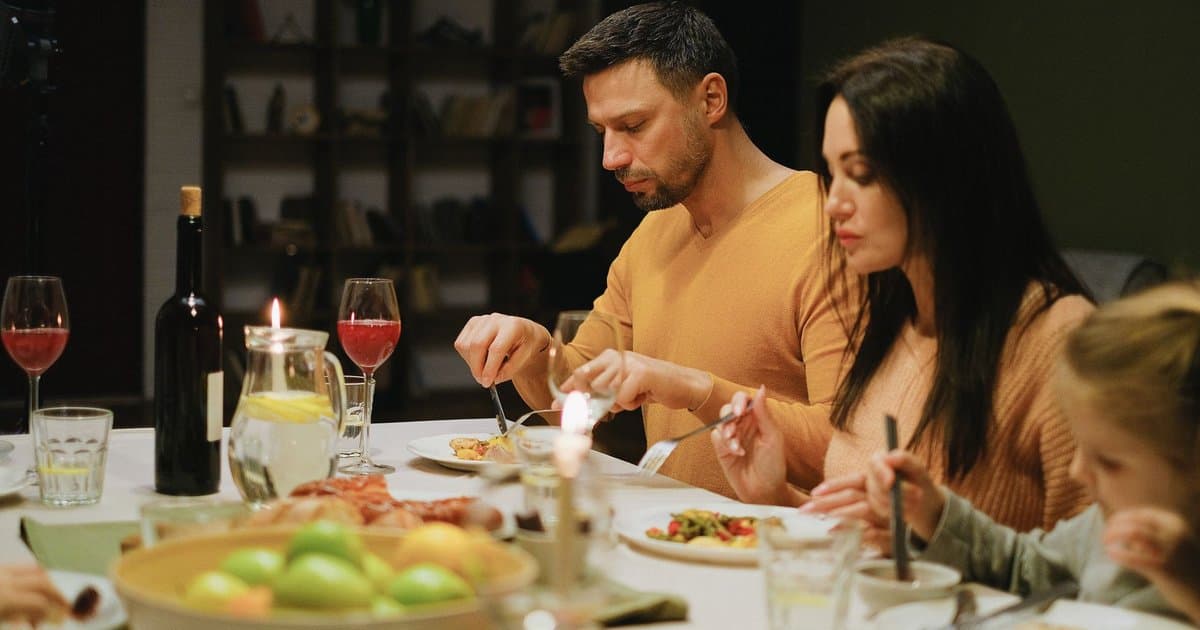
Family dinner has quietly become optional in a lot of homes. Practices run late, everyone eats at a different hour, and phones pull each person off into a separate little world. Grabbing something alone in front of a screen feels far easier than getting everyone to one table at once. On a busy weeknight it seems like a small and harmless thing to skip. You tell yourself you will make up for it on the weekend. The trouble is that the table does far more than simply feed people. When it disappears from the week, kids lose something that is genuinely hard to replace anywhere else.
Researchers have studied family meals for decades, and the pattern that comes back is remarkably steady. Kids who eat regularly with their family tend to have larger vocabularies before they even start school. Teens who share meals with their parents report lower rates of anxiety and depression. They are also less likely to get pulled into substance use and other risky behavior. The link holds up even after researchers account for income and other family factors. It is not simply that well off families happen to eat together more. Something about the meal itself, done often, seems to protect kids in ways a lecture never could.
Part of the reason is simple, steady exposure to words. A meal full of conversation is a constant stream of language for a young child. Around the table kids hear adults use words that never come up in cartoons or short videos. They hear how a story gets told, how a whole day gets described, how people ask questions and answer them. Younger children pick up vocabulary and sentence patterns just by sitting there and listening in. Nobody has to turn it into a lesson for it to work. That daily practice builds a base that shows up years later in their reading and their grades.
The deeper reason is about being known by the people you live with. A child who sits down with family most nights learns that there is a reliable place where they will be heard. Small things come out over food that would never get scheduled into a formal sit down talk. A worry about a friend, a hard moment at school, a joke from the day, all of it surfaces when people are relaxed together. Parents catch small shifts in a kid's mood that they would otherwise miss entirely. Those little cues are often the first sign that something is wrong. That steady, low pressure contact is a big part of how kids learn they matter to someone.
This is where a lot of parents talk themselves out of it, so it needs to be said plainly. The benefit does not come from a home cooked spread or a spotless, magazine ready table. Cereal counts. Takeout counts. A quick and messy meal with real conversation beats an elaborate one where everyone stares down at a phone. The value lives in the attention, not in the menu you managed to pull off. Guilt about not cooking enough keeps some families from sitting down at all. Letting go of the pressure to make it perfect is often the very thing that makes it possible to do.
A few simple rules protect the habit without turning it into another chore. Put phones in another room or in a basket during the meal, and that includes the adults. Ask open questions instead of ones that get a single word answer, like what was the best part of your day. Keep it short when you need to, because fifteen focused minutes at the table still counts for a lot. Let kids help cook or set the table so they feel like part of the whole thing. Try to protect the nights you actually can rather than chasing a perfect record every week. Consistency beats intensity here by a wide margin.
None of this assumes a picture perfect schedule, because most families simply do not have one. Shift work, two jobs, and single parenting all make a set dinner hour genuinely hard to hold. The research is about frequency built up over time, not about hitting the mark every single night. If dinner is truly impossible, breakfast together or a shared snack after work does much of the same quiet work. Three or four real meals a week is already plenty to matter for a kid. Even one protected night is far better than none at all. The goal is a steady rhythm your family can actually keep, not a rule that sets you up to fail.
So before family dinner slides off the calendar for good, it helps to see clearly what is really at stake. The table builds language, catches problems early, and tells a kid in plain terms that they belong. It costs almost nothing and asks mostly for your attention. You do not need to cook well or lay down a long list of rules to make it work. You just need to sit down together on a regular basis and put the screens somewhere else. Do that much and the rest tends to take care of itself. That plain habit gives your kids far more than the meal sitting in front of them.