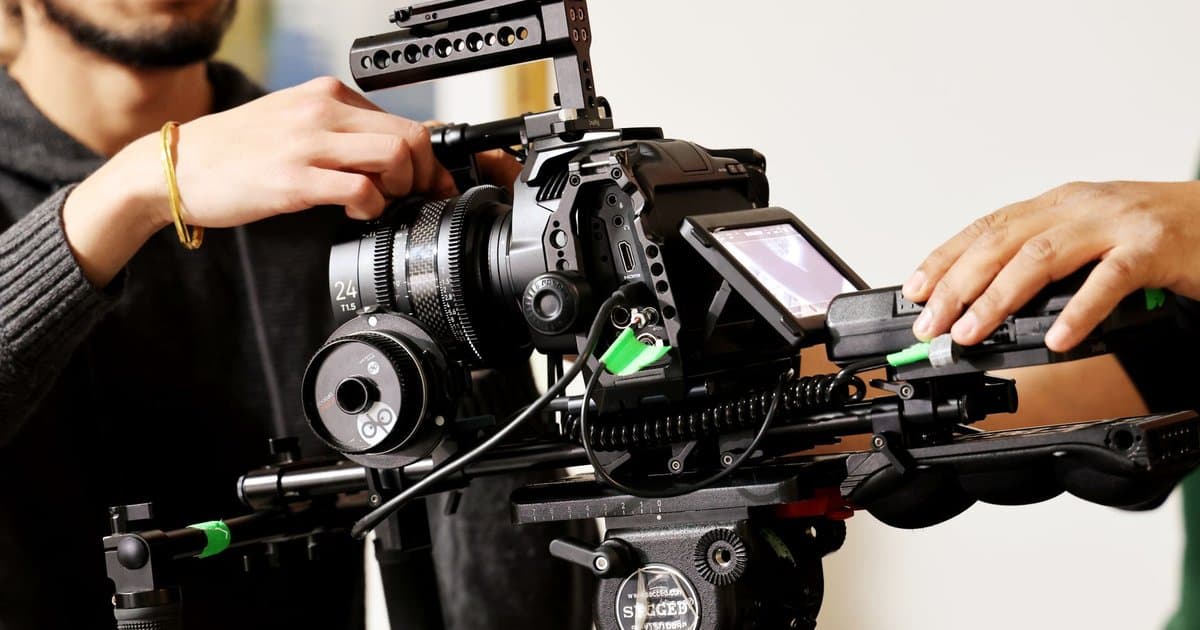
Walk into most conversations about production and the talk turns to equipment within about a minute. A better camera, a sharper lens, another light, a nicer microphone, as if the next purchase is the one thing standing between you and good work. It is a comfortable belief because gear is easy to buy and skill is hard to build. The trouble is that more equipment rarely makes a shoot better, and it very often makes it worse. The people who produce clean, watchable work tend to carry less than you would expect, not more. This is not a rule about being cheap, it is about where quality actually comes from. Here is why the gear pile lies to you.
Every piece of equipment you bring has to be carried, set up, powered, adjusted, and then packed down again. On a real shoot, time is the resource you never have enough of, and gear eats it fast. The more you bring, the more of the day disappears into fiddling with cables instead of actually capturing anything. Momentum matters more than people admit, because a subject who is left waiting around gets stiff, bored, and self conscious. A small kit that is ready in two minutes keeps the energy up and the session moving forward. A big kit that takes an hour to stage has already cost you the best and most natural moments.
More gear also means more things that can go wrong at the worst possible time. Every cable, battery, adapter, and wireless connection is one more chance for a failure that stops everything cold. When a shoot depends on ten pieces working together, the odds that all ten cooperate go down, not up. A dead battery or a dropped signal inside a complicated rig can cost you a shot you can never get back. A simple setup has fewer points of failure, so it is far more reliable when it actually counts. Reliability is invisible when it works and catastrophic when it does not, which is why simplicity is a quiet advantage.
There is a deeper cost, and it is about where your attention goes while the camera is rolling. Running a complicated setup pulls your focus onto the equipment and away from the thing that actually matters. You end up watching your gear instead of watching your subject, your framing, and the moment unfolding in front of you. The best footage comes from being present enough to notice the small human things right as they happen. Every extra device is one more thing quietly pulling your eyes off the story you came to tell. When the gear demands your attention, the shoot slowly becomes about the gear.
What actually separates good work from bad is almost never the price of the camera body. It is light, whether it flatters the subject or fights them, and whether you can read a room and place it well. It is sound, because people forgive a soft image long before they forgive audio they cannot understand. It is framing, timing, and knowing how to make a nervous person relax in front of a lens. None of those things live inside a piece of equipment, and all of them get sharper with practice. A skilled person with a modest kit will beat a beginner surrounded by expensive toys every single time.
None of this means equipment never matters, because sometimes a real limitation is the equipment itself. If your microphone cannot capture usable sound in the room you work in, that is a problem worth solving with a purchase. The trick is being honest about whether the gap is in your kit or in your own skill. Most of the time the honest answer is skill, which stings a little because skill cannot be bought in an afternoon. A good test is to ask whether a more experienced person could get a strong result with your current setup. If the answer is yes, the next purchase is a distraction rather than a solution.
This is why constraints tend to make people better rather than worse. When you cannot buy your way out of a problem, you are forced to actually solve it with skill instead. Master one light before you buy three, learn to hear bad sound before you own four microphones, and shoot enough to trust your own eye. Add equipment only when a real limitation in your work demands it, not when you are simply bored or stuck. The goal is not the smallest kit for its own sake, it is a kit small enough to disappear so the work can lead. The best operators you will ever watch make it look almost boring, because nothing about their setup fights them. They spend their attention on people and moments, which is the only place that attention was ever going to pay off. Gear is a tool, and the moment it becomes the point, the work stops being the point.