Until the late 1800s, scripture memorization was assumed in Protestant and Catholic catechesis alike. By the time of confirmation or first communion, an average church kid in the United States, England, or France could recite the Apostles Creed, the Lord's Prayer, the Beatitudes, Psalm 23, Psalm 1, the Ten Commandments, Romans 8, and dozens of catechism questions and answers. By the early 1900s the practice was already weakening. By the 1980s it had become rare outside of homeschool curricula and a few denominational holdouts. The 2024 State of the Bible report from American Bible Society estimates that fewer than 18 percent of practicing Christian adults can quote ten verses by memory. The cost is not nostalgic. The cost is functional.
What scripture memorization gives you is text that is available without a device, without a search bar, without an internet connection, and without a moment of forgetting. When the words are in you, they show up in three places that nothing else reaches. They show up in prayer, where you can pray a Psalm in line at the grocery store. They show up in temptation, where the verse you needed at 11:00 PM is not on your phone because your phone is the temptation. They show up when a friend or a child or a stranger asks a question and the answer is right there, not on a Google query that takes you out of the conversation.
The method that works is older than any app and it is the same method Charlotte Mason used in the late 1800s and that Jewish yeshivas have used for two thousand years. Pick a passage. Say it out loud three times. Write it out three times. Sleep on it. Repeat the next morning. The combination of audible repetition and physical writing recruits more brain regions than silent reading does, which is why the words stick. Four to six verses can be locked in a week with about ten minutes a day. A whole chapter takes six to eight weeks if it is a Psalm and longer if it is a Pauline argument with logic to track.
Where to start matters because difficulty curves vary widely. The five passages I recommend for an adult starting in 2026 are Psalm 23 (six verses, narrative imagery, easiest), the Lord's Prayer in Matthew 6:9 to 13 (compact, you already half know it), Romans 8:28 to 39 (the climax of one of the most important arguments in the New Testament, harder but it pays for itself for the rest of your life), Philippians 4:4 to 9 (practical, useful in anxiety), and the Beatitudes in Matthew 5:3 to 12 (theologically dense, structurally repetitive which helps memory). Memorize in that order over six to eight months. By the end of the year you will have over fifty verses locked in.
Translation matters less than people argue. Pick one and stick with it for memorized text, because mixing translations creates mental conflict at retrieval. ESV, NASB, NIV, KJV, and CSB all work. KJV has the rhythmic advantage that the cadence aids memory, which is why so many older Black church traditions still favor it for memorized passages. ESV and CSB are slightly easier on contemporary ears. Pick one and commit.
Daily review is the part most people skip and the reason most memory work decays. Once a passage is in, it needs maintenance review for about six weeks before it goes into long-term storage. The simplest system is a notecard ring. Write each verse on a 3x5 card, add the card to a ring of cards you keep on your desk, and review the whole ring once a week for the first six weeks after adding. After that, monthly review keeps everything sharp. After two years of consistent review, most passages stay accessible without active work.
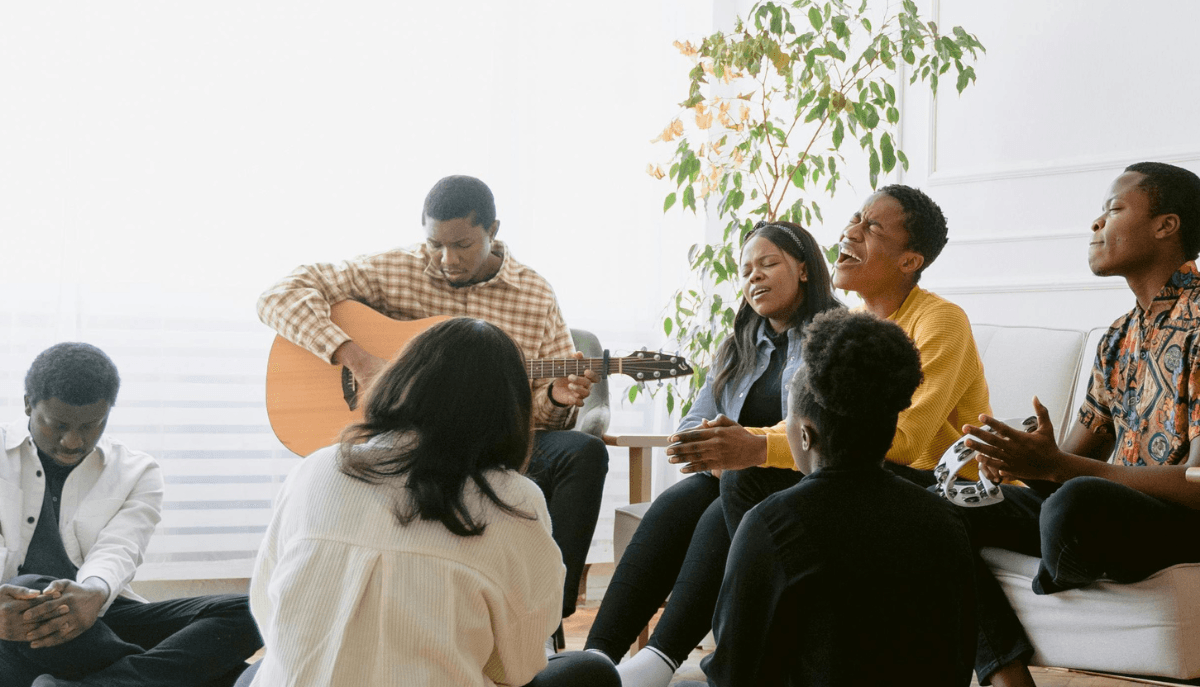
The Black church tradition in America has held this practice longer than most. In Nashville, in Memphis, in churches across the South, you can still find members in their 70s and 80s who can quote chapter after chapter of Romans, Hebrews, and the Psalms. That generation memorized scripture not as a project but as a default, often in living rooms and on porches, often through call-and-response. There is a quiet treasure in that practice and the next generation is mostly losing it. Recovering it is not nostalgia. It is a recognition that the words you carry inside you do work that no app can replicate.
Pick one passage. Say it three times. Write it three times. Sleep. Repeat tomorrow. In a year you will be a different kind of believer than you are right now, and the change will not depend on a phone, a charger, or a signal.