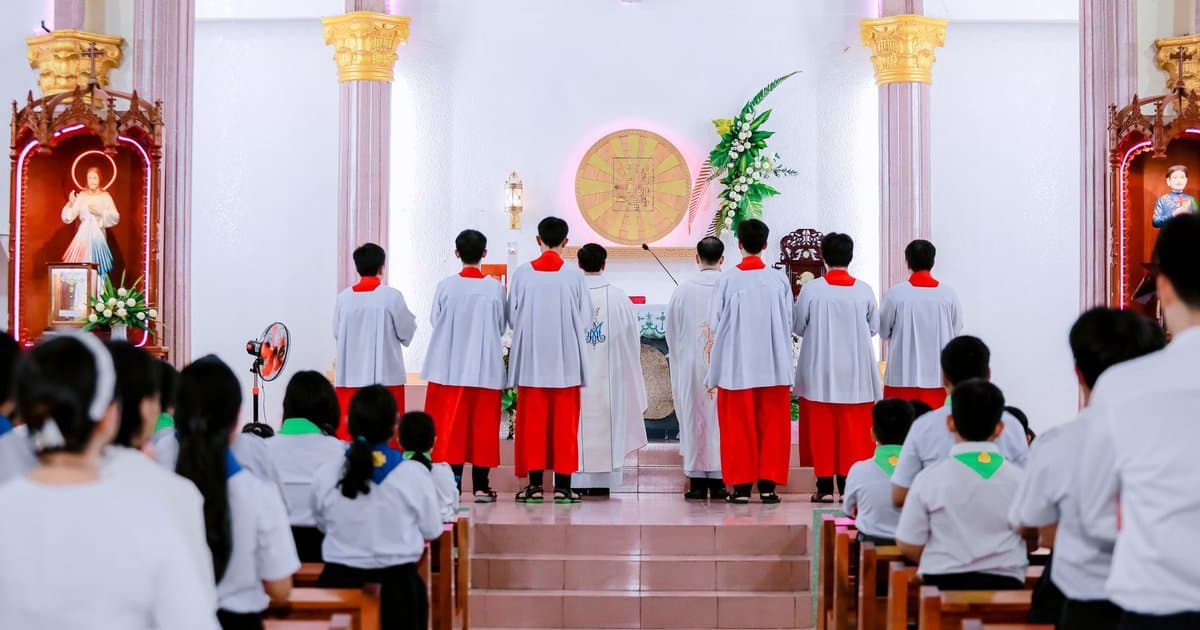
Something unusual is happening in churches across the country, and the people driving it are not the ones you would expect. Young adults who spent years identifying as atheists or agnostics are showing up to services, asking questions, and in many cases committing their lives to Christianity. This is not a marketing campaign. It is not a trend manufactured by megachurch social media teams. According to data from the Cooperative Election Study, the share of nonreligious Americans has declined for the third consecutive year. Sociologists of religion are now confirming that the decades-long rise of the "nones" has seemingly come to a halt. And the people reversing that trajectory are often under 35.
The stories themselves are striking in how personal and specific they are. Recent interviews with young converts have revealed patterns that challenge the standard narrative about faith in modern culture. One young man described moving from committed atheism to the Orthodox tradition after a period of intellectual searching that began with philosophy and ended in a cathedral. An Iranian convert described a vision of Jesus that changed the entire direction of his life. These are not people who grew up in the church and came back. These are people who had no foundation of faith and built one from scratch, often against the expectations of their families and social circles.
What is driving this shift? Part of it is what some cultural observers are calling a "vibe shift" around Christianity. For years, religion in public culture carried the baggage of political entanglement, institutional scandal, and performative morality. But a younger generation is beginning to separate the institution from the faith itself. They are reading the Gospels without the filter of cable news. They are attending liturgical services because the ritual and reverence offer something that algorithms and content feeds cannot. The appeal is not relevance. The appeal is depth. They are not looking for a church that looks like their social media feed. They are looking for something that feels older and more permanent than anything they have encountered in the digital world.
There is also a loneliness factor that cannot be ignored. The mental health crisis among young adults has been well documented, and while therapy and medication serve important roles, many young converts describe a specific kind of emptiness that clinical solutions did not touch. They describe a hunger for meaning that goes beyond wellness and self-care. Christianity, particularly in its more traditional expressions, offers a framework for suffering, purpose, and community that secular culture has struggled to replicate. The appeal of the Orthodox and Catholic traditions among converts is particularly telling. These are not easy traditions to enter. They require study, commitment, and a willingness to submit to something larger than personal preference.
This does not mean the institutional church gets a pass. Many of these same converts are blunt about the failures of organized religion and the reasons their generation walked away in the first place. They are not interested in culture wars or political endorsements from the pulpit. They are interested in the person of Jesus and the historical claims of the faith. Their conversion stories tend to follow a similar arc: intellectual curiosity, existential dissatisfaction, encounter, and then commitment. It is a journey that takes months or years, not a single emotional experience at a worship concert.
Pastors and church leaders who are paying attention should recognize what this moment represents. It is not a revival in the traditional sense of mass emotional events. It is quieter and more deliberate than that. It is individuals making costly personal decisions to follow a faith that their peers still largely dismiss. The church's role in this moment is not to celebrate prematurely or to claim credit. It is to be present, to be serious about theology, and to create spaces where hard questions are welcome. The converts who are arriving did not come because the music was good. They came because they ran out of places to look for answers and finally opened the door they had been avoiding.
The data will continue to shift. Cultural moments come and go. But the pattern of young people moving toward faith rather than away from it is now measurable and consistent. Whether this becomes a sustained movement or a temporary correction will depend largely on whether the church can receive these new believers with the seriousness they deserve. They are not looking for entertainment. They are looking for truth. And for the first time in a generation, they are willing to say so out loud.