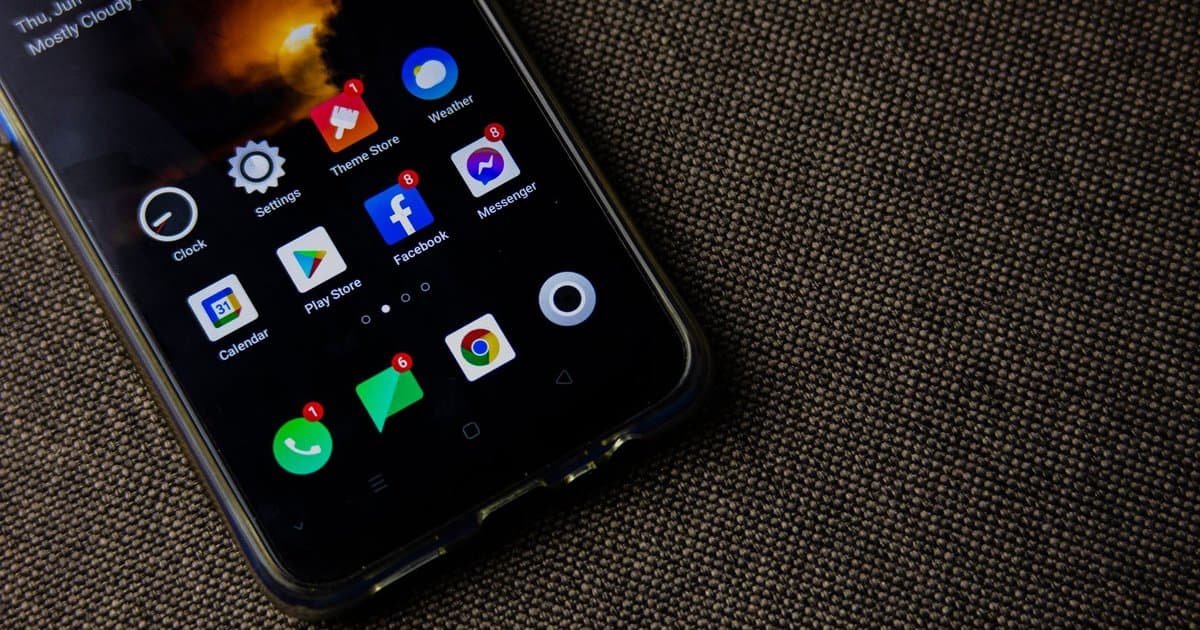
Almost everyone does it. You open the app switcher, see a wall of cards, and flick them all away until the screen is empty. It feels like tidying up, and it carries an assumption that each of those cards is an app sitting there draining the battery. That assumption made sense fifteen years ago on early smartphones and on desktop operating systems, where an open program really was running. On current iPhones and Android phones it is mostly wrong, and the habit tends to cost battery rather than save it. Apple has said as much publicly, and the reason has to do with how the memory system actually works.
Those cards are not a list of running programs. They are a list of recent apps, and most of them are frozen. When you leave an app, the operating system takes a snapshot of its state and moves it into a suspended condition where it holds memory but gets no processor time. A suspended app is not calculating anything, not drawing anything, and not consuming meaningful power. It is closer to a bookmark than to a running engine. The card in the switcher is a picture of where you left off, not proof that anything is happening behind it.
Keeping that frozen app in memory is deliberate, and it is the part people fight against without knowing it. Random access memory is fast, and holding a suspended app there means reopening it is nearly instant, since nothing has to be rebuilt. When the phone needs memory for something new, it evicts the oldest suspended apps on its own. That eviction is automatic and it is much better at guessing than you are, because it can see actual memory pressure. Empty memory is not a goal on a phone. Unused memory is wasted memory, and the system is designed to keep it full.
Here is where the habit backfires. Force closing an app does not put it to sleep, it kills the process entirely. The next time you open it, the phone has to do a cold launch, which means loading the code from storage, rebuilding the interface, reconnecting to the network, and re authenticating. That burst of processor, storage, and radio work costs real energy. Reopening a suspended app costs a fraction of it. So a person who clears the switcher ten times a day and reopens the same five apps is paying for dozens of cold launches they did not need to pay for.
The real drains are elsewhere and they are easy to find. Screen brightness is usually the single largest consumer, especially on large displays at high refresh rates. Cellular radio effort comes next, and it climbs sharply in weak signal areas where the phone raises transmit power hunting for a tower. Location services running continuously rather than only while in use come next, along with apps granted background refresh they do not need. Battery health matters too, since an aging cell holds less charge and sags under load. Every one of those shows up in the battery screen, which lists usage by app with a breakdown of screen time versus background time.
That screen is the tool worth learning, because it replaces guessing with evidence. Look for an app with high background activity relative to how much you actually used it, since that gap is the signal. When you find one, the fix is a setting rather than a swipe. Turn off background app refresh for it, change location permission from always to while using, or turn off notifications that wake the screen constantly. Those changes persist. Swiping the card away does not, because the app returns to the same permissions the moment you open it again.
There is a short list of times force closing is the right call, and it is worth knowing so the habit becomes a tool. If an app is frozen, unresponsive, or clearly misbehaving, killing it is the correct fix. If one app shows genuinely high background use and you cannot change the setting, closing it helps until you can. If an app is streaming audio, recording, navigating, or downloading, it is truly running and closing it stops the work. Outside those cases, leave the switcher alone. The phone is already managing this better than the manual version, and the fastest way to improve battery life is to turn the screen down and check the battery screen instead.