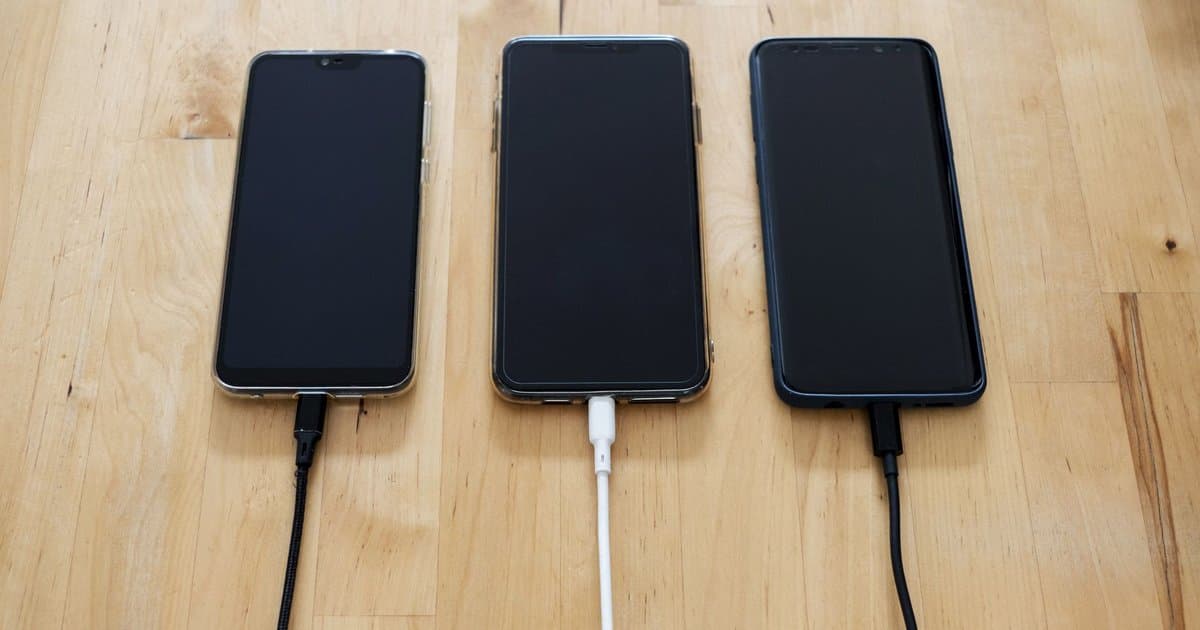
Almost all of us do the same thing every night without thinking. We plug the phone in before bed and let it sit at a full charge until morning. It feels like the responsible move, sending yourself into the day at a clean one hundred percent. For years that was simply how you were supposed to treat a phone. The strange truth is that this comfortable habit is one of the worst things for your battery. The full charge you chase every night is quietly shortening the life of the part that is hardest to replace.
To see why, you have to know a little about how these batteries age. Nearly every phone runs on a lithium ion battery, and those batteries do not like extremes. Sitting at a very high charge puts the internal chemistry under real stress. Hold a battery near full for hours and that stress slowly wears down its ability to store energy. This is why a two year old phone dies by mid afternoon when a new one lasts all day. The battery did not break, it simply aged faster than it had to. That aging is mostly permanent, because a worn battery does not heal itself. Every long night at a full charge nudges it a little further along.
Battery researchers talk about a comfortable middle zone, and the numbers are easy to remember. A lithium ion battery is happiest living somewhere between roughly twenty and eighty percent. In that range the chemistry stays relatively relaxed and ages far more slowly. The stress climbs as you push toward a completely full charge and lingers there. It also climbs when you let the battery drain all the way to empty. Keeping your phone in that middle band, rather than pegged at full, can add many months to its useful life. You will never notice the difference on any single day. You notice it a year later, when your phone still holds a real charge.
Heat is the other quiet killer, and it often shows up alongside charging. Batteries hate warmth even more than they hate a high charge. Fast charging generates heat, and so does a phone buried under a pillow while it charges overnight. Combine a hot environment with a full battery and you are stacking two stresses at once. That is why a phone left charging on a sunny windowsill ages so poorly. If you want the battery to last, keep it cool while it drinks up power.
This is where the overnight habit really works against you. Plugging in at bedtime means the phone hits full within an hour or two, then simply sits there. For the rest of the night it holds at one hundred percent, topping off in tiny bursts every time it dips. So the battery spends its longest, most consistent stretch of the day parked in the worst possible zone. You are not charging your phone all night so much as marinating it at full. Multiply that by hundreds of nights and the wear adds up in a way you can feel. The charger is not the villain here, the long idle hours at full are. Your phone finished its real work hours before you ever woke up.
Here is the quiet admission hidden in your settings. Phone makers know all of this, which is why newer phones try to protect you from yourself. Most now include a feature that learns your schedule and pauses the charge around eighty percent. It then finishes the last stretch right before your usual wake up time. That feature exists because the companies understand that a constant full charge damages their own batteries. Turning it on is one of the simplest things you can do. If your phone offers optimized or adaptive charging, it is worth switching on today.
It is also worth clearing up a couple of old myths while we are here. You do not need to drain your phone to zero before charging it, and doing so actually hurts. That advice came from older battery types that no longer sit in your pocket. Modern lithium ion batteries have no memory effect, so partial charges are perfectly fine and even preferred. Little top offs throughout the day are better for the battery than one deep cycle. Charging from thirty to sixty percent during lunch does no harm at all. Short, frequent charges suit these batteries better than one deep drain and refill.
None of this means you have to obsess over every percentage point. The goal is simply to break the reflex of chasing a full charge and holding it. Turn on optimized charging so the phone manages that last stretch for you. Try to keep the battery loosely in that middle band during normal days. Avoid leaving it hot while it charges, and skip the deep drain to empty. Do that, and your battery will hold a real charge for far longer than you are used to. The best habit here is the one that feels a little less thorough.