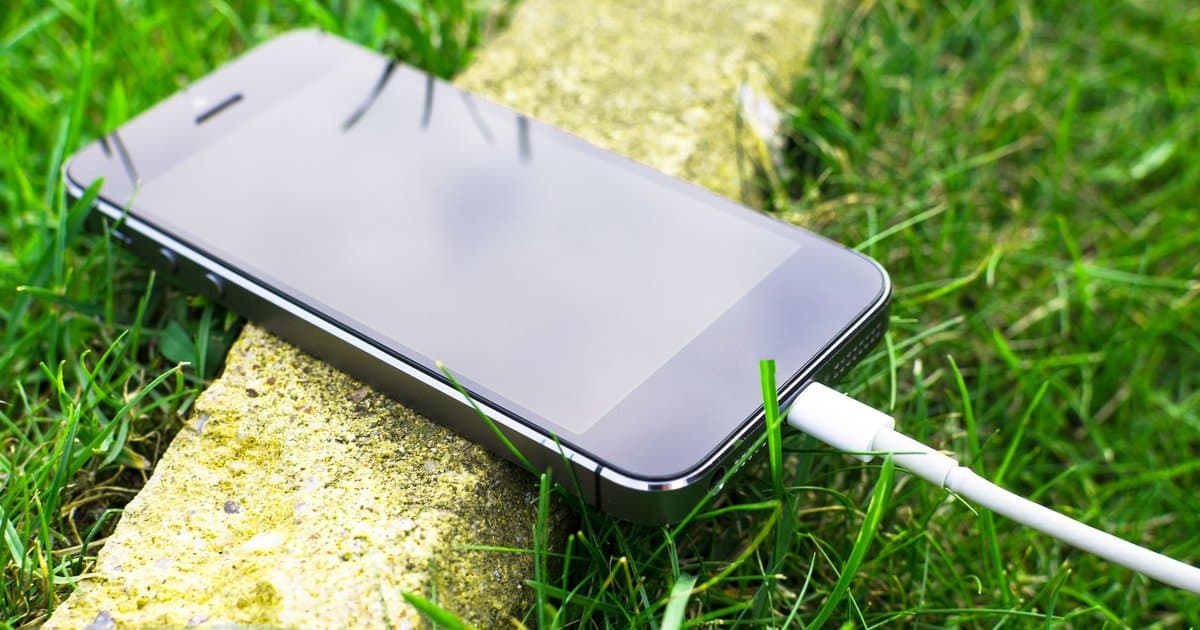
Your battery is at four percent, your gate is far away, and there it is. A free USB port built right into the wall or the charging kiosk, promising to save you. You plug in without a thought, because charging is charging. Most of the time nothing bad happens, and that is honest to say up front. But that same port can carry more than power, and security agencies have warned about the risk for years. The threat has a name that sounds like a joke but is not. It is called juice jacking.
To see the risk, you have to know one fact about the cable in your pocket. A standard USB cable carries two things at once, electric power and data. It is the same cable that charges your phone and moves your photos to a computer. When you plug into a wall outlet with your own adapter, only power flows, because an outlet cannot send data. When you plug into a public USB port, you are trusting whatever sits behind that port. If someone tampered with it, that hidden device could try to talk to your phone.
In the worst version, a rigged port does two things. It can try to copy data off your phone, such as photos, contacts, or files, while it charges. It can also try to push software onto your device, a hidden program that keeps stealing after you unplug and walk away. This is not science fiction. Security researchers have built working demonstrations, and both the FBI and the FCC have put out public notices telling travelers to be careful with public charging stations. The tools to pull it off are cheap and small.
Now the honest part, because grounded beats scary. Confirmed real world attacks on regular travelers are rare, and modern phones have added strong defenses. Today when you plug into anything that wants data, your phone usually asks whether to trust this computer or allow data access. If you never tap yes, the data side stays shut and only power flows. So the sky is not falling, and you do not need to panic at every airport. Still, the fix is so cheap and easy that there is no reason to take the gamble.
The simplest habit is to skip the public USB port entirely. Carry your own charging block, the small brick that plugs into a normal wall outlet, and use that instead. Power from a wall outlet cannot carry data, so the whole risk disappears. Wall outlets sit next to most of those USB kiosks anyway, so you rarely lose anything by choosing them. Pack a short cable and a compact adapter in your bag and you are covered. This one swap solves the problem better than any app ever could.
A portable battery pack is the other clean answer. Charge the pack at home where you trust the outlet, then top off your phone from the pack while you travel. Your phone never touches a public port at all, so there is nothing to trust and nothing to fear. A small pack is cheap, fits in a pocket, and doubles as backup power on a long day. For anyone who travels often, it is one of the more useful things you can carry. Buy one once and stop thinking about airport ports for good.
If you truly must use a public USB port, a few steps lower the odds. Buy what is sold as a data blocker, a tiny plug that sits between the port and your cable and lets only power through. When your phone asks whether to trust the device or share data, always choose no or charge only. Power your phone all the way off before charging if you can, since a phone that is off is far harder to reach. These are small steps, and any one of them helps. The trusted answer, though, is still your own block in a wall outlet.
The same careful mindset helps with public wifi, the cousin of the public charger. Open airport and coffee shop networks get you online for free, but you cannot see who else is on them. On a poorly secured network, a snoop could try to watch traffic that is not locked down. Stick to sites and apps that use a secure connection, which most major ones now do by default. Avoid signing into your bank or typing card numbers on open wifi if you can wait. A phone hotspot from your own carrier is safer than a random free network. For frequent travelers, a trusted VPN adds another layer over any connection. The theme stays steady, since convenient and free usually ask for a little trust in return.
The bigger lesson goes past charging. The stuff we plug into, connect to, and tap yes on all deserves a second of thought. Free and convenient often comes with a quiet trade, and the trade is usually your data. You do not need to live afraid of every cable and every port. You just need a couple of simple habits that make the easy attacks pointless. Carry your own power, keep your data locked behind a no, and let the risky ports charge someone else's phone.