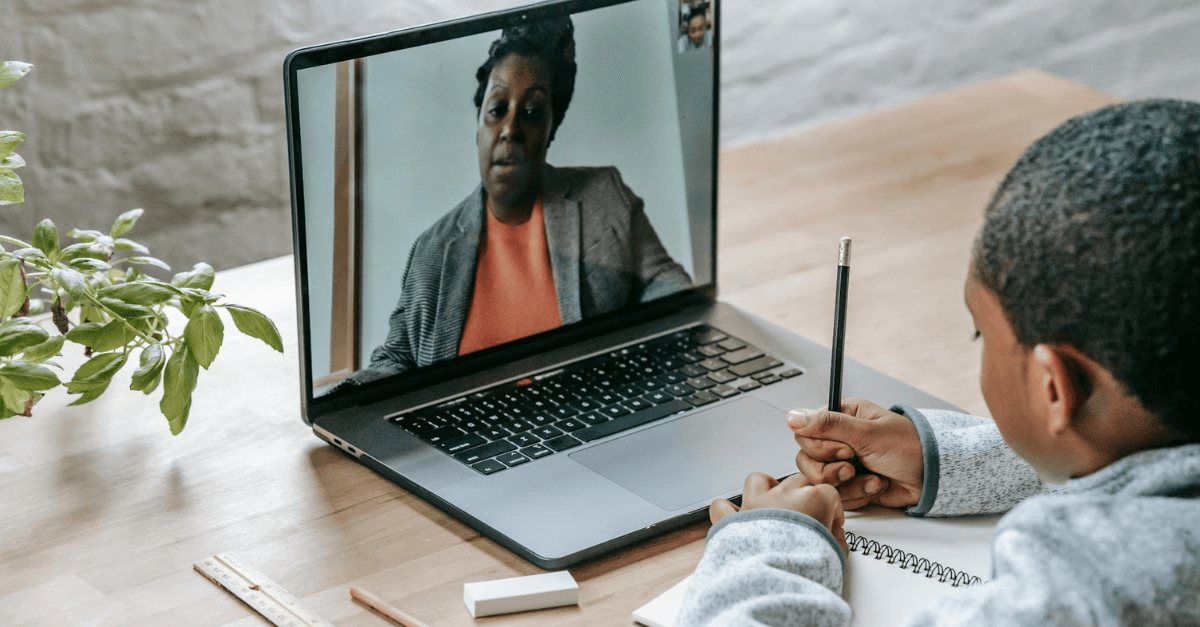
Parents in upper-middle-income families have spent the last 15 years assuming that the best math intervention for an elementary-age child is a private human tutor. The hourly rate ranges from 60 to 120 dollars depending on city, the tutor sits with the child for 45 to 60 minutes a week, and progress comes slowly across a school year. The 2025 Stanford Center for Research on Education Outcomes published a study that complicates the assumption. AI tutoring tools, used 20 to 30 minutes daily, produced math gains in children under 12 that exceeded private human tutoring by a margin of 28 percent on standardized assessments over a 16-week intervention. The data is uncomfortable because it contradicts what most parents have been paying for.
The mechanism is not that the AI is smarter than the human tutor. The mechanism is structural. AI tutoring tools deliver micro-doses of instruction every day rather than a single larger dose once a week. The literature on skill acquisition is consistent that distributed practice outperforms massed practice for retention and skill transfer. A 25-minute daily session totals 175 minutes a week, which is more than double the 60 to 90 minutes a child gets from a private tutor. The combination of distributed practice and higher total time produces the gain. The AI is not the magic. The schedule is the magic, and the AI is the delivery mechanism that makes the schedule sustainable.
The second factor is feedback latency. When a child works through a math problem with an AI tutor and makes an error, the feedback comes within seconds. The error is corrected, the misconception is addressed, and the next problem builds on the corrected understanding. With a once-weekly tutor, a child can spend six days reinforcing a misconception in homework before the tutor sees it. By that point, the misconception is harder to unlearn. The 2024 study at the Vanderbilt Peabody College tracked 840 elementary students and found that feedback within 30 seconds of an error produced retention 2.3 times higher than feedback delivered the next day.
The third factor is the difficulty calibration. AI tutoring platforms now use adaptive algorithms that adjust problem difficulty in real time based on student performance. The student stays in the productive struggle zone (around 80 percent success rate) for almost every minute of the session. Human tutors approximate this but cannot match the precision because they are working with their attention split between explanation and assessment. The student spends more minutes in the optimal learning zone with the AI, which is why the gain compounds. Over 16 weeks, the difference is meaningful. Over a full school year, it is dramatic.
The current best AI math tools for elementary children are Khan Academy's Khanmigo (15 dollars per month), DreamBox (used by many school districts and available privately at 12 to 18 dollars per month), and Synthesis Tutor (60 dollars per month, more expensive but with stronger pedagogy). Compared with private tutoring at 60 to 120 dollars per hour times 4 hours per month, the cost is 4 to 8 times lower. The math on price is straightforward. The math on outcomes favors the cheaper option.
There are real caveats. AI tutoring requires a child willing to engage with a screen-based tool consistently. Some children resist screen time. Some children disengage when there is no human social presence. For those children, a human tutor is still the right choice even if the math points the other way. The benefit also assumes the tool is being used consistently. A 25-minute session three times a week produces a fraction of the benefit. The protocol that wins requires daily engagement, which is the parental supervision burden that the wellness coverage often glosses over.
There is a second caveat that matters for older children. The Stanford study specifically focused on math under age 12 and reading comprehension under age 14. For more abstract subjects (advanced algebra, calculus, essay writing) and older students, the gap closes and in some cases reverses. Human tutors retain an advantage for higher-order thinking, complex problem decomposition, and Socratic dialogue. The right answer for a 10-year-old struggling with multiplication is different from the right answer for a 16-year-old struggling with proof-based geometry. Parents should not generalize the elementary math finding to all subjects and all ages.
For parents currently paying for elementary math tutoring at 200 to 400 dollars a month, the data suggests reallocating most of that spend toward an AI tool plus a once-monthly check-in with a human tutor for diagnostic and motivation purposes. That blended model captures most of the AI benefit at much lower cost while preserving the human relationship that helps children stay engaged. Several Nashville-area schools have started recommending exactly this blend, and the school district reports parental satisfaction higher than with traditional tutoring at significantly lower cost.
The honest take is that the human tutoring industry is overdue for the disruption that the data is now confirming. The market will adjust. Private tutors will move toward higher-value services (advanced subjects, test prep, learning differences specialists) and away from elementary math drill that the AI now does better. Parents who anchor on the assumption that human tutoring is automatically better are paying a premium for a service that the evidence no longer supports. The shift is uncomfortable. The data is what it is. The kids learning math right now do not care about our assumptions. They care about whether they understand fractions by Thursday.