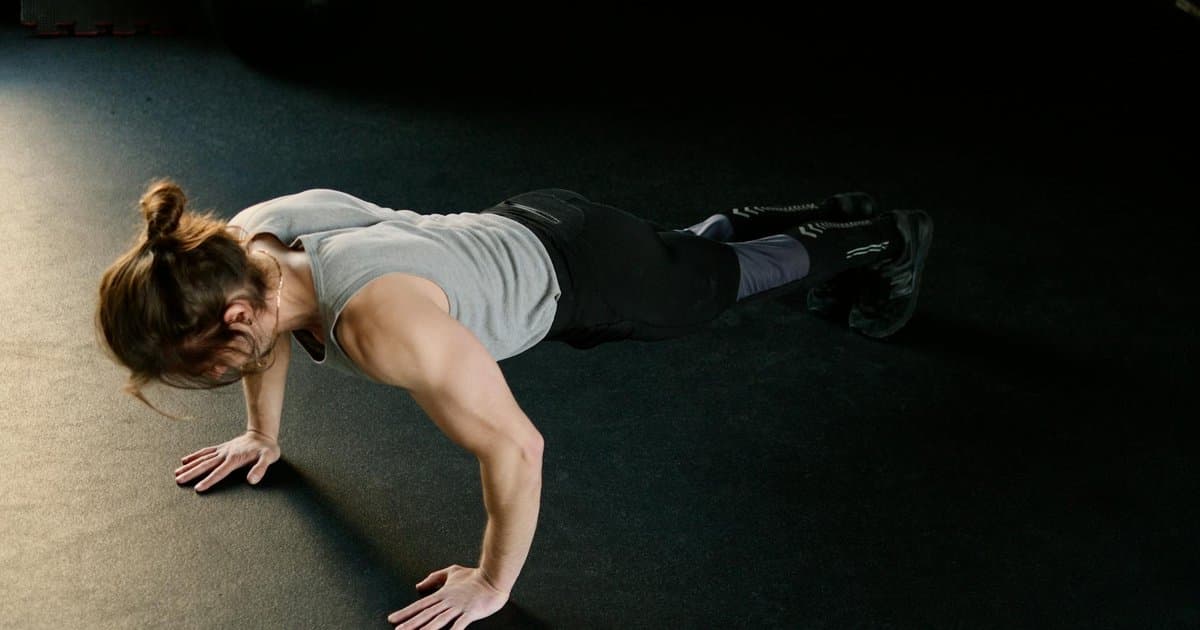
The push-up is the most underrated upper body movement most people own and never use. Schools turned it into a punishment, gyms turned it into a warm up, and most adults stopped doing them around the time they got their first office job. That is a loss, because a well programmed push-up routine will build a real chest, real shoulders, and real triceps without a single dumbbell. The catch is that almost no one progresses the movement past the standard floor version they learned in middle school. Without progression, the body stops adapting after a few weeks. Variation is what keeps the stimulus high enough to keep building muscle.
The first variation is the slow tempo push-up. Same setup as a regular push-up, but you lower for four full seconds, pause for one second at the bottom, then press up under control. Most people fail to feel push-ups in their chest because they rush the descent and skip the bottom of the range. A slow tempo cooks the chest and triceps in a way that bouncy reps never will. Aim for three sets of six to eight on this version. If you can rip out twelve, your tempo is still too fast and you need to slow it down further.
The second variation is the elevated feet push-up. Put your toes on a couch, a chair, or the second step of a staircase. The higher you elevate, the more your shoulders take the load. This variation is the cheapest way to push a beginner toward overhead press strength without owning a barbell. Three sets of eight to twelve will hit the front delts hard. Once you can complete twelve clean reps with feet on a chair, raise the elevation again until you are working toward a near vertical position.
The third variation is the close grip push-up, sometimes called a diamond push-up. Bring your hands inside shoulder width, fingers angled slightly inward, and keep your elbows tight to your ribs as you lower. This version shifts most of the work onto the triceps, which is the muscle that actually grows your arms more than biceps ever will. Start with three sets of five to eight, especially if you have not trained triceps directly in years. The first time you try this you will feel why people who can only do regular push-ups still have small arms.
The fourth variation is the archer push-up. Set up wider than normal, then lower your body to one side while keeping the other arm straight and unloaded. The working side carries almost the full bodyweight, which is the closest a beginner can get to a one arm push-up without years of training. Three sets of four to six per side is enough to start. This variation builds asymmetric strength, exposes side to side imbalances most people never notice, and develops the kind of stabilizer strength that protects your shoulders for the next two decades of training.
The fifth variation is the deficit push-up, sometimes called a dumbbell deficit or book deficit. Place each hand on a stack of two thick books, two yoga blocks, or two short stools, and let your chest sink below the line of your hands at the bottom. The extra range of motion is what most home workouts are missing, and it forces the chest to stretch under load. Stretch under load is one of the biggest drivers of hypertrophy that current strength research has confirmed in the last five years. Three sets of six to ten with full range will build more chest than any flat bench press done with bad form.
Programming these five variations is easier than people think. Pick two for an upper body day, alternate the pairs across the week, and run the routine three days per week with at least one rest day in between. A simple split looks like this. Monday you do slow tempo and close grip. Wednesday you do elevated feet and archer. Friday you do deficit and slow tempo. Add one set every two weeks until you hit five hard sets per variation. Most people stall because they keep doing the same number of sets for months, then quit when nothing changes. Adding volume slowly is what keeps the body adapting.
The reason this works is that bodyweight progressions follow the same rules as barbell progressions. Increase the load, increase the range, increase the difficulty, or increase the volume. Push-up variations cover three of those four levers without buying a single piece of equipment. You can train this routine in a hotel room, a small apartment, or a backyard with no gym access, no excuses, and no commute. Six months of consistent push-up training will reshape your upper body more than most people expect. The barrier was never gear. The barrier was always programming.