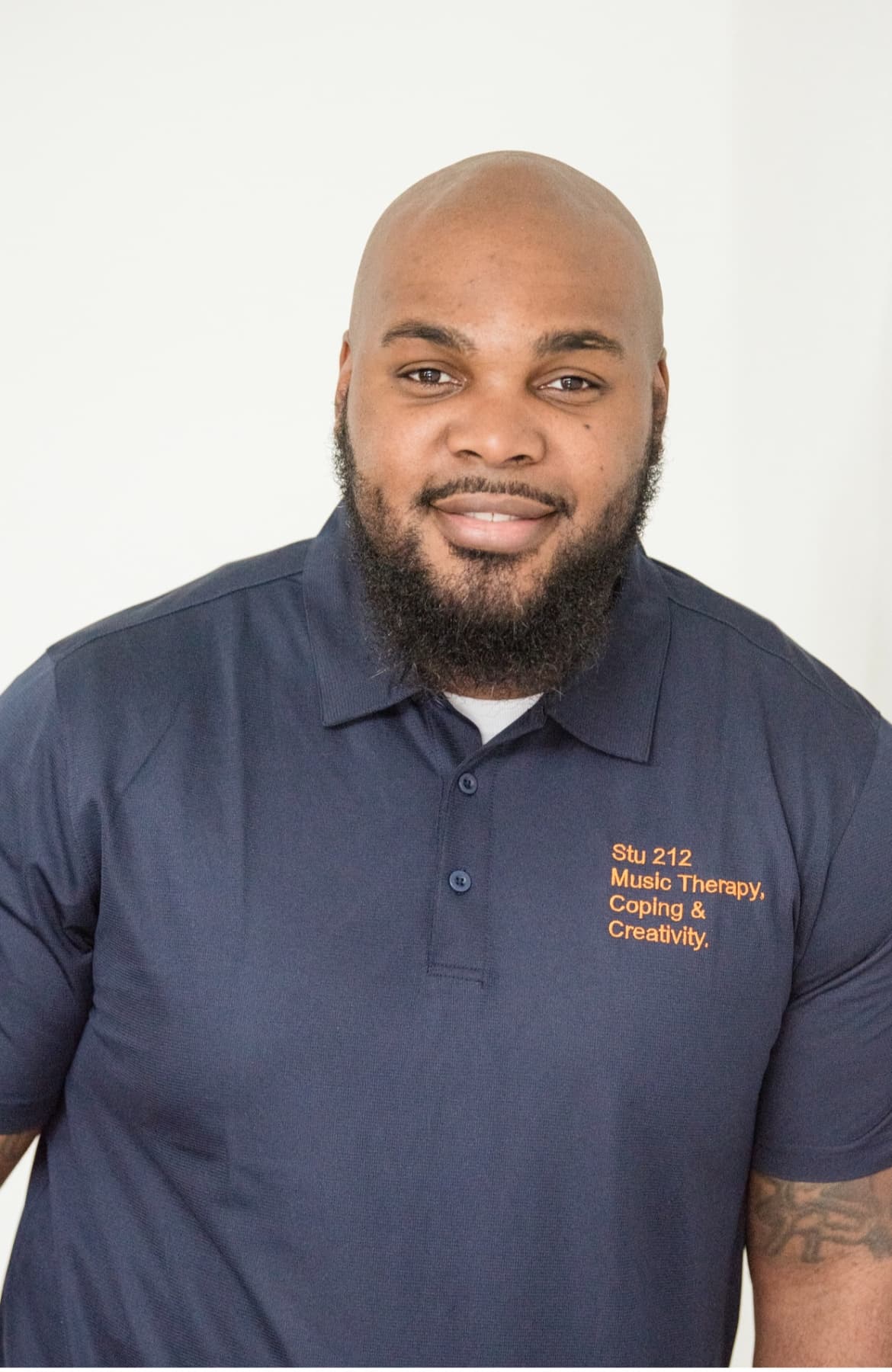
He starts most mornings with a prayer and a motivational video on YouTube. Then he loads the mobile studio and drives. Some days it is a school. Some days it is a juvenile hall. Some days a library or a rec center. By the end of the week he has worked two or more contracts a day, planned or run a pop-up, and sat through a stack of Zoom calls with clients. The youth he records with leave the session having said things, into a microphone, they have never said to anyone.
Jeremy Phillips is the founder and CEO of Stu 212 Music Therapy, Coping, & Creativity, based in Oakland, California. He has been doing this work for four years. The plain version is that he uses music as a coping mechanism to help young people deal with what they are carrying, alongside health and wellness programming and mentorship. The less plain version is that he is doing it as an independent contractor, with a studio he brings to the client, paid through school districts, counties, and the contractors who hire him.
My life is where it is now because I transformed my weakest moments into strengths, and I can now help others navigate their challenges.
A smart outsider hears music therapy and assumes it is a soft add-on, something nice that schools tack onto a wellness budget. Phillips will tell you the room tells a different story. Every client he has worked with has been affected by it. Kids open up on a track in ways they will not open up in a counselor's office. The microphone gives them a frame. The beat gives them cover. What comes out is the thing they have been holding.
He grew up in Oakland in the 90s, in a neighborhood with drugs and violence and family all stacked on top of each other. Five siblings. Both parents present, both working, the family barely making ends meet. His father told him never to give up, to work for what he wanted, and that family was everything. Music was the coping mechanism then too. He says, plainly, that it saved his life.
The turning point was not clean. He was a troubled kid who lost friends and family. He was arrested for something he did not do, and he remembers the feeling of being a young Black man pulled into the system, with the door starting to close behind him. At 20, after years with a clean record, he was charged for a weapon that was not his. He avoided jail but landed on probation for three years. The pending charges made it almost impossible to find work. He describes that stretch as walking on eggshells, trying to provide for himself while figuring out what kind of life he was actually going to have. The record has since been expunged.
The case pushed him into a mentoring program called Crossroads, which required him to enroll in community college, look for work, and document the effort. He calls it heartbreaking at the time and pivotal in hindsight. College got finished. The work with youth started. The pattern of his life shifted. He will not name a decision he would undo. The path he walked is the one that put him in front of the kids he now serves.
Faith without works is dead.
Faith shows up in the daily work the way he was taught it should. He cites the line about faith without works being dead, and then he describes what works looks like for him: undivided attention in the room, the best recording he can give a kid on a given day, gift cards and shoes for the students who show up and deliver. Most of that comes out of his own pocket. He does not frame it as sacrifice. He frames it as the job.
The constraint right now is staffing. He is one person carrying a model that wants to be in more schools, more halls, more rec centers than one person can reach. The waitlist of places that want Stu 212 in the building is longer than his calendar. Growing the team is the next gate.
A Juneteenth celebration is on the calendar. New partnerships for the fall are close to signed. He says things are working out and continuing to grow. He is still the one driving the mobile studio to the next site in the morning.