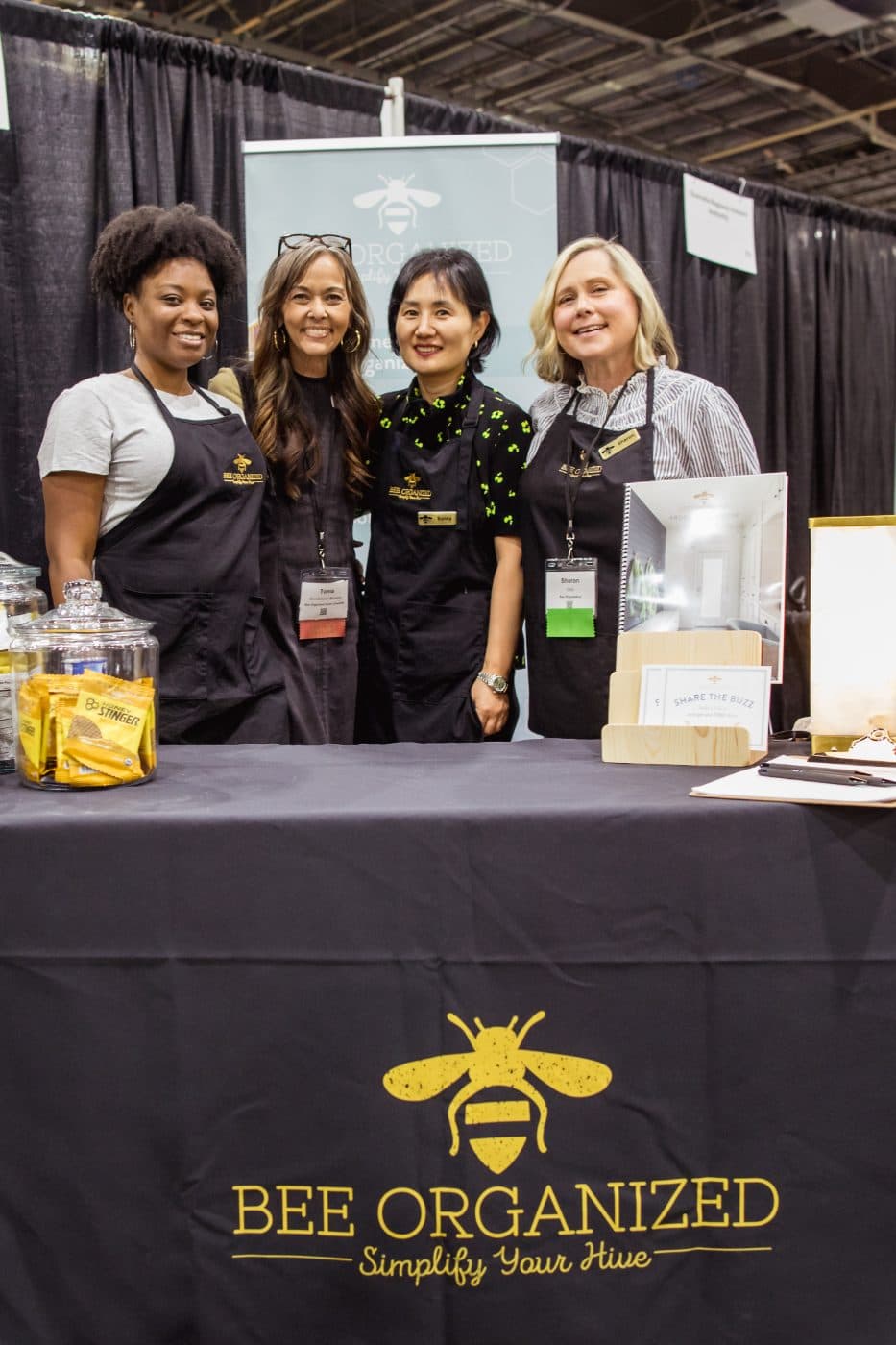
She is up before the 5:30 alarm, makes coffee, and spends about an hour on her knees with a Bible. Four or five mornings a week she walks fast, does crunches and squats, and skips the pushups because the wrist she broke on the job is still healing. By 7:30 she is in email, reaching out to leads, scheduling her Bees, prepping for the day's jobs. New client jobs she starts herself. Once the relationship is built, she trusts her team to run the work without her.
Tonia Bendickson Blooms is the owner of Bee Organized South Charlotte, a home and business organizing franchise in Charlotte, North Carolina. She is five months in. She calls this her Plan C season. Plan A was twenty years as a TV journalist across three markets. Plan B was a stretch as an Outreach Pastor at Elevation Church, where she helped start the church's outreach arm. Plan C is this.
The money math is honest. The business is funded through a Rollover Business Startup, drawing on the one retirement account that survived the end of her second marriage, the one she had built during her years on staff at Elevation. She is not yet breaking even. There are franchise fees and brand fund fees to what the network calls the Main Hive in Kansas City. There are nine Bees on payroll, with three more in the interview pipeline. More money is going out than coming in, and she says it is all right on time.
My idol let me down. But God was still there. And He's been bringing me and my world back to life.
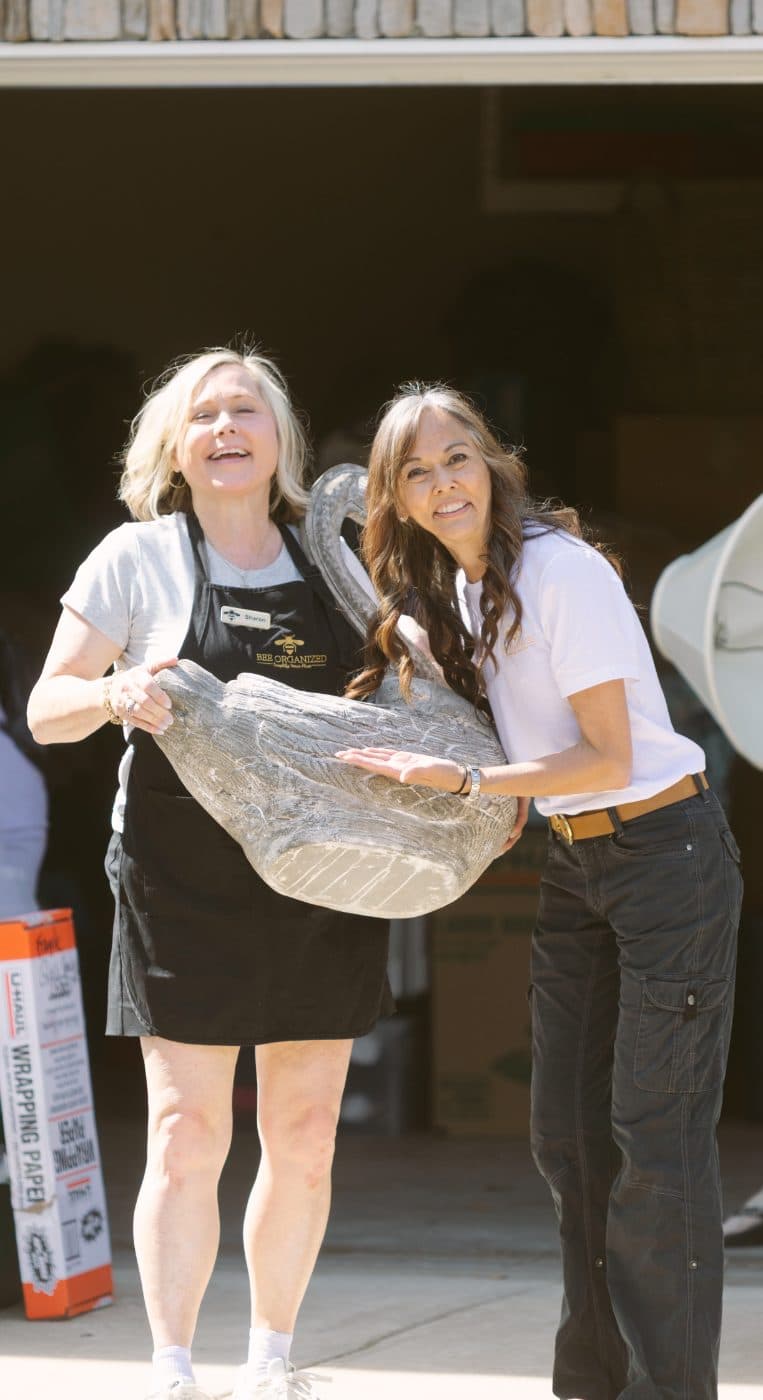
A smart outsider hears professional organizer and pictures color-coded bookshelves and curated closets. Blooms will tell you the aesthetic is the surface, not the point. She points to Carrie Lane's book on the industry as a symptom of modern work-life imbalance, and to Margareta Magnusson on Swedish Death Cleaning, the practice of dealing with your own possessions now so your grieving family does not have to. The work is about spaces that support people instead of overwhelming them, and letting go of things like the dusty swan statue waiting in the garage. She used to assume professional organizers had it all together. She describes herself, plainly, as a recovering crammer jammer stacker who knows what it is to feel buried by stuff from a life you are no longer living.
She grew up in Spokane, Washington, the daughter of hardworking parents who put her in dance, figure skating, and race car driving to keep her out of trouble. There was alcoholism in the house too, and codependency, and a kid who felt unseen. In 1980, Mount Saint Helens erupted and everyone she knew sat staring at the TV for hours. She remembers thinking she wanted to do that. She wanted to help people feel safe when things were crazy, and to tell stories people wanted to hear. That was the road to TV news.
She became, in her words, that TV lady. She met fascinating people. She went to lovely places. There was a gaping emptiness inside her she could not name. She gave her life to Jesus in college, survived one failed marriage, and was in the middle of a second when she started attending Elevation Church with her two youngest in 2006. She joined staff. She helped launch Elevation Outreach. In 2017, in a moment of worship, she felt the Lord tell her she was His favorite. She resisted it. If she was His favorite, why was her marriage so lonely.
The nine years since have been a slow dismantling. She and her second husband separated in 2022, sold the house, moved into separate apartments. She thought reconciliation was coming. It did not. She is still estranged from her middle child. She stepped off staff at Elevation thinking it would help save her marriage and later realized she was the one who needed saving. Elevation is still her church. The work is new.
We're not waiting to see if this works. We're scaling something that already does.
The real constraint, she'll tell you, is herself. Bookkeeping has been slow — not from lack of skill, just bandwidth, and a broken wrist that made everything slower. She has since brought in a friend to help, though she has not yet made the time to fully hand it over. But the bigger constraint is her own calendar. She knows, as most self-aware business owners eventually do, that she is the one holding herself back — still pulled into the day-to-day of jobs, when what she actually needs is more rooms, more people, more conversations about what a thoughtfully curated space does for a household or a business.
Faith does not show up in her work as scripture in client emails. She has six values she keeps coming back to: Cooperation, Trust, Gratitude, Compassion, Mindfulness, Connection. Most days she does not think about them, she just bumps into them. Trust is quoting the honest number on an estimate instead of the padded one a client would never question. Mindfulness is the pause before responding to a frustrated teen or a frustrated client. Compassion shows up in payroll, the choice to actually see a Bee who worked a holiday rather than just cut the check. Gratitude, she says, is the one that hugs the rest. Gratitude on a good day is easy. Gratitude while reconciling Target and Container Store receipts at 9pm on a Tuesday with a sore wrist, making sure a client is not overcharged four dollars on a bin she returned, is a choice.
The numbers, five months in: $35,000 in revenue, on pace to land between $80,000 and $100,000 by the end of year one. Nine Bees on the team, three more in the pipeline, no subcontractors. A record month of eight jobs that proved the system holds up under real weight.
She is about to take two weeks to work remotely from Washington State, near her daughter and six-month-old granddaughter, and to celebrate her 60th birthday in Spokane. When she gets back, she launches her youngest, Asher, off to play JUCO baseball. She wants to sit in the joy of those things first. Then comes fall, and whatever God does with the work next.