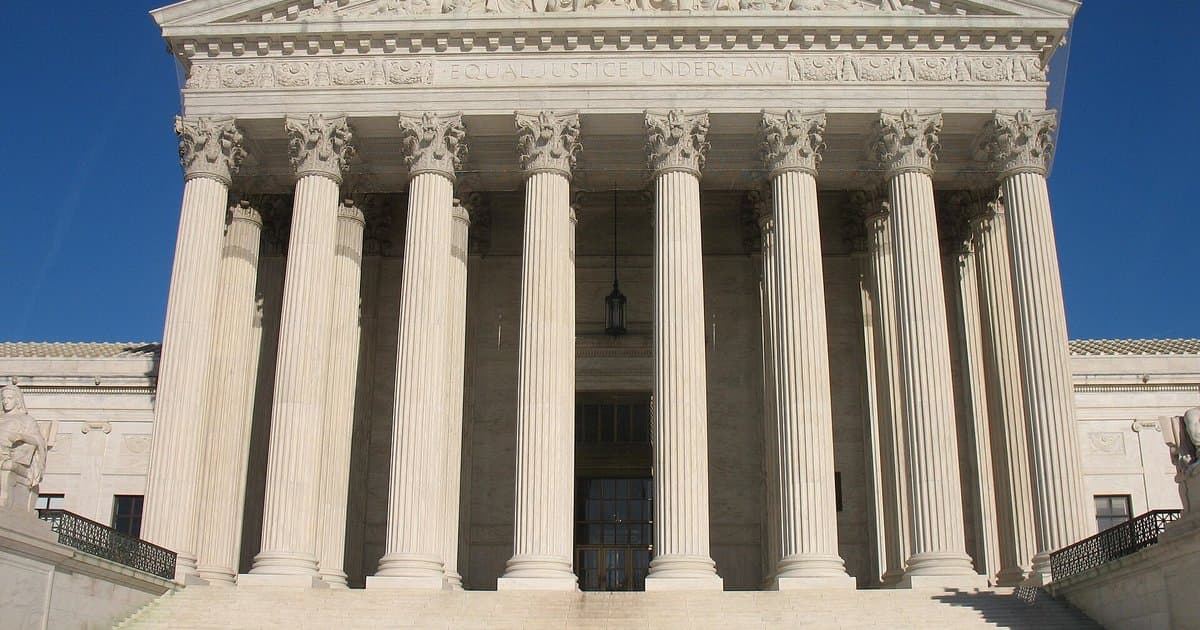
WASHINGTON, June 3. The U.S. Supreme Court has cleared the way for Alabama to use a Republican drawn congressional map that eliminates one of the state's two majority Black districts, a move that reshapes the political map heading into the 2026 midterm elections. The justices acted in an unsigned order that overturned a three judge district court panel, which had found the map was tainted by intentional race based discrimination, according to NPR and NBC News. The 6 to 3 ruling split the court along ideological lines, with the three liberal justices in dissent. The order means Alabama will head into November with six Republican leaning districts and one Democratic leaning seat, rather than a map that protected two districts where Black voters could elect their preferred candidates. Democrat Shomari Figures, who currently represents Alabama's 2nd Congressional District, is now likely to lose his seat as a result of the ruling. The decision arrives as part of a broader shift in how federal courts weigh race and partisanship in redistricting disputes.
The Supreme Court tied its action to a recent decision in a case from Louisiana that narrowed the reach of the Voting Rights Act, per CNN. The justices instructed the lower court to take a fresh look at the Alabama case in light of that ruling, which directs judges to give greater deference to states when partisan interests drive how district lines are drawn. The same Alabama dispute had previously reached the high court in 2023, when a majority ordered the state to create a second district where Black voters had a meaningful chance to elect their candidate. The latest order marks a sharp reversal from that earlier posture in the same long running case. Legal analysts say the move signals that the current court is far less willing to block maps on the grounds of racial discrimination. The shift carries consequences well beyond Alabama, since several other Southern states face similar challenges to their congressional lines.
Black voters make up roughly a quarter of Alabama's population, and civil rights groups have argued for years that the state has diluted that voting power through how it draws district boundaries. The eliminated district covers parts of the state with large Black communities, including areas in and around Montgomery and the historic Black Belt region. Voting rights advocates contend that removing the district silences a community that fought for decades to gain representation in Congress. The Legal Defense Fund, which has litigated the case, said the decision gives cover to Alabama and other states to discriminate against Black voters without fear of consequence, according to NPR. State officials have defended the map as a lawful exercise of the legislature's authority to draw districts. The competing claims now return to the lower court for further review under the new legal standard.
The ruling has immediate stakes for control of the U.S. House, where Republicans hold a narrow majority. Election analysts at the Brookings Institution and other groups have noted that map changes across multiple states could shift several seats before voters cast ballots. The Alabama order alone converts what had been a competitive or Democratic leaning seat into one that favors Republicans. With midterm primaries approaching, candidates and party committees must now adjust strategy to match the redrawn boundaries. Voters in the affected district will find themselves grouped into new configurations that change which candidates appear on their ballots. Local election officials face the task of updating precinct assignments and voter information before the next round of voting.
For Black communities across the South, the decision adds to a series of recent rulings that have weakened the legal tools used to challenge maps. Organizers who spent years building turnout operations in newly drawn districts must now reassess where their efforts can have an effect. Faith leaders and community groups in Alabama have historically played a central role in voter mobilization, and several have signaled they will continue pressing the issue through the courts and at the ballot box. The outcome also resonates in other states with significant Black populations, including Louisiana and Mississippi, where similar fights remain active. Advocates warn that the cumulative effect could reduce the number of districts where Black voters can elect candidates of their choice. Supporters of the maps counter that the rulings restore the authority of elected legislatures over court drawn alternatives.
What to Watch. The case now returns to the three judge district court, which must reconsider its findings under the narrowed Voting Rights Act standard set by the Louisiana decision. Alabama's 2026 primary and general election calendars will proceed under the reinstated map unless further legal action intervenes. Civil rights organizations are expected to pursue additional challenges and may seek relief in related cases pending in other states. Observers will track whether courts in Louisiana, Mississippi, and elsewhere follow the same path in their own redistricting disputes. The balance of power in the U.S. House could hinge on how many seats shift as these maps take effect. Updates are expected as candidates and party committees respond to the finalized district lines.
Sources: NPR, NBC News, CNN, Georgia Public Broadcasting