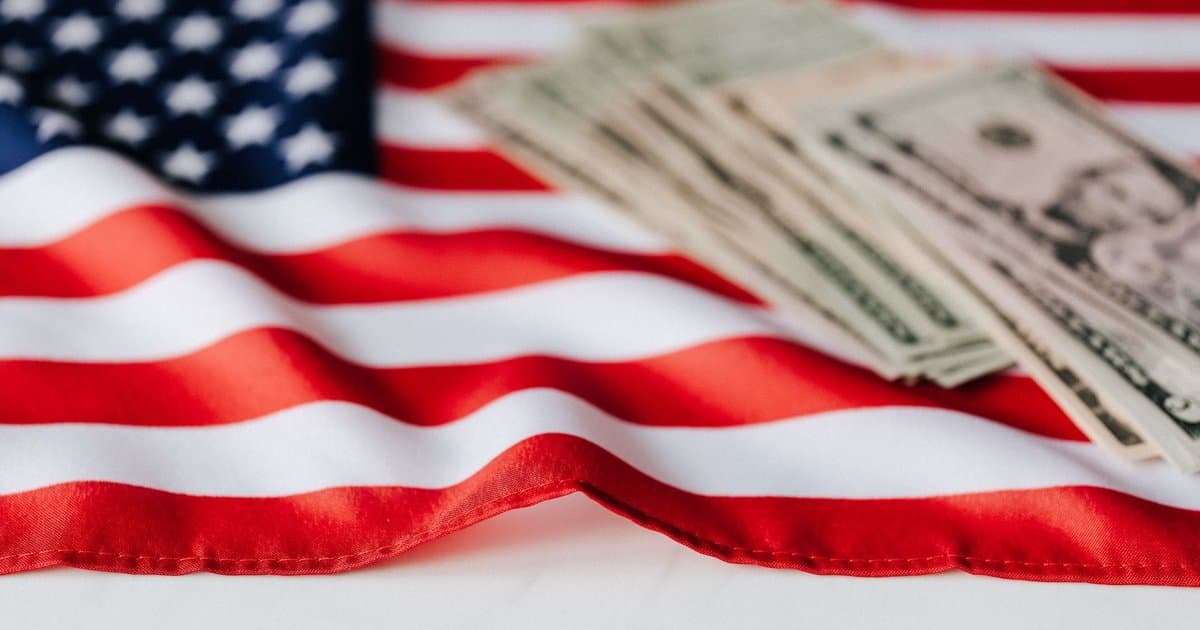
Pull out your wallet and count what is inside. You are probably holding a few singles, maybe a twenty, and nothing close to a hundred dollar bill. So it surprises most people to learn that the hundred is now the most common note the United States prints. There are more hundred dollar bills in circulation today than one dollar bills. That flip happened in 2017, the first time in the history of American money that the hundred pulled ahead. Twenty years before that, there were roughly twice as many singles in circulation as hundreds.
The scale behind this is hard to picture. Market researchers put the total value of hundreds in circulation at around 1.3 trillion dollars. The hundred now outnumbers every other bill, including the workhorse twenty that comes out of every cash machine. Think about how rarely you actually touch one in a normal week. You do not get them as change, most registers do not keep many on hand, and plenty of small shops will not accept them at all. Yet the supply keeps climbing year after year, which raises a simple question about where all of them go.
The answer is that most of them are not here. The Federal Reserve estimates that close to 80 percent of all hundred dollar bills sit outside the United States. They are held in homes, safes, and shops in other countries, often far from any American bank. In much of the world the dollar is trusted more than the local money, and the hundred is the easiest way to store a large sum in a small space. When a currency at home is losing value fast, a stack of hundreds holds its worth. That trust is a big reason foreign demand for the bill keeps rising.
There is a plain logic to it once you see the pattern. A hundred dollar bill works as a store of value, not really as a spending tool. People who hold them are parking money, not buying groceries. Cash leaves no record, it does not depend on a working bank, and it does not vanish when the power goes out. For someone living through high inflation or a shaky banking system, that beats earning a little interest. So the hundred travels the globe as a quiet form of savings while singles and twenties do the daily work at home.
Inside the United States, the story runs the other way. Most of us pay with cards, phones, and apps now, so the bills we handle in person are the smaller ones. A single, a five, and a twenty still move through tip jars, vending machines, and corner stores every day. The hundred barely shows up in that flow. It is not that Americans quit cash, it is that the cash we spend tends to be low in value. The big bills drifted into a different job, one that looks more like a savings account than a checkout line.
Timing helps explain the surge as well. The sharp climb in hundreds lined up with years when interest rates were very low. When a savings account pays almost nothing, holding cash costs you almost nothing either, so the downside of keeping money in a drawer shrinks. Add in stretches of global uncertainty, and demand for a reliable bill only grows. Every crisis, from a financial panic to political turmoil somewhere in the world, tends to push more people toward dollars they can hold. The hundred sits right at the center of that instinct, since it is the largest note the country still prints.
None of this means the hundred is a common sight for the average shopper. You can go months without seeing one change hands in person. What the trend really shows is how much the rest of the world leans on American cash as a safe place to keep money. It is a quiet vote of confidence, printed on cotton and linen and shipped overseas by the crate. The bill you almost never carry has become one of the country's most requested exports. That gap between how seldom you use it and how many exist is the surprising part.
So the next time a hundred lands in your hand, take a second to notice it. You are holding the most printed note in the country and one of the least seen in daily life. Most of its siblings are thousands of miles away, tucked into savings around the world. The humble single you spend without a thought is now outnumbered by a bill you rarely touch. It is a small fact that says a lot about trust, money, and the reach of the dollar. The wallet in your pocket tells only a sliver of the story.