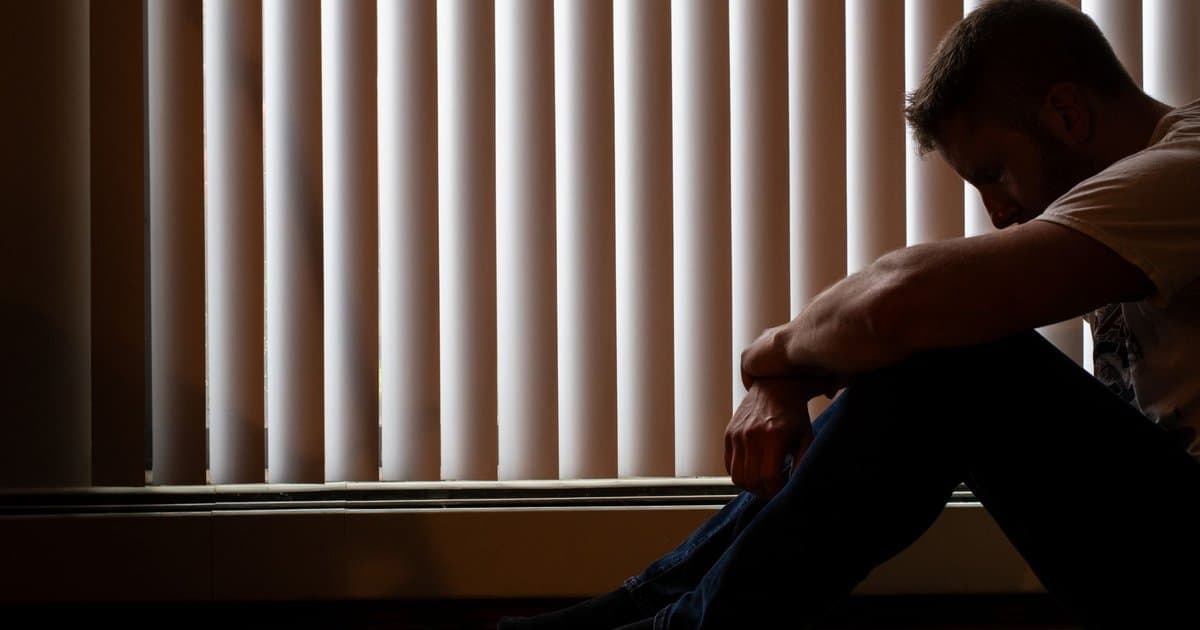
A pattern shows up consistently in my clinical practice. Adults take a three-day weekend. They have Saturday off, Sunday off, and Monday off. They still feel Sunday anxiety on Sunday afternoon, even though Monday is also a holiday. The dread arrives on schedule, attached to the day of the week rather than to the actual return-to-work timing. The mechanism is more revealing than most people realize, and the fix is structural rather than emotional. Sunday anxiety is not a job problem. It is an anticipatory cortisol problem, and you can interrupt it.
The biology runs through the hypothalamic-pituitary-adrenal axis. Cortisol production in adults follows a predictable weekly rhythm shaped by years of conditioning. Most knowledge workers have spent thousands of weeks executing the same Sunday-evening-into-Monday-morning ramp. The body learns to start producing cortisol in anticipation of the demands ahead. By the time you are 35 with 12 to 15 years in the workforce, the Sunday afternoon cortisol surge is largely autonomic. It fires whether or not Monday actually requires you to show up. The brain is running a pattern, not responding to a current signal.
A 2023 study at Northwestern measured salivary cortisol in 480 working professionals across normal weekends and three-day weekends. The Sunday evening cortisol levels were roughly the same in both conditions, even though Monday was a workday in one group and a holiday in the other. The control was strong. Even when Monday's calendar was empty, the body produced the cortisol surge. This is the clearest evidence that the Sunday Scaries are largely a conditioned response, not a rational evaluation of the work week ahead. The anxiety is real. The cause is body memory, not job content.
The implication is that the standard advice to address Sunday anxiety is wrong. People are told to plan their week ahead on Sunday evening, do something relaxing, journal their feelings, or talk to a therapist about job stress. None of those interventions address the actual mechanism. They address the symptom. The mechanism is the cortisol pattern, and the cortisol pattern is changed by physical and behavioral interventions, not by reframing your relationship to your job. The fix is not in your head. It is in your body and your weekly rhythm.
The intervention that works most consistently in my practice is a Sunday morning workout, scheduled like a meeting, performed at moderate intensity for 45 to 60 minutes. The exercise burns through cortisol production capacity early in the day, before the conditioned afternoon surge can build. Adults who add this practice consistently report Sunday afternoon anxiety dropping by 40 to 60 percent within four weeks. The intensity matters. Light walking does not produce the same effect. Moderate cardio at conversational pace where you are slightly out of breath produces the cortisol release that interrupts the Sunday pattern.
A second intervention that works is breaking the Sunday-Monday pattern with deliberately disrupted schedules. If you can shift one workday a week to be a full work-from-home day or a meeting-free deep-work day, the brain stops categorizing weekdays as a uniform high-cortisol block. The anticipatory cortisol then stops associating with Sunday specifically. This is harder to implement at jobs that require fixed schedules, but for hybrid workers and self-employed people, the protocol is highly effective. Within 8 to 12 weeks, the Sunday cortisol pattern measurably weakens.
A third intervention is sleep timing. Adults who let Sunday night sleep slip later than 11 PM are essentially stretching the cortisol surge across three to four hours of the evening. Going to bed by 10 PM Sunday compresses the anticipatory cortisol into a shorter window. The total cortisol load is similar, but the felt experience of anxiety is lower because the body moves into the sleep-onset cortisol drop earlier. Combined with a consistent Sunday morning workout, this is the cleanest non-pharmacological protocol I have seen produce sustained relief from Sunday anxiety.
The reason three-day weekends do not help is now obvious. The Monday holiday does not change the conditioned weekly pattern unless the underlying cortisol rhythm is interrupted. The day off is welcome but the body is still running its Sunday script. This is also why a vacation often produces a one-week relief from Sunday anxiety followed by a return on the second Sunday back at work. The pattern is durable. The pattern requires durable disruption, not occasional time off.
For Nashville professionals working in the music, real estate, hospitality, and healthcare industries that dominate the local economy, this matters because those industries have particularly variable work schedules and weekend obligations. The Sunday anxiety pattern can be especially confused in jobs where Sunday is sometimes a workday. The same protocol applies but the timing of the workout shifts to whichever day represents the cortisol-anticipation peak for your specific schedule. The biology is the same. The schedule context shifts.
The takeaway is that Sunday anxiety is a body problem with a body solution. Reframing your relationship to work helps marginally. A Sunday morning workout, a 10 PM bedtime, and a disrupted weekly pattern help substantially. Most adults will keep trying the cognitive interventions that do not work and concluding the Scaries are an inevitable feature of modern work. They are not. They are a learned cortisol pattern, and patterns can be reshaped within a quarter if you address them at the right level. Stop fighting Sunday in your head. Fight it in your body. That is where the anxiety actually lives.