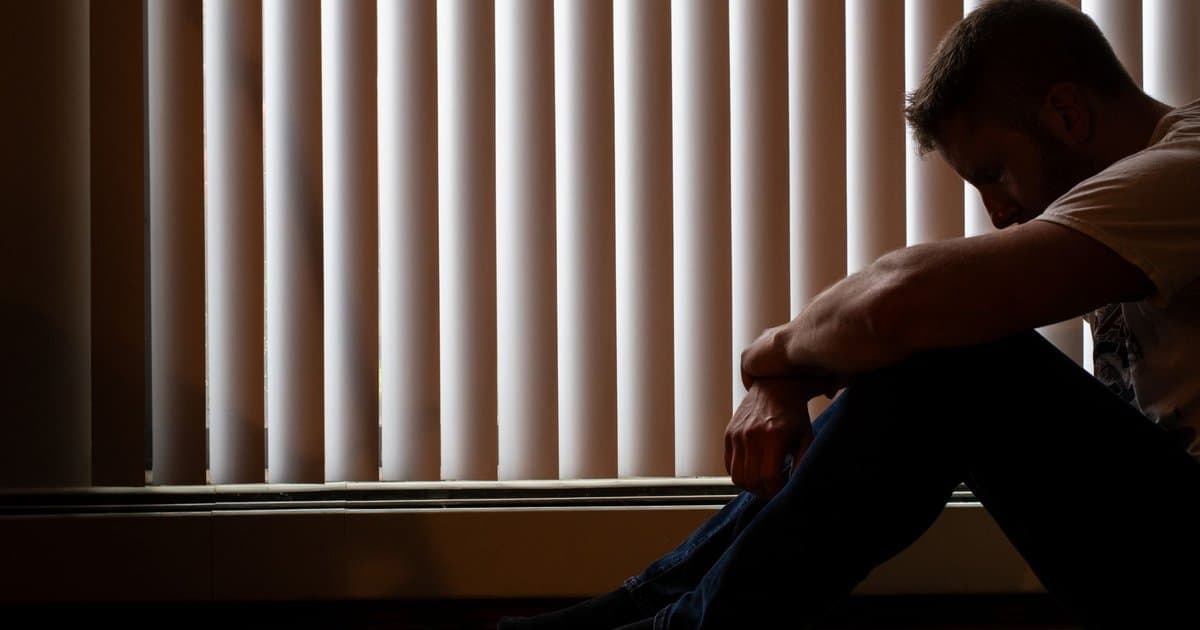
When anxiety hits hard, most people make the same mistake. They try to think their way out of it. They start asking themselves whether the fear is real, whether they are overreacting, whether they should call someone or take a walk or just power through. The whole time, the mental loop spins faster and the body gets more activated. By the time they have analyzed the situation for ten minutes, they are more anxious than when they started. The mistake is not the analysis itself. The mistake is the order.
Here is what is actually happening inside the body when anxiety spikes. The amygdala signals threat and the sympathetic nervous system fires. Heart rate climbs, breathing shortens, blood moves to the limbs, and the prefrontal cortex gets a smaller share of resources. That last part matters because the prefrontal cortex is where careful reasoning happens. When the body is in high sympathetic activation, the reasoning brain is partially offline. Trying to think your way out is like trying to read fine print in dim light. The hardware is not broken, it just cannot do the job in those conditions.
The order most people use is broken. They feel the spike, they try to think, the thinking does not work, and they decide something is wrong with them. Nothing is wrong. The body is doing what bodies do, and the tool they reached for cannot do the job. The body has to settle first. Then the mind comes back online. The research on polyvagal theory and somatic regulation has been pointing at this for years, and it shows up in clinical practice with people who have tried everything else.
What actually works in the first sixty seconds is slow exhale breathing. Inhale through the nose for four counts, exhale through the mouth for six or eight. The longer exhale activates the parasympathetic nervous system and starts to bring the body down. Two minutes of this changes the chemistry in measurable ways. Cold water on the face triggers the mammalian dive reflex and drops heart rate. A short walk uses up some of the activation. None of these are tricks. They are physiological levers that work whether you believe in them or not.
There is a second part most people miss. After the body settles, you can think clearly, and that is when the thinking work begins. Naming the fear, checking the evidence, deciding what is true and what is catastrophic projection. This is where cognitive behavioral therapy lives, and it works when the body has come down enough to let it work. Trying to do it before the body settles is like trying to install software on a computer that is already overheating. Cool the machine first. Then run the program.
This reorder changes how people show up in their own lives. The person who used to need ninety minutes to recover from a hard moment can sometimes recover in fifteen. The person who used to cancel plans starts keeping them. The person who used to spiral for a whole evening starts catching the spike earlier and using the tools earlier. Nothing about the world has changed. What changed is the response pattern, and patterns are trainable. The change is unglamorous and quiet, but it adds up.
For anyone who has felt the spiral and felt frustrated that the usual advice did not help, the path forward is not more positive thinking. It is learning the body. Learning to notice the early signals, the tight jaw, the held breath, the racing heart. Then meeting them with a physical response, not a mental one. The mental response will come, and it will land, but it will land in a body ready to hear it. None of this replaces therapy or medication.
The body work fits underneath whatever else is already helping and makes that other work go further. A therapist can still ask the cognitive questions. A medication can still smooth out the baseline. The somatic piece is what lets both of those land in moments when life gets sharp and there is no therapist in the room. People who learn this skill stop feeling at the mercy of their own nervous system. They start feeling like they have a tool that actually fits the problem.
The encouraging part is how quickly the new order shows up once someone practices it. Three or four weeks of reps is usually enough. Slow exhale breathing daily before any spike happens, two minutes of cold exposure in the shower, a short walk after lunch. The body learns the regulation pattern when there is no emergency, so it can find that pattern when there is one. Most people who try this for a month say they did not realize how loud their nervous system had been. Anxiety does not go away by being argued with. It goes down by being met where it lives.