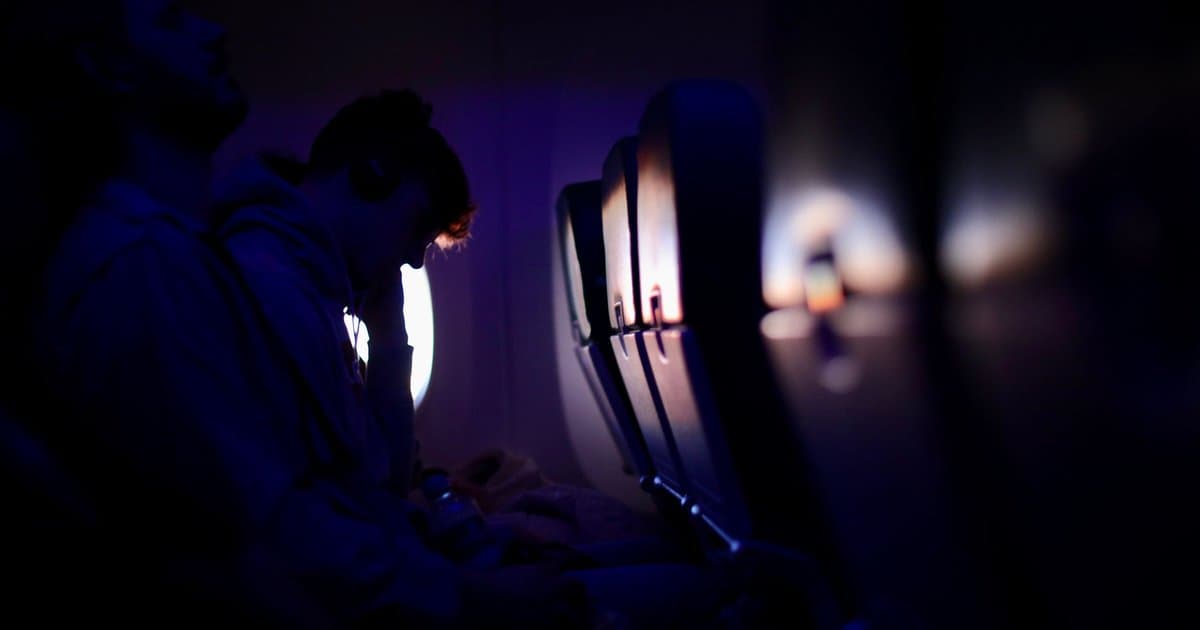
Frequent travelers swear by it and the research backs them up. A flight east usually leaves you feeling worse than a flight west across the same number of time zones. Fly from New York to London and the first few days can feel like wading through fog, while the trip back the other way is rough but somehow more manageable. This is not about the food on the plane or how much you slept in the air, though those play a part. It comes down to the way your internal clock is built and the direction you are asking it to move. Once you understand the mechanism, the difference makes complete sense.
Your body runs on a roughly twenty four hour cycle called the circadian rhythm, controlled by a small cluster of cells in the brain that responds mostly to light. Left alone in a room with no clocks and no sunlight, the average person's internal day does not run exactly twenty four hours. It runs a little longer, closer to twenty four and a quarter hours for most people. That small detail is the whole story. Your clock naturally wants to drift later, which means staying up a bit longer and waking a bit later is the direction your body finds easy. Going the other way, forcing yourself earlier, fights against that built in tendency.
Flying west asks your body to do the easy thing. When you travel from east to west, you gain hours, your day gets longer, and you need to stay up later and sleep in later to match the new time zone. That lines up perfectly with a clock that already wants to drift later on its own. Your body adapts to a longer day with relatively little complaint, because you are pushing it in the direction it was already leaning. This is why the first night after flying west is often easier, and why people tend to adjust within a day or two even after a long westbound trip. You are working with your biology instead of against it.
Flying east asks for the opposite, and that is where the trouble starts. Traveling from west to east, you lose hours, your day gets shorter, and you have to fall asleep earlier and wake up earlier than your body wants to. Telling a clock that naturally drifts later to suddenly run earlier is like asking someone who never feels tired before midnight to fall asleep at nine. The body resists, you lie awake, and the next morning you have to get up before your internal clock thinks the night is over. Each day your rhythm only shifts so far, often around an hour, so a six hour eastward jump can take the better part of a week to fully settle. That slow, grinding catch up is the heavy fog people describe after an eastbound flight.
Knowing the cause points straight at what helps. Light is the strongest tool you have, because it is what the brain uses to set the clock in the first place. Flying east, you want morning light at your destination to nudge your rhythm earlier, so get outside in the sun after you land and avoid bright screens late at night. Flying west, evening light helps hold you awake longer and push the clock the way it already wants to go. Shifting your sleep schedule by an hour or so in the right direction a few days before a big eastbound trip can take the edge off before you ever board. Small meals, steady hydration, and going easy on alcohol all help your body do the adjusting it already has to do.
The takeaway is that jet lag is not random and the east versus west gap is real. Your body has a clock that prefers to run a touch long, so adding hours by flying west feels natural and subtracting them by flying east feels like swimming upstream. Plan your hardest adjustment for the trips that head east, lean on morning sunlight when you get there, and give yourself a few extra days before anything important. You cannot beat your circadian rhythm, but once you know which way it wants to move, you can stop fighting it and start working with it.