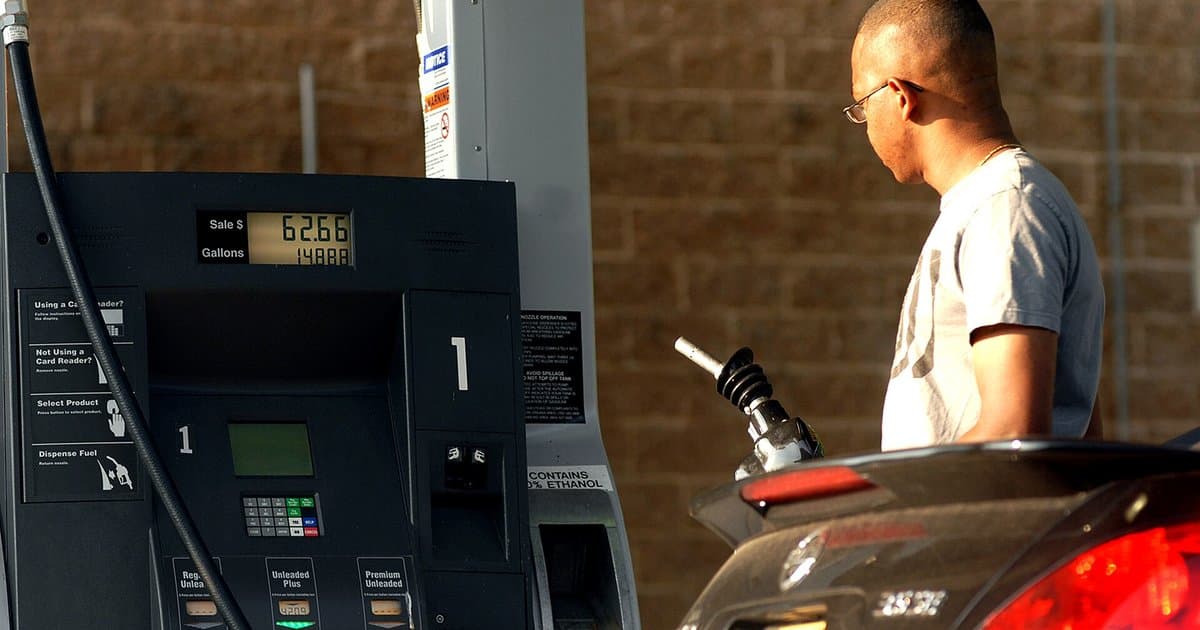
Pull up to any gas station and look closely at the price sign. The number almost always ends in nine tenths of a cent. You might see three dollars and nineteen and nine tenths cents per gallon. You never actually hand over a fraction of a penny, and the pump rounds your final total to the nearest cent. So why is that strange little nine tenths still hanging there after all these years? The answer is part history and part mind trick, and it has stuck around far longer than anyone planned.
The fraction goes back to the 1930s. As states and the federal government started taxing gasoline, they set some of those taxes in tenths of a cent per gallon. Gas was cheap then, often well under twenty cents a gallon, so a fraction of a penny was a real slice of the price. Stations built those fractions into what they charged so they would not eat the tax themselves. When a tax landed at a fraction, the posted price followed. That is how the odd ending first showed up on signs across the country.
Then competition took over and made it permanent. When two stations sat across the street from each other, each wanted to look like the cheaper option. Dropping the price by a tenth of a cent let an owner advertise a lower number without giving up much money. If a rival charged a flat twenty one cents, you could post twenty and nine tenths and win the sign war. Shaving that last fraction became a habit that spread everywhere. Over time almost every station landed on the same nine tenths ending.
Psychology is the real reason it never died. A price of two dollars and ninety nine and nine tenths cents reads as if it starts with a two, not a three. People pay the most attention to the first digit they see and mostly ignore the rest. That left digit shapes how expensive something feels far more than the pennies do. Nine tenths lets a station stay on the cheaper side of a round number by the smallest possible amount. The gap is almost nothing in cash, but it is large in how your brain files it.
The fraction also adds up in ways that are easy to miss. A tenth of a cent sounds like nothing on a single gallon. Multiply it across the hundreds of millions of gallons a large chain sells, and it becomes real money. Across the whole country, drivers buy hundreds of billions of gallons every year. That fraction, collected pump by pump, turns into a serious sum for the industry. What feels trivial to one driver is meaningful at national scale.
You might expect inflation and digital signs to have killed the habit by now. Prices have climbed from cents to dollars, and most signs are electronic and easy to change. Yet the nine tenths survived every jump because no single station wants to be the one that looks more expensive. If everyone else ends in nine tenths, rounding up to a full cent makes your sign read higher. So the practice locks itself in place through simple peer pressure. No law requires it, but the market keeps it alive.
A few sellers have tried to break ranks. Some stations and warehouse clubs now post prices in whole cents to seem honest and simple. Now and then a state lawmaker floats a bill to ban the fraction and force round pricing. Those efforts rarely go anywhere, because the savings to drivers would be almost too small to notice. Meanwhile the perceived cost of dropping the trick, looking pricier than the station next door, feels large to owners. So the fraction hangs on out of caution more than need.
In the end, that nine tenths is a leftover from a world of twenty cent gas that psychology refused to let go. It started as a way to handle tiny taxes and turned into a tool for winning the price sign on the corner. You pay a rounded total every time, so the fraction never really touches your wallet in the way it seems to. It survives because of how your eyes read a number, not because of any real cost. The next time you fill up, you will notice it on every sign. It is one of the oldest pricing habits still in plain view.