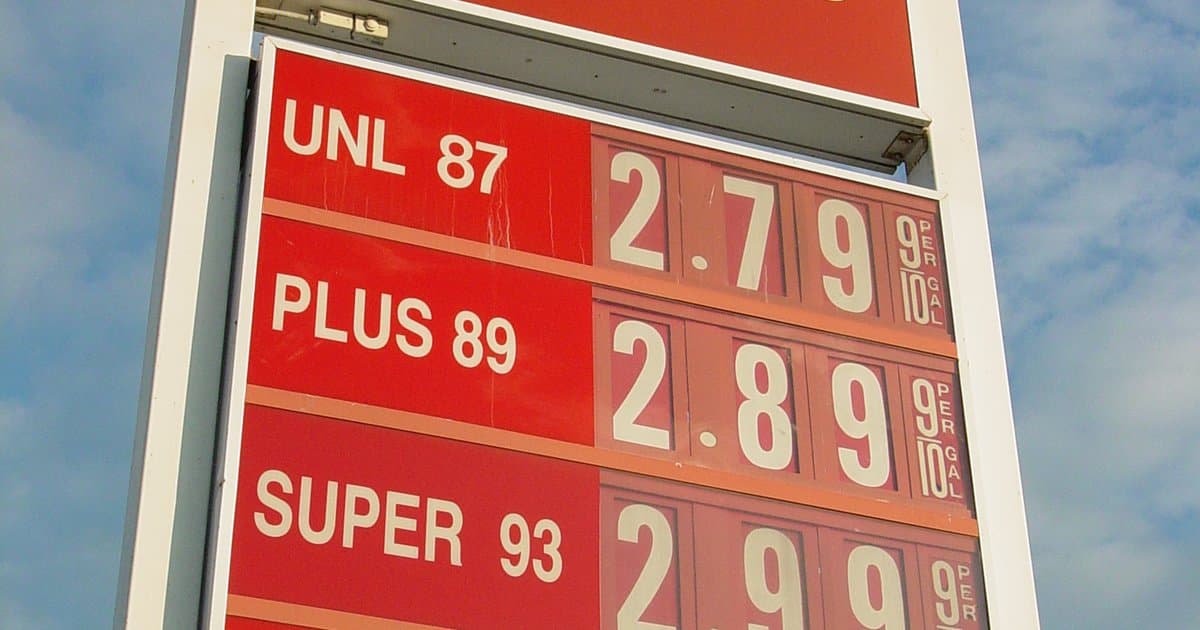
Every driver has noticed it. Oil spikes on a Monday and the sign at the corner station moves by Tuesday morning. Oil falls back the following week and that same sign sits there like nothing happened, giving up a few cents at a time over most of a month. It feels like a scam, and for a long time it was treated as a complaint rather than a fact. Then economists measured it, found it in country after country, and gave it a name. They call it rockets and feathers, because retail prices shoot up and float down.
The phrase comes from a 1991 paper by Robert Bacon looking at British gasoline, and the finding has survived more than thirty years of people trying to knock it over. Researchers have found the same asymmetry in American gasoline, in European fuel markets, and in a long list of goods that have nothing to do with driving, including bananas and bank deposit rates. The size of the gap varies by market and by study. The direction almost never does. Prices climb faster than the cost that justifies them and fall slower than the cost that should pull them down.
The first explanation is about attention, and it is the one that puts some of the weight on us. When prices are rising, drivers watch. They notice the sign, compare stations, and drive an extra half mile to save eight cents. When prices are falling, that same shopping instinct switches off, because everyone is already feeling better about the number. A station that holds its price during a decline loses very few customers, since almost nobody is checking. A station that holds its price during a spike gets punished immediately. Search behavior alone can produce most of the pattern without anyone conspiring.
The second explanation sits in the plumbing of how fuel gets bought. A station owner buys wholesale on a rack price that resets daily, but the fuel already sitting in the ground was bought at an older cost. When wholesale jumps, the owner raises the pump price fast to cover the load coming tomorrow, not the one already sold. When wholesale drops, that same owner has an obvious reason to hold the price a few extra days and repair a margin that was thin all summer. Station margins on fuel are famously slim, with much of the actual profit coming from what people buy inside. The pump becomes the place where lost ground gets made back.
Costs that do not move with oil also drag on the way down. Credit card processing takes a percentage of every sale, so it falls when prices fall, but rent, labor, insurance, and delivery do not. State and federal fuel taxes are mostly fixed cents per gallon, which means they make up a larger share of a cheap gallon than an expensive one. Local rules matter too, since some regions require special fuel blends that only a few refineries make. Fewer suppliers means slower competition, and slower competition means a longer glide down.
The last piece is the market structure itself. In places with many stations close together, studies tend to find the asymmetry shrinks. In places with one or two operators covering a stretch of highway, it grows. That is not a claim of illegal coordination, and antitrust reviews of gasoline pricing have often found no evidence of it. It is simpler than that. When a competitor is visible from your lot, you cut early to avoid losing the morning traffic. When the nearest competitor is eleven miles away, there is no urgency at all, and the price falls at whatever pace feels comfortable.
What should a household do with this. Not much at the individual pump, honestly, since the savings from chasing a cheap station usually get eaten by the driving. The more useful move is at the budget level. If fuel costs jump, treat the increase as sticky and plan on it lasting longer than the news cycle that caused it, because the decline will take weeks longer than the rise did. Fill up midweek, when prices in many markets are lowest before the weekend. And when you hear that oil has dropped and wonder why your bill has not, understand that nothing is broken. You are watching a well documented pattern do exactly what it always does.