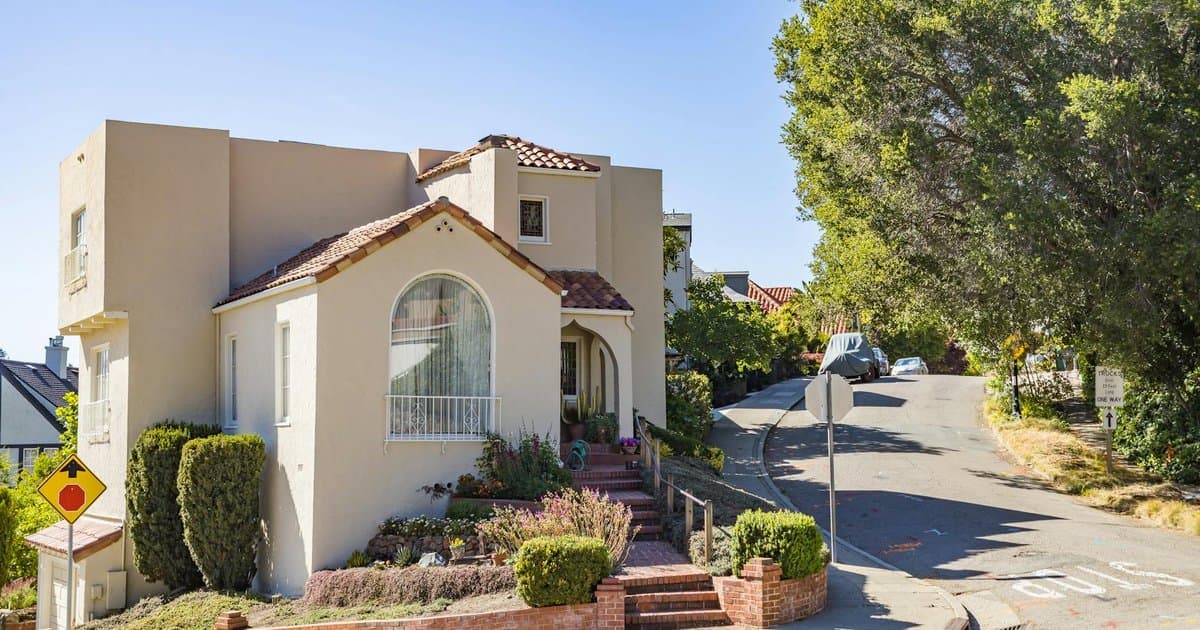
It is an easy decision to talk yourself into. You find the nicest house in the neighborhood, the one with the addition, the upgraded kitchen, and the finished basement, and it feels like the smart move because you are getting the most house for your money in an area you like. What most buyers do not think through is what it costs to own the top of a street rather than the middle of it. The most expensive house on the block is one of the riskiest positions in real estate, and the price you pay for it can follow you for years. Here is what is actually on the line.
Start with how homes are valued, because this is where the trouble begins. When an appraiser sets the worth of a house, they lean heavily on recent sales of similar homes nearby, the comparables. If your home is far nicer and pricier than everything around it, there are no true comps to support its value, and the surrounding sales drag your number down toward the neighborhood average. That means you can pay top dollar and still have the appraisal come in low, which creates problems the day you buy and again the day you sell. The market does not care what you spent. It cares what the street supports.
The resale risk is the part that bites hardest. A neighborhood tends to have a ceiling, an unspoken limit on what buyers will pay to live there, and the most expensive house bumps right up against it. When you go to sell, your buyers are people who could afford more but chose your area, and many of them will hesitate to be the household paying the highest price on the block. You end up competing for a narrow slice of buyers while your home sits longer and your price drifts down. The same features that made the house feel like a deal when you bought it become hard to recover when you leave.
Appreciation works against you too, and this one is quiet enough that most people never notice it. Homes tend to rise in value partly by riding the gains of the homes around them. A modest house surrounded by nicer ones gets pulled upward as the neighborhood improves. The most expensive house has nothing above it to pull it along, so it appreciates slower than the homes it sits next to. Over ten years, that gap compounds into real money, and the owner of the priciest house often ends up with the weakest return on the street despite owning the best property on it.
There are carrying costs that ride along with the position as well. The biggest house usually means the biggest property tax bill, the highest insurance premium, and the most expensive repairs, because everything scales with size and finish level. A roof on a larger home costs more. Heating and cooling more square footage costs more. When something high-end breaks, replacing it in kind costs more than a standard fixture would. None of that is a disaster on its own, but stacked together over years of ownership it adds up, and it is money flowing out of a property that is appreciating more slowly than its neighbors.
This does not mean you should never buy a nicer home, and it does not mean the top house is always a mistake. If you plan to live there for a very long time, if the premium over the neighborhood is small, and if you genuinely love the place for reasons that have nothing to do with return, the math matters less. The danger is buying the priciest house on the block by accident, swept up in the features, without understanding that you are taking on slower growth, a softer resale, and higher costs all at once. Those are real trade-offs, and they deserve a real decision.
The smarter play for most buyers is to aim for the middle of a neighborhood you believe in rather than the top of one you settle for. An average home in a strong, improving area gives you room to grow into the street, comps that support your value, and neighbors whose gains help carry yours. You can always add value through improvements over time, and when you do, you are building up toward the ceiling instead of starting at it. That position protects you on the way in, while you own it, and on the way out.
Before you fall for the best house on the block, walk the street and look at what sits around it. Pull the recent sales and see where your price would land against them. Ask yourself whether you are buying a home or buying a ceiling. The most expensive house can be a wonderful place to live. It is just rarely the smartest place to put your money, and knowing the difference is what keeps a good home from becoming an expensive lesson.