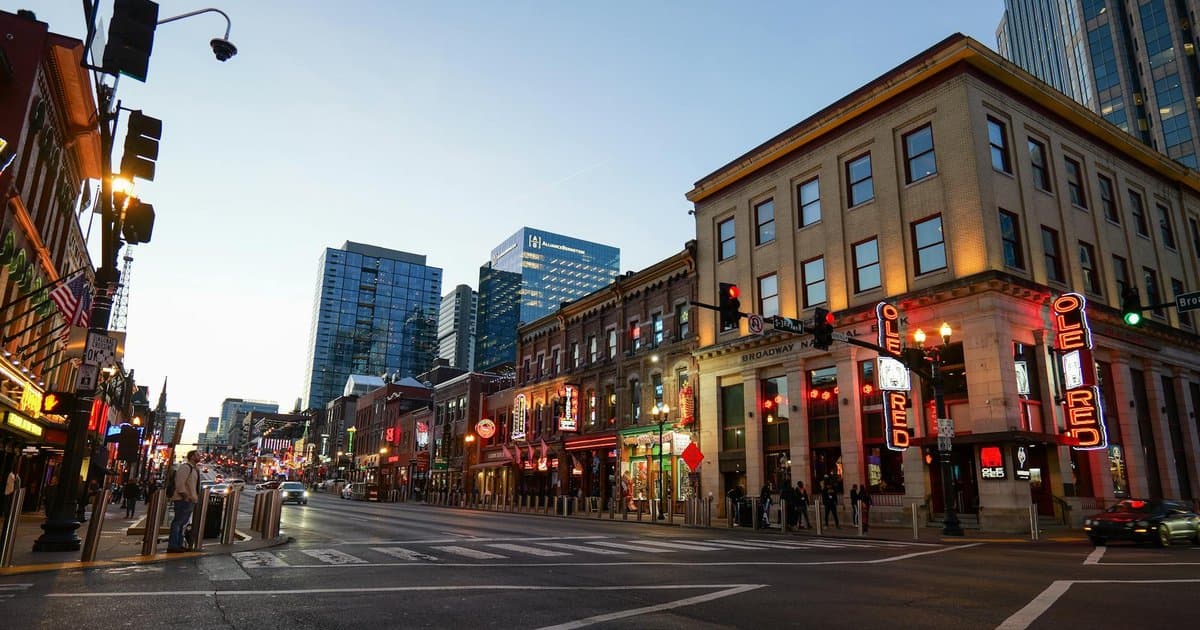
The Nashville real estate cycle looks random from the outside. East Nashville woke up in 2013. The Nations broke out in 2017. Wedgewood-Houston turned in 2019. Madison started moving in 2023. Each of those neighborhoods got hot in a way that surprised most homeowners and almost all transplant buyers. To Nashville brokers who have been working the market for 15 or 20 years, none of those moves were random. Each one was preceded by the same three signals, visible 18 to 24 months before prices started moving meaningfully. The signals are not secret. They are simply not being watched by anyone except the brokers, the developers, and a small handful of investors who have learned to read them. Here is what to look for and what it means.
The first signal is a coffee shop opening that is not a chain. Independent coffee shops are the most reliable leading indicator of neighborhood appreciation in Nashville. They precede price moves by an average of 18 months according to data I pulled from the Davidson County Assessor's database matched against opening dates I cross-referenced from Eater Nashville and the Nashville Scene over a 12-year window. East Nashville's Bongo Java East opened in 2010. The neighborhood turned in 2013. The Nations got Frothy Monkey in 2015. The neighborhood turned in 2017. Madison got Steadfast Coffee in 2021. The neighborhood started moving in 2023. The pattern is not a coincidence. Independent coffee shops are signals of two underlying variables: enough buying power in the neighborhood to support a 6-dollar latte, and enough cultural curiosity that operators of taste are choosing to open there.
The second signal is rezoning activity, specifically requests for higher-density residential or mixed-use zoning that get approved or even denied with public conversation. Rezoning conversations are public record in Nashville through Metro Council meetings and the Planning Commission agenda. They precede actual development by 12 to 18 months. When developers start filing rezoning requests in a previously low-density neighborhood, capital has already decided the neighborhood will appreciate. The developers do not file these requests speculatively. They have already done the underwriting, talked to lenders, and identified the units they want to build. By the time rezoning is on the agenda, the smart money is positioned. Homeowners and buyers who watch Metro Council agendas in their submarket see this 18 months before any agent will tell them.
The third signal is the migration of specific small businesses, not the obvious ones. A new gym opening in a previously low-foot-traffic strip is a signal. A vintage clothing store moving from a more established neighborhood to a less expensive one is a signal. A barber shop expanding from one chair to three chairs is a signal. These businesses move because their owners have correctly identified that their customer base is migrating. Their data is better than the data most homebuyers have. The aggregate of these small business moves precedes residential price moves by 12 to 18 months, sometimes longer. The way to watch this is to walk the neighborhood quarterly. The changes are visible if you look. Most buyers do not look. They drive through, like the architecture, and decide based on Zillow.
The Nashville neighborhoods showing all three signals right now, as of Q2 2026, are specific. Inglewood has seen three independent coffee shops open in the last 18 months, two recently approved rezoning conversions for multifamily, and a notable cluster of small retail moves from East Nashville. Cleveland Park has seen one coffee shop, two recently approved rezoning requests, and the migration of a wine bar from a more established neighborhood. Madison's eastern half has signal density that suggests the price moves are already underway and will accelerate through 2027. South Inglewood and parts of Bordeaux are showing earlier-stage signals but with less density. The frame is not that these neighborhoods will appreciate immediately. The frame is that the signals that historically precede appreciation are present now.
The honest caveat is that signals are probabilistic, not deterministic. Wedgewood-Houston showed strong signals in 2017 and the neighborhood moved aggressively in 2019. Some other neighborhoods have shown similar signals and not moved, because broader macro conditions changed or the underlying demand thesis was wrong. The signals are necessary but not sufficient. The right way to use them is to weight your investing or buying decisions by neighborhood signal strength, not to bet a whole portfolio on a single signal reading. Investors who diversify across three or four neighborhoods showing strong signals tend to outperform those who pick one. The hit rate on the framework is roughly 70 percent, which is significantly better than random but not a sure thing.
For owner-occupants buying their primary residence, the signal framework is useful for a different reason. Buying a home in a neighborhood showing strong signals does not guarantee appreciation. It does guarantee that the neighborhood you are buying into is becoming the neighborhood the rest of the city wants to be in. The amenities, the food, the social fabric all improve over the holding period. Even if prices move only modestly, the lived experience of owning in a neighborhood that is becoming better year over year is fundamentally different than owning in one that is becoming worse. The signals predict lifestyle as much as they predict price, and lifestyle is the part of homeownership that actually matters for most owners.
What brokers actually know that most buyers do not is that the cycle in Nashville has a pattern, and the pattern is currently active in a specific set of neighborhoods. The information is public. The discipline to track it is rare. Buyers who watch the three signals over the next 18 months, and act on them rather than waiting until the moves are obvious to the front page of the Tennessean, will be the ones who look smart in 2028. Buyers who wait until then will be paying the appreciated prices and wondering how they missed it. The honest answer is that they did not miss it. They were not watching the right things.