That budget bookshelf or sofa feels like a smart decision at checkout. You saved a few hundred dollars, the room is furnished, and the piece looks fine under the store lighting. What the price tag hides is that a lot of inexpensive furniture is designed to be replaced, not kept, and the real cost only reveals itself over the years you actually live with it. Once you see how these pieces are built and what happens to them, the cheap option often turns out to be the expensive one, just paid in installments you never agreed to. The sticker was only the down payment.
Start with what most low cost furniture is made of. The frame you assume is wood is usually particleboard or MDF, which is wood dust and glue pressed into a panel and wrapped in a printed paper or plastic layer that looks like grain. That material is fine under light, even loads, but it does not tolerate moisture, weight, or being taken apart and moved. Once the surface layer chips or the panel swells, there is no sanding or refinishing it back, because there is no solid material underneath. A scratch on real wood is a patina you can fix. A scratch on laminate is the beginning of the end of the piece.
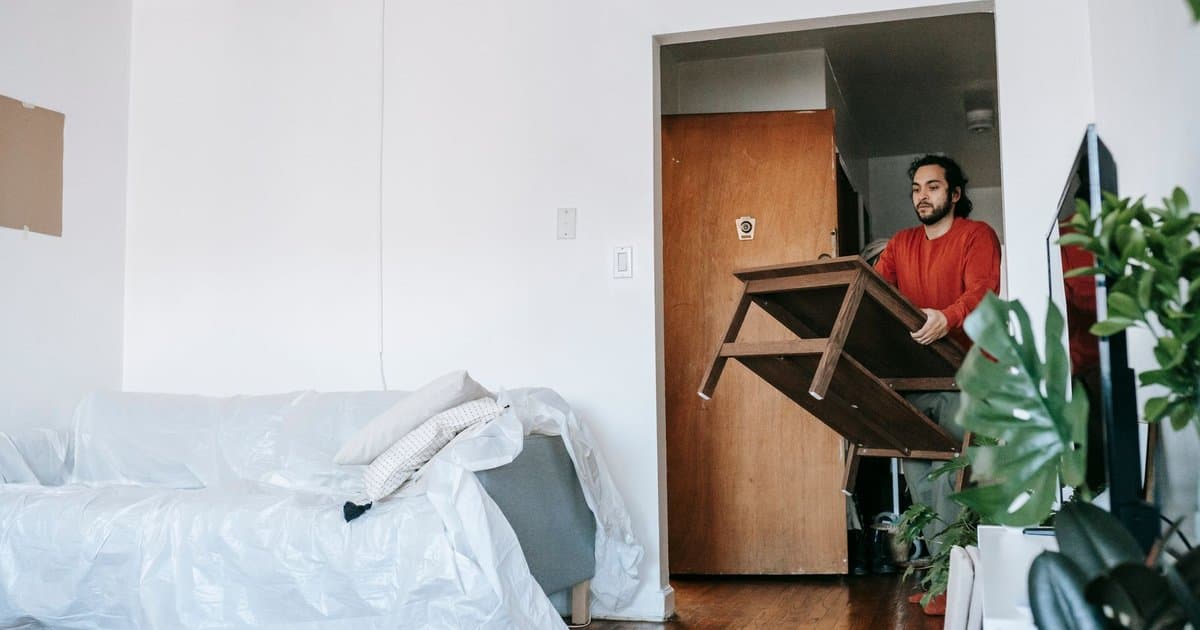
The joints are the next tell, and they explain why these pieces sag and wobble. Quality furniture is held together with joinery and screws that bite into solid material and can be tightened over time. Budget furniture leans on cam locks, glue, and staples driven into that soft pressed board. Every time you move the piece, those connections loosen in holes that cannot be re tightened because the board simply crumbles around the hardware. This is why a cheap dresser feels solid for a year, then starts to rack and lean, and finally cannot survive a single move to a new apartment without falling apart in the back of the truck.
Now do the math the sticker never shows you. An eighty dollar shelf that lasts three years and cannot survive a move is not really an eighty dollar shelf. If you replace it three or four times across a decade, plus the delivery fees and the hours spent assembling each new one, you have spent more than a solid piece would have cost once. A well made version might run three or four times as much up front, but if it lasts twenty years and moves with you, its cost per year of use is a fraction of the cheap one. Cheap furniture is rarely cheaper. It just spreads the bill out to where you stop noticing you are paying it.
There is a cost beyond your wallet too. Furniture built to be thrown away mostly cannot be recycled, because the mix of glue, laminate, and pressed board is nearly impossible to separate into anything useful. It goes to the landfill, and the industry that makes it runs on a cycle of constant replacement that quietly depends on things breaking. Every few years another truckload of particleboard heads to the curb across your city. When you buy to keep, you step off that treadmill, and the pieces that last long enough often become the hand me downs and thrift finds that furnish someone else's first apartment down the line.
None of this means you must spend a fortune or buy everything new. The move is to buy well where it counts and be strategic everywhere else. Put your money into the pieces that carry weight and get daily use, like the bed frame, the sofa, the dining table, and the dresser, because those are the ones that fail and the ones that hurt to replace. Save on the decorative and rarely stressed items where particleboard is genuinely fine and nobody will ever know the difference. The point is to match the quality to the job the piece has to do.
Learn to spot solid wood, real joinery, and secondhand pieces built in an era when furniture was made to last. A scratched fifty year old dresser from a thrift store will often outlive anything new at the same price, and it already survived decades of use to prove it. The goal is not to spend more or to chase some perfect showroom look. It is to stop paying for the same thing again and again, quietly, in a cycle you never chose to be in. Buy the piece once, buy it right, and let it get old with you. A home does not have to be expensive to be solid. It has to be chosen with a longer memory than the checkout line rewards. Think in decades instead of seasons, and the math quietly starts working in your favor instead of against it.