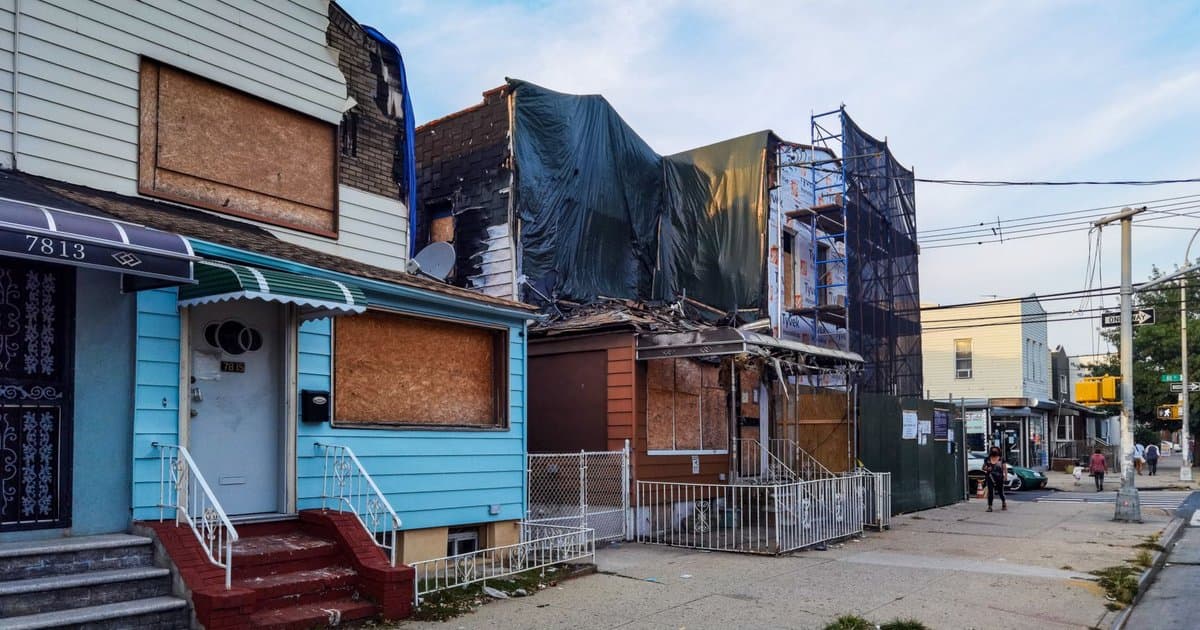
When a bank closes the only branch in a neighborhood, the loss looks small on a map and large in daily life. People often shrug at the news, since banking moved online years ago and an app seems to do the job. But a branch is more than a place to deposit a check, and the neighborhoods that lose them are rarely the wealthy ones. The closures cluster in lower income areas and in communities of color, where a single branch may have served thousands of people. What disappears with it is not just convenience. It is a piece of the machinery that lets ordinary people borrow, save, and build something lasting.
Start with credit, because that is where the stakes hit hardest. A local branch is where a small business owner builds a relationship that turns into a loan. A banker who knows the street and the customer can look past a thin file and say yes to a person a distant algorithm would reject. When that branch leaves, those relationships vanish, and applications go to faraway offices that judge people by numbers alone. For a barber trying to open a second chair or a family trying to buy a first home, that shift can be the difference between approval and a flat no. The neighborhood does not just lose a building. It loses a door into the credit system.
The gap left behind rarely stays empty. Check cashers, payday lenders, and pawn shops move into the space a bank used to hold, and they charge far more for far less. A worker who once cashed a paycheck for free now pays a fee for the same service every single week. Someone short on cash before payday borrows at rates that trap them in a cycle that is hard to escape. Over a year those small charges add up to real money pulled out of households that already have the least to spare. The closure does not remove the need for financial services. It just hands that need to businesses built to profit from desperation.
There is a safety cost too, and it is easy to overlook. When people cannot deposit cash nearby, more of them keep money at home or carry it across town. That makes individuals targets and makes whole blocks less secure. Small businesses face the same problem, since a shop owner who cannot make a quick deposit ends up holding cash that should be in an account. The branch was quietly doing security work for the neighborhood, and its absence shifts that risk onto residents who never asked for it. A service that felt routine turns out to have been protecting people in ways nobody noticed until it was gone.
The deepest stake is generational. Wealth in this country has long been built through homes and small businesses, and both run on access to credit. When a community loses its branch, it loses one of the tools that lets families move from getting by to getting ahead. The effect does not show up in a single year. It shows up a decade later, in the homes that were never bought and the businesses that never opened because the financing was out of reach. This is how a gap that already exists gets wider, one closed door at a time, in the same neighborhoods that have faced this pattern before.
None of this means the branches are coming back, and nostalgia will not fix it. But naming the stakes honestly is the first step toward better answers. Community banks and credit unions can fill some of the space a departing giant leaves behind, and they often understand the neighborhood better anyway. Residents can push for those institutions to stay and grow, and can support the ones already doing the work. The point is to stop treating a branch closure as a minor inconvenience and start treating it as what it is. It is the removal of a tool that whole communities have used to build, and replacing that tool matters far more than the empty building suggests.