Most people learn to pray the way they learned to write a letter. You start with a greeting, you make your requests, you sign off, and you wait for a response that may or may not come. That model is fine for emails. It is not how God designed prayer. The one mistake that keeps most Christians stuck at a surface level is treating prayer as a monologue when scripture frames it as a conversation. Both sides matter, and removing either half collapses the whole thing into a religious exercise that feels increasingly hollow over time.
The pattern shows up everywhere. People pray for an hour and never stop to ask what God might be saying back. They keep a prayer list and check off requests like errands. They read scripture before praying but treat the text as a warmup rather than a voice. And when the prayer ends, they get up and move on with the day, never giving the Spirit room to respond. The result is a prayer life that feels one-sided because it actually is.
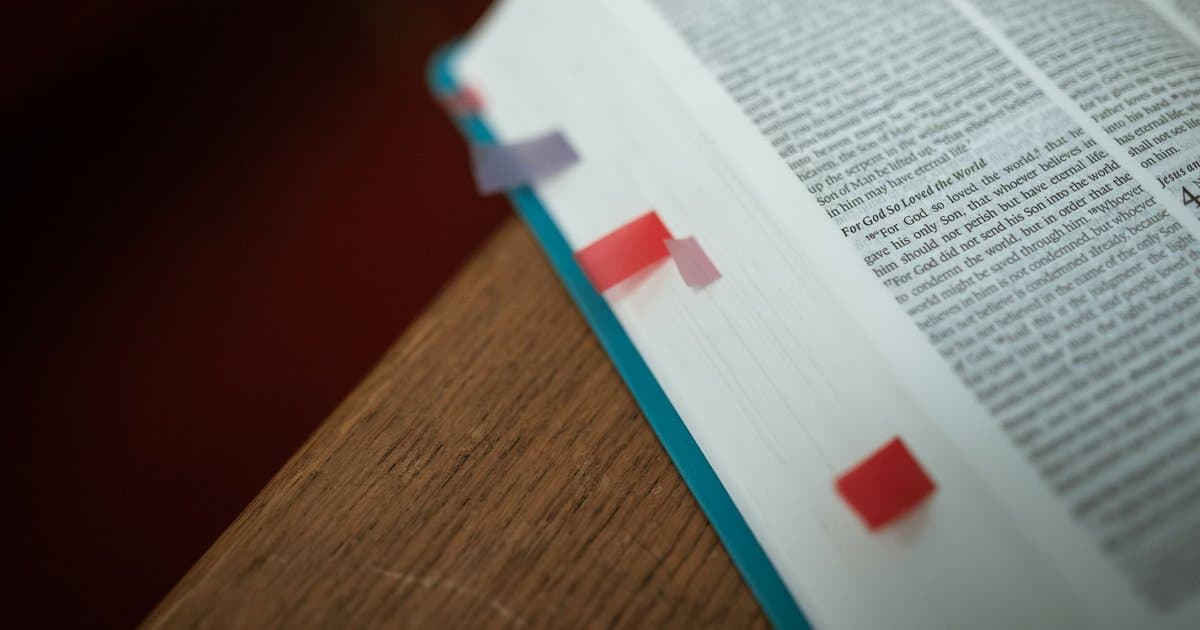
The fix is not complicated, but it requires you to slow down. After you finish speaking, stay still for two minutes. Do not pick up your phone. Do not start your day. Just sit there with Him. Open scripture and read slowly, letting one or two verses sit on your chest before moving on. Most people miss God's voice not because He is silent but because they are noisy.
Scripture backs this up consistently. Elijah on Horeb did not encounter God in the wind, the earthquake, or the fire. He heard Him in a low whisper after everything loud had passed. Jesus repeatedly withdrew to quiet places to pray, not to speak more but to listen better. Samuel was trained as a boy to say "speak, for your servant is listening." Across both testaments, the people who heard God most often were the ones who built time to actually hear Him.
Some of this is cultural. Western Christianity moves fast. We import the productivity language of our jobs into our spiritual lives and treat prayer as a task to complete instead of a relationship to maintain. The result is that we measure our prayer life by output, the chapters read and the time logged, instead of by communion. But God is not impressed by your output. He is interested in your presence. The conversation is not for His benefit. It is for yours.
Building the listening half of prayer takes practice because most adults have not done it before. Start with two minutes. Set a timer if you have to. Sit with your Bible open after you pray and read a single psalm out loud, then sit in silence and ask one question. What are you saying to me right now? Then wait. The first few weeks will feel awkward. Your mind will wander. The discipline of staying still is what creates the space where you can actually hear something.
Over time, the silence stops feeling empty. You start to notice patterns. A verse that keeps returning. A name that keeps surfacing. A nudge toward a phone call you have been avoiding. A conviction that is hard to ignore. None of this is mystical. It is what scripture describes as walking with the Spirit. The mistake of one-way prayer is that it never gives the Spirit a chance to lead because the room is too loud.
There are practices that can help if silence alone feels too unstructured. Lectio Divina is one of the oldest. You read a short passage four times, with pauses, asking different questions each pass. The Daily Examen, used for centuries in the Ignatian tradition, walks you through a 15 minute review of where God showed up in your day. Centering prayer asks you to repeat one sacred word to anchor your attention while you sit. These are not magic formulas. They are scaffolding for people who never learned how to be quiet in front of God, and the scaffolding is more useful than most modern Christians admit.
If your prayer life has felt flat for a long time, this is probably the reason. You are not lacking faith. You are not praying wrong words. You have just been doing all the talking. The cure is to stop, breathe, and let Him into the conversation you have been having by yourself. Try it for thirty days. Two minutes of silence after every prayer, with scripture open and your phone face down. Most people who do this describe it as the first time prayer actually felt like a relationship. The change is not in God. The change is in your willingness to actually hear Him. That alone is worth the small adjustment to the rhythm of your day. The depth comes after the discipline, and the discipline is mostly learning to be quiet.